
Buy wallet phone cases wholesale by the loaded product’s behavior, not the number of features in a listing. A useful range needs the right phone insert, secure but accessible card storage, a cover that closes at the intended load and a support function that works with the phone installed. PU, leather, magnetic closure and charging compatibility are separate specifications.
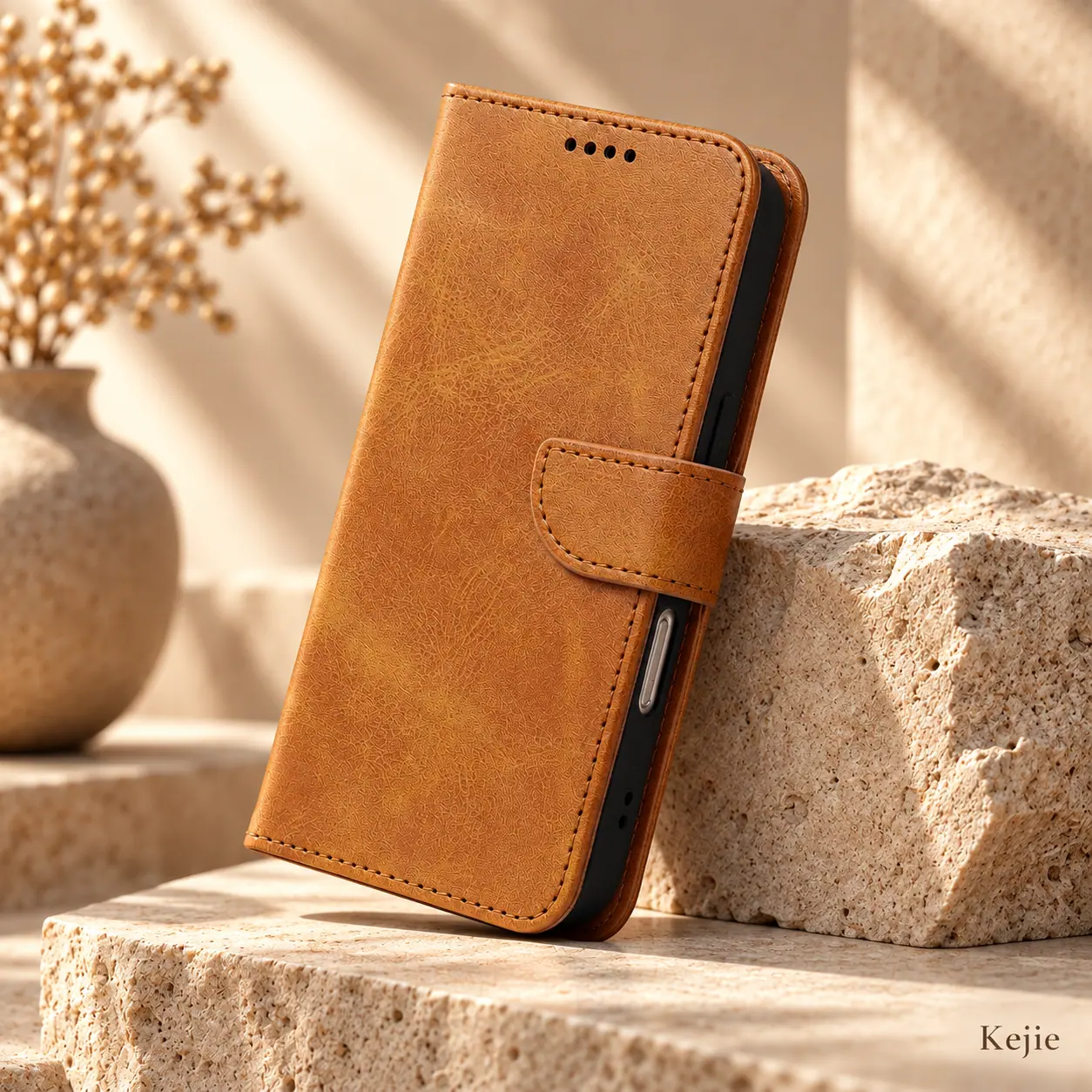
Compare genuine leather and PU wallet case options
The published genuine cowhide card-holder case is a separate option from the PU flip wallet. It has a rear-pocket layout rather than a front folio cover, and its specification lists wireless charging as unsupported. Compare exact phone molds, leather finish, intended card load and sample requirements before combining either design in a wholesale range.
Start with a specific Kejie wallet case
Magnetic Flip Wallet PU Leather Card Holder Case for iPhone & Samsung Galaxy
- Construction: PU exterior with a TPU phone holder.
- Listed functions: card holder, magnetic flip closure and wallet-style support.
- Buyer check: exact device variant, loaded closure and sample performance.
Explore Kejie’s PU leather phone case collection for the current range. Choose the carrying layout first, then specify the surface, phone model and brand details. A category name does not establish one shared fit, card capacity or minimum order.
In this buying guide
Choose the carrying structure before counting card slots
These features can be combined. A folio describes the cover; a card slot describes storage; a magnet describes a fastening or alignment mechanism. None automatically proves the others.
| Structure / feature | Useful for | Trade-off and sample check |
|---|---|---|
| Flip / folio cover | Buyers who want front coverage and inside storage | More opening steps and folded bulk; check camera clearance and one-handed access. |
| Rear or internal card holder | Keeping selected cards with the phone | Storage adds thickness; test extraction and retention at the agreed minimum and maximum load. |
| Magnetic flap / closure tab | Keeping the chosen cover or pocket closed | A cover can close empty but strain when loaded. Confirm the closure type and position; do not infer charging support. |
| Fold-out / wallet-style stand | Hands-free viewing in the supported orientation | Stability depends on the phone, angle, surface and card load. Verify which orientations actually work. |
Capacity is a load specification. Slot count alone does not say how many cards the closed case can carry comfortably. Agree the card types and thicknesses, intended count and whether cash is included. Do not approve an advertised capacity from a photograph.
Specify the material stack—not just “leather look”
PU-based synthetic material
A PU-coated synthetic construction can provide a leather-like surface. Specify the backing, coating, thickness, lining and edge treatment. “PU” does not, by itself, identify every layer or prove a lifespan.
Genuine animal leather
Specify the hide/skin source, leather type, finish and thickness. Natural appearance and batch variation need agreed references. The word “genuine” alone is not a finished-case durability grade.
Coated leather and synthetic coated fabric are not interchangeable descriptions. Ask for the actual composition rather than deciding by touch or a grain photograph. The Leather Working Group’s material definitions distinguish leather and related constructions.
For either route, approve a physical surface reference and check fold lines, edge finish, stitching, rubbing/color transfer and contact with the phone and cards under agreed conditions. Do not assume that PU always costs less, or that animal leather always performs better.
A closing magnet does not make a charging-compatible case
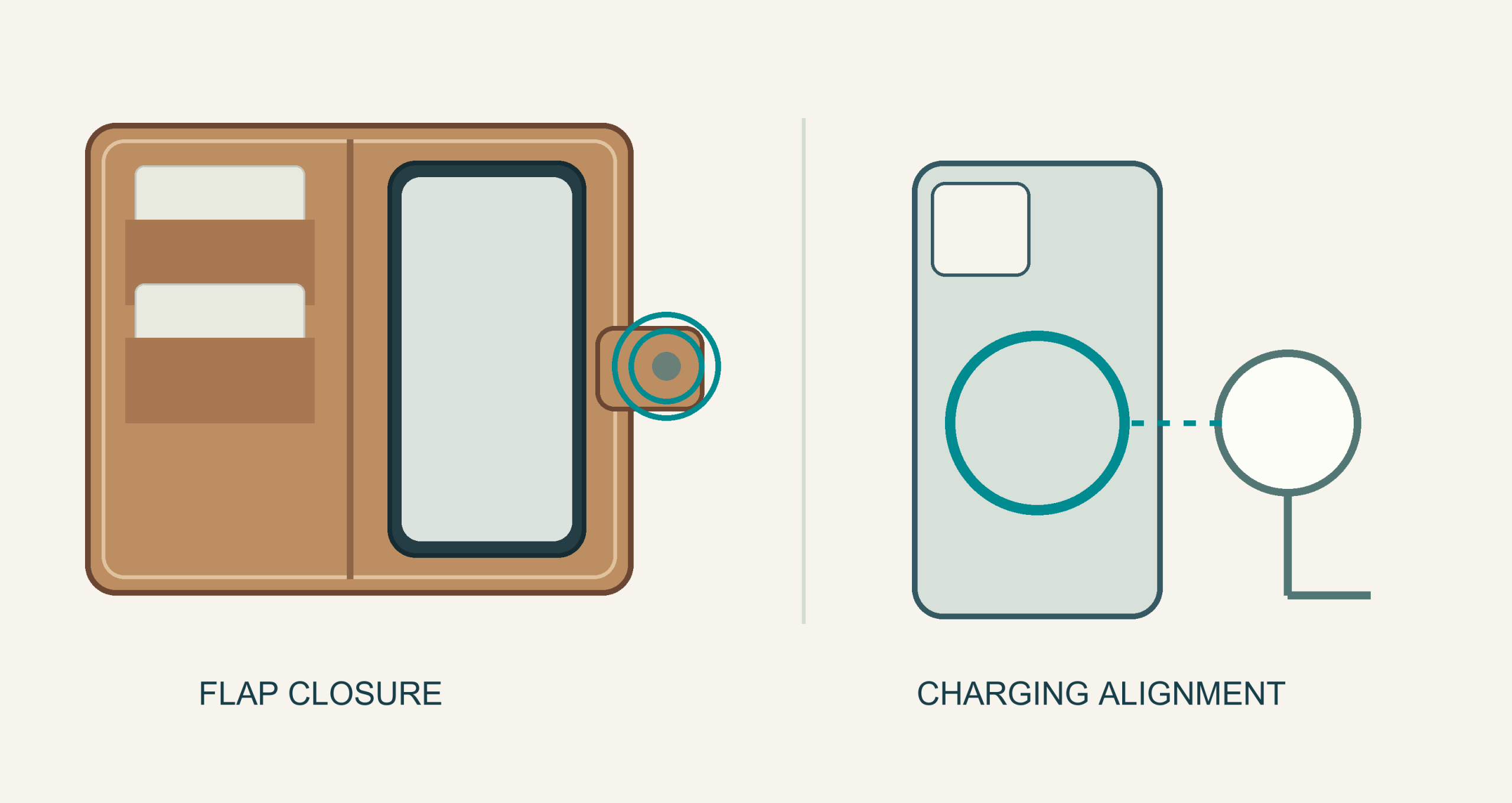
- Closure: the magnet helps retain a cover or tab. Check whether it engages with the intended card load.
- Magnetic accessory alignment: a compatible rear system must be specified for the intended phone and accessory. An edge fastener is not evidence of that system.
- Wireless charging: verify the exact phone, case, wallet configuration and charger. Added storage, materials and the position of contents affect the arrangement; do not transfer a result from a bare shell to a loaded wallet.
Apple’s MagSafe Charger guidance says cards, badges and similar items should not sit between the phone and charger; remove them or keep them outside that interface. Follow the applicable phone and charger instructions. The featured Kejie wallet’s listed magnetic closure does not establish MagSafe/Qi2 certification, wireless charging performance or RFID shielding.
Approve a loaded sample in the order it will be used
-
1. Install the exact phone
Check seating, buttons, camera and flash openings, speaker/earpiece access, cable plugs and screen-protector clearance. Open and fold the cover into the intended positions. A similar series name is not a fit test.
-
2. Load, remove and reload cards
Use the agreed card types and count. Check insertion force, fingertip access, slipping during normal handling and whether a single card still holds after the pocket has carried the approved fuller load. Record snags, stretch or card marks.
-
3. Close and reopen the loaded wallet
Check tab alignment, closure engagement, cover bulge and unwanted pressure on the screen or cards. Agree the opening-cycle method and acceptance criteria; inspect the hinge/crease, stitching, edge finish and bonded areas after the exercise.
-
4. Try the advertised support function
Use the phone installed, agreed card load, viewing angle and surface. Check slippage and normal tapping. Test portrait and landscape separately if both are required; approve only the configurations demonstrated by the sample.
Keep one useful sample record
Sample ID / revision · exact phone · cards and load · action / conditions · finding / photo · required correction · recheck result.
If the capacity, cycle method or acceptance criteria are undefined, agree them before marking the sample approved. This checklist proposes checks; it is not a report of completed Kejie testing.
Build the range by exact phone variant and wallet layout
Keep one SKU row for each device, color and wallet construction. Review stock or existing-tool availability separately from new or modified phone inserts. A shared outer cover does not make the internal holder universal.
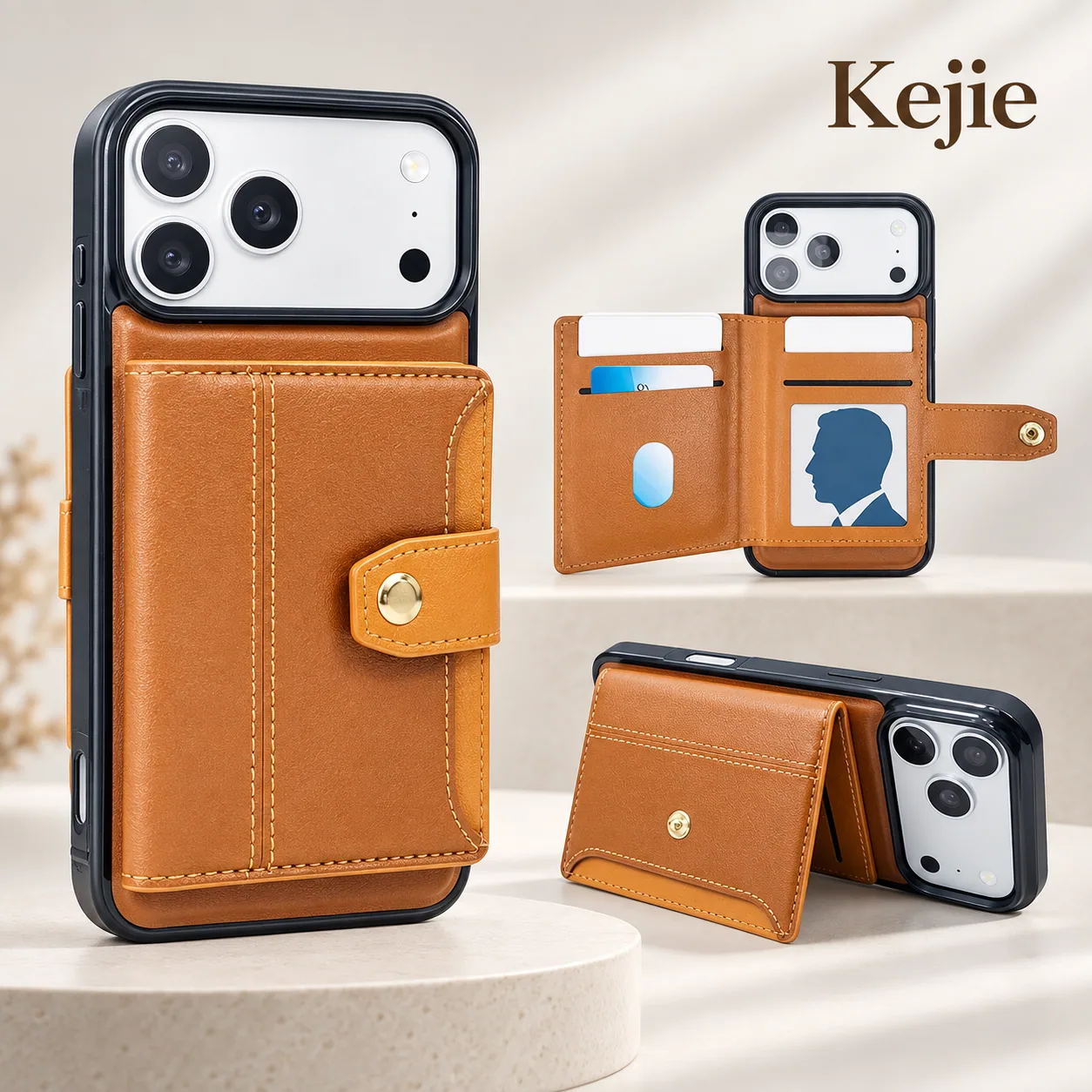
High Quality PU Leather Card Holder Shockproof Phone Case for Samsung Galaxy A Series
Why consider it: a PU card-holder direction alongside the flip-wallet platform.
Confirm before combining orders: exact model insert, pocket and closure configuration, colors and minimum per variant. Do not inherit the other wallet’s stand or magnetic-closure specification.
For the broader brand program, the private-label sourcing guide connects product selection, identity and repeat-order control. Keep the approved phone holder, wallet layout, material and artwork revision together.
Turn the selected sample into a clear branding brief
- Mark the usable logo area. Supply logo files, position, size and color. Ask Kejie which decoration methods suit the selected coating and panel; approve a decorated sample, clear of folds, pockets, stitches and closure parts.
- Control the visible finish. Agree color/texture references, stitching and edge details. Confirm feasibility before using one finish across every phone variant.
- Define the retail unit. Specify packaging, model/color label, insert and included accessories. The packed product must identify the right device and keep its surface and wallet shape protected.
- Separate the order minimums. Ask for quantities per phone model/color, logo design and packaging version. Standard-platform references do not automatically apply to branded runs. Request setup, sample, unit and packing charges separately.
Kejie’s OEM/ODM service is the next step when the project includes logo, finish, packaging or structural changes. State which details are already approved and which need feasibility review.
Send the wallet specification, not only a quantity
Share the product links, exact phone variants, units per model/color, material construction, intended card load, closure and stand requirements, any charging requirement, logo files, packaging and destination. Ask for a sample plan and a written quotation tied to that scope.
Review my wholesale wallet-case brief with Kejie →
A useful wallet-case range works when loaded, fits the named phone and can be reordered against an approved reference. Choose that combination before expanding colors or adding marketing claims.
 English
 Español de Argentina
 Русский
 Italiano
 日本語
 한국어
 العربية
 Français
 Deutsch