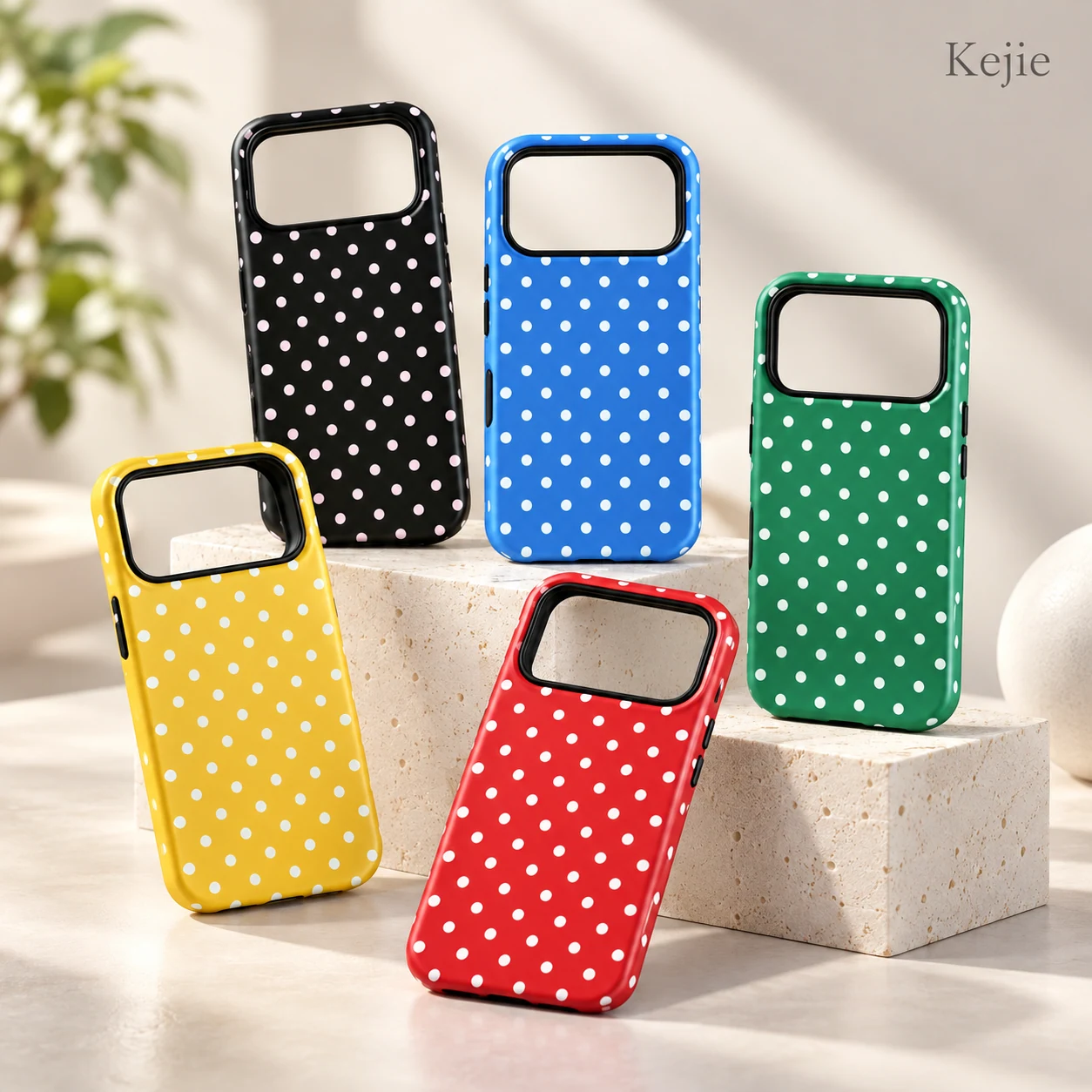
Kejie polka dot case family: a starting point for an artwork-led collection.
The right private label phone case manufacturer helps turn a selected case into a repeatable branded product. Compare the product platform, artwork and finish options, packaging coordination, sample approvals and control of repeat orders. A logo alone does not define the material, device fit or retail presentation your brand will deliver.
This guide brings together ten China-based manufacturer candidates, with Kejie as the featured partner for growing brands. Start with an existing case direction, then define which brand details need to change. Keep new structural development separate from logo, color and packaging work so the quotation matches the actual project.
1. Kejie Phone Case: build around a defined brand brief
Kejie supports private-label projects across TPU, TPU + PC, silicone, magnetic, PU leather and aramid-fiber directions.
- Select an OEM/ODM development route for the chosen platform.
- Review logo, color and retail packaging together.
- Keep samples, artwork and production revisions aligned.
Start from a specific product
Choose the exact phone variant, material and function before discussing a logo. Use current Kejie listings to make the conversation concrete.
Link branding to approval
Bring the artwork, color reference and packaging needs into the sample discussion. Agree which details are ready and which still need review.
- NDA discussion is available on request.
- Minimums and development work depend on the selected case.
- Review Kejie’s company background before sharing your project brief.
Three Kejie product directions for your brand
Choose a platform that matches your brand. Compare these three products, then approve exact device fit, finish and customization scope on a sample.
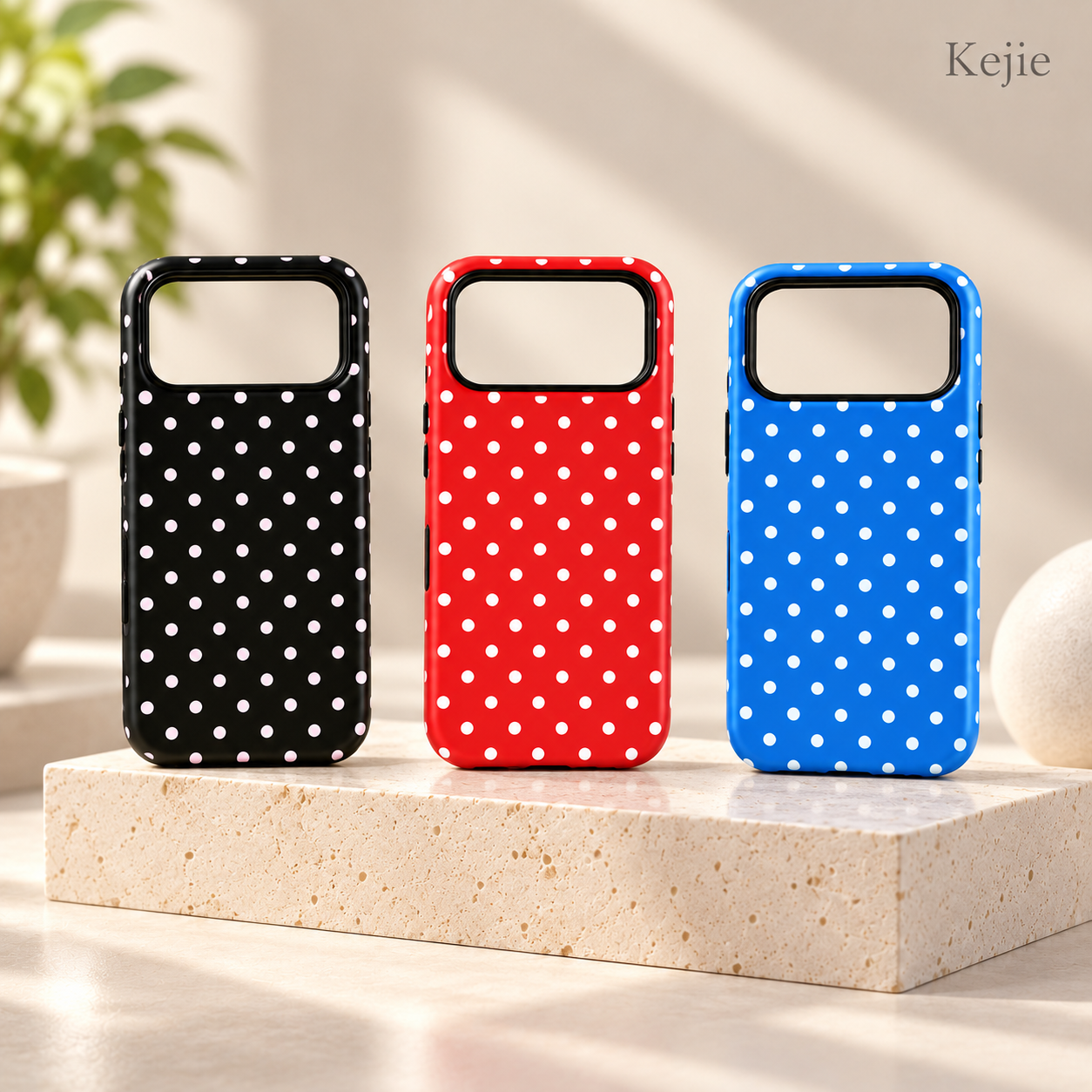
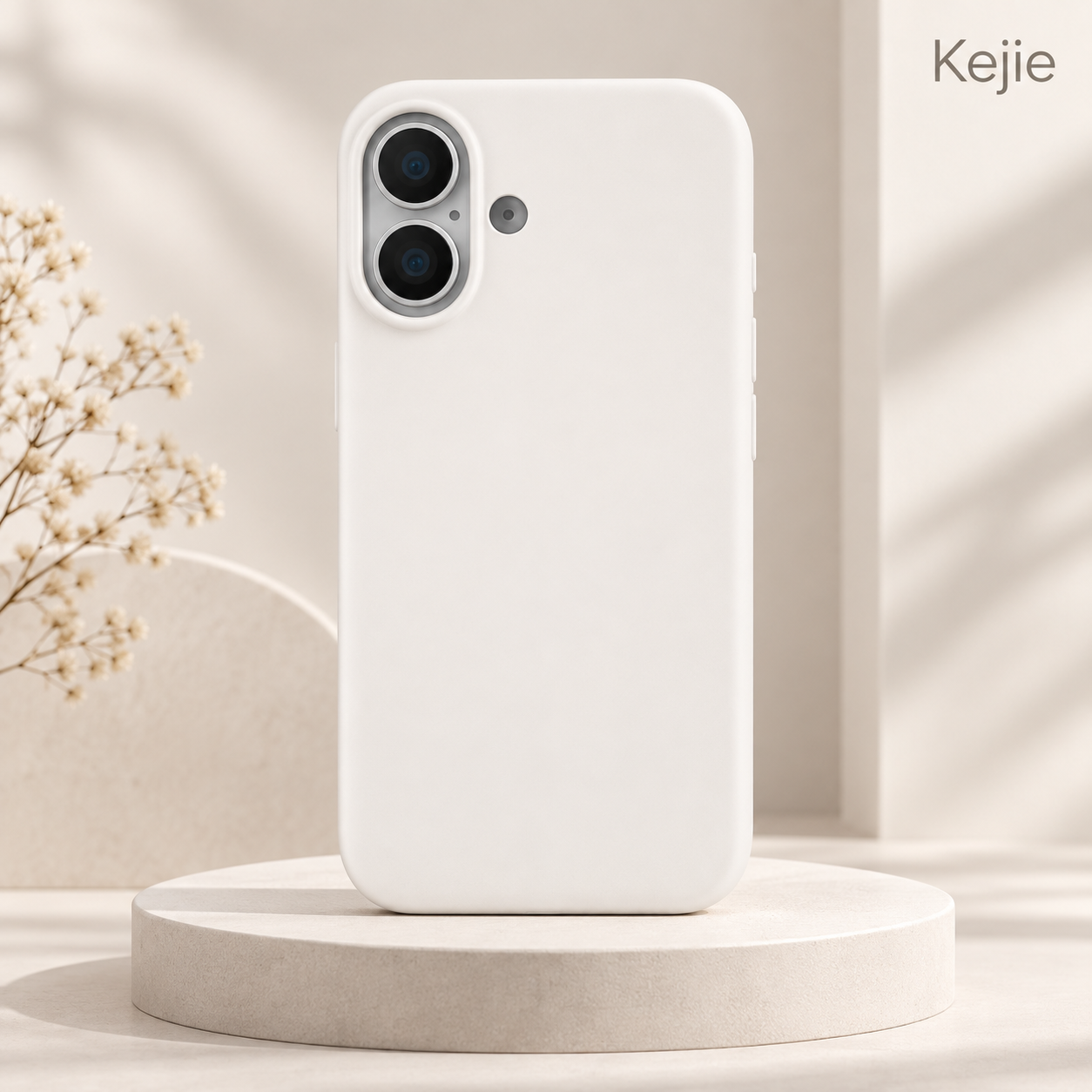
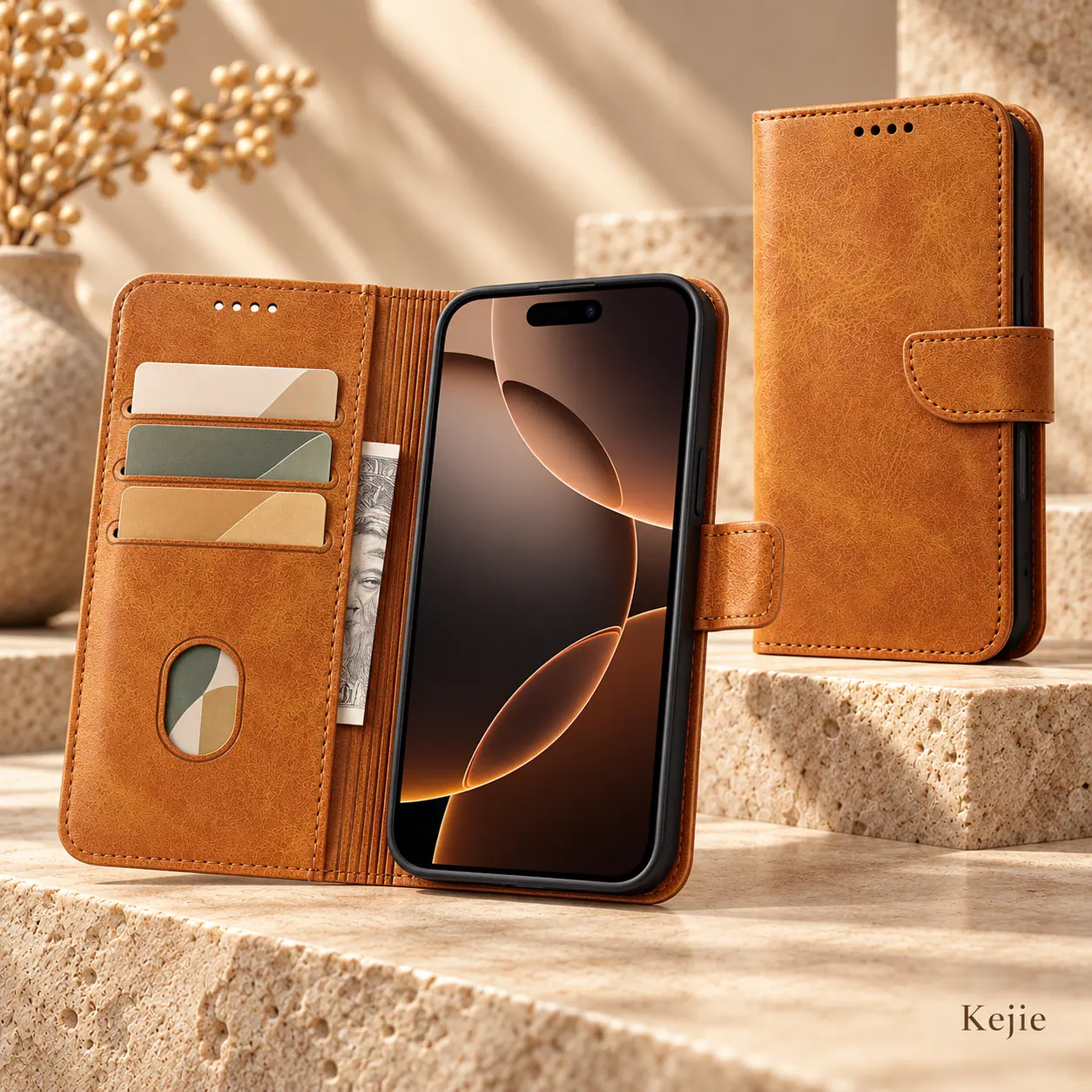
- Compare TPU + PC, silicone and PU leather collections.
- For a Samsung extension, use the Galaxy S26 B2B sourcing guide to prepare the model-specific buying brief.
- Category coverage does not establish one common MOQ or cross-model fit.
Top 10 private label phone case manufacturers in China
This is a product-focused editorial shortlist, not an audited quality, sales or market-share ranking. Kejie publishes the guide and is our featured recommendation. The other nine entries are alphabetical by brand or common company name. Their focus reflects current official customization offers reviewed on October 13, 2026; the contracting entity, assigned production site and project-specific terms still need confirmation.
| Manufacturer / location | Private-label direction | Relevant brand project | Official source |
|---|---|---|---|
| 1. Kejie Phone Case — Shenzhen sales office | Multi-material case platforms, branding and sample-to-production coordination | Brands wanting a defined product and approval route | Kejie service scope |
| 2. Aikusu / Shenzhen Boer Epoxy — Shenzhen | Epoxy, UV-printed and sublimation case directions | Artwork or decorative finish-led collections | Official website |
| 3. C&T Phone Case Maker — Guangzhou | Material-led development and product/packaging customization | Brands needing a documented material story | Official website |
| 4. HuaRui — Dongguan | Engineering, molding, IML and multiple case constructions | Projects where branding also involves structural development | Official website |
| 5. IMD Cases — Dongguan contact location | IMD and sublimation decoration with functional case platforms | Graphic-led protective case programs | Official website |
| 6. Jiakang Electronic Technology — Dongguan | Protective cases and branded 3C accessory development | Brands extending a protection-focused accessory line | Official website |
| 7. Dongguan Jolly Industries — Dongguan | Wallet, crossbody cases, straps and coordinated accessories | Lifestyle collections combining cases and carrying details | Official website |
| 8. LovingCase / Nuoweir — Shenzhen | HD/3D printed cases and integrated tech-accessory sourcing | Artwork-led brands coordinating related accessories | Official website |
| 9. Runsuncase — Shenzhen; also lists Vietnam production | Existing molds, appearance and functional customization | Brands adapting a magnetic or kickstand platform | Official website |
| 10. Syndee — Guangzhou | PC magnetic, frosted and two-piece case directions | Catalog platforms with logo, finish or packaging changes | Official website |
The links identify the first-party sources behind this shortlist. Published supplier statements are not an independent factory audit or a guarantee of current capacity, ownership, certification or order terms.
Use these directions to select candidates for the same brief. Do not infer ready stock, a low custom MOQ, exclusive designs or certification from a catalog description. If the project centers on a proprietary shape or new tooling, the custom phone case manufacturer guide covers the broader OEM selection context.
Define the brand specification before requesting a quote
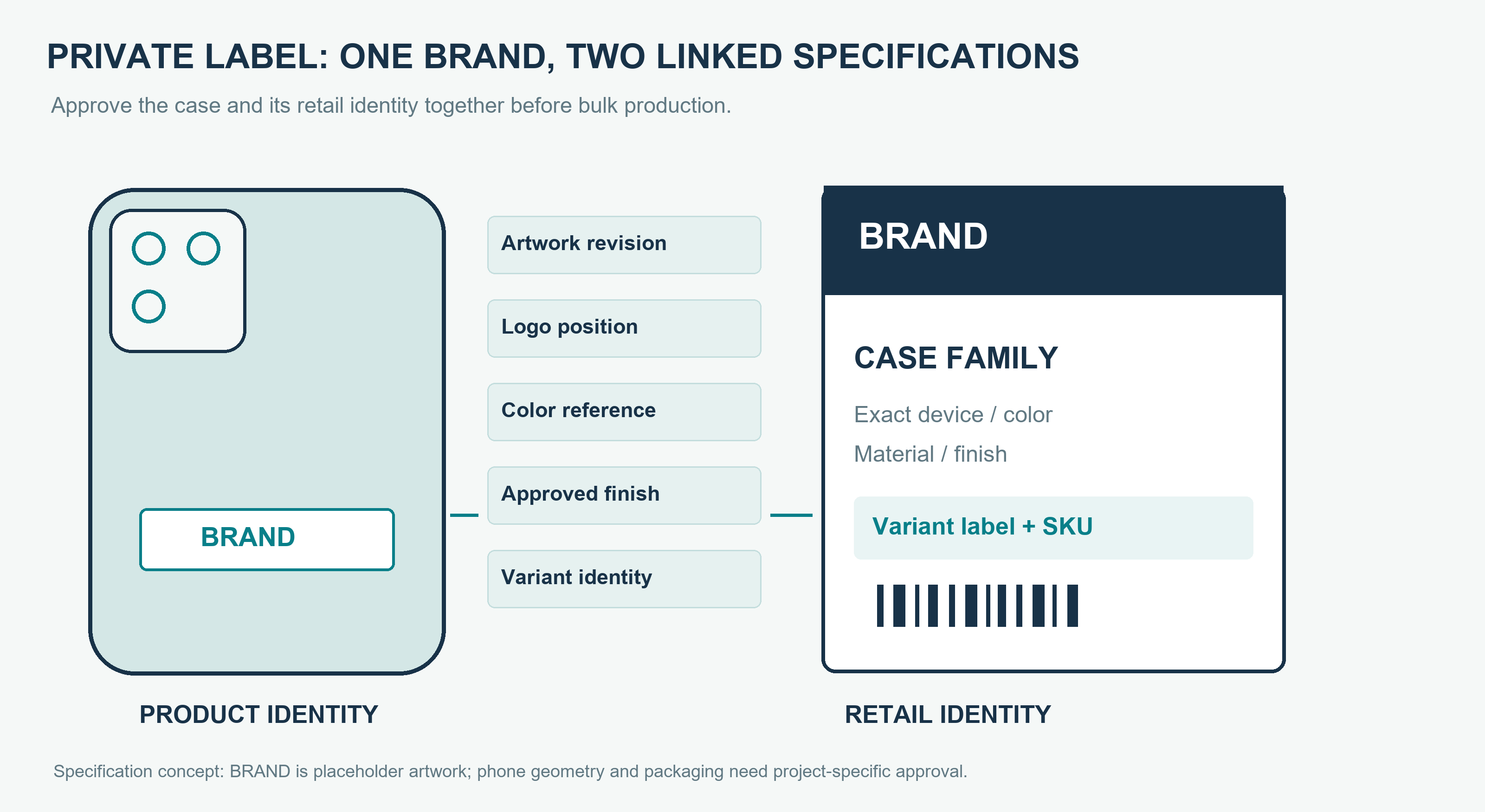
Build the specification in three steps
- Supply artwork: identify the revision, logo position and color reference.
- Confirm decoration limits: check camera openings, texture, coating and assembly boundaries.
- Approve a finished sample: a flat mockup cannot confirm print behavior on the actual shell.
- Record the exact phone model, materials, functions and variant quantities.
- Keep product and packaging versions together.
- Support impact, aging or charging claims with relevant finished-product evidence.
Choose the changes your brand needs next
| Requested change | Review needed | Approval output |
|---|---|---|
| Logo or graphic on an existing platform | Decoration method, usable area, artwork and wear requirements | Finished decorated sample with approved artwork version |
| Custom color or surface finish | Material/process compatibility and repeatable color reference | Physical color/finish sample and acceptable variation |
| Private-label retail packaging | Package dimensions, artwork, variant label and packing protection | Package proof plus a complete packed-product sample |
| New openings, stand, magnet layout or shape | Device data, engineering, component and tooling scope | Controlled drawings and production-intent functional samples |
Choose the review route
- Match the decoration method to the selected surface.
- Treat molded logos or changed openings as geometry changes.
- Ask Kejie to review feasibility before finalizing the artwork.
Request a complete project quote
- Separate standard-case terms from custom print, color and packaging terms.
- Confirm minimums per model, color, graphic or packaging design.
- List setup, samples, decoration, packaging and engineering charges separately.
Approve a retail-ready launch, not just an attractive mockup
Use four approval gates. The project scope determines the work between them; these are checkpoints, not a fixed timetable.
01 — Product fit
Check the exact device, buttons, camera clearance, installation and the intended accessory functions. Hold approval if the product platform is still undefined.
02 — Brand execution
Check logo position, graphic registration, color and finish on a physical sample. Mark the accepted artwork revision and appearance limits.
03 — Retail identity
Review a packed unit: package fit, printed details, device/variant identification, labels and protection during handling. Approve product and package versions together.
04 — Bulk release
Carry the accepted samples, specification and inspection requirements into the order. Agree how findings and changes will be reported before shipment.
- Approve each relevant device and color variant.
- Keep physical samples alongside digital artwork proofs.
- Recheck the affected scope when materials, graphics or packaging change.
- Adding a foldable case? Use the foldable manufacturer selection checklist for the additional qualification questions.
Keep the brand consistent as orders grow
Keep one traceable record per sellable SKU. Use it to reproduce the approved product on the next order.
| Control point | Record or term to agree | Reason for a growing brand |
|---|---|---|
| Product and artwork versions | SKU, device variant, material, color/finish, artwork file and approved sample ID | Prevents old graphics or a similar-looking shell entering a reorder |
| Production and finishing responsibility | Assigned site, outsourced operations where relevant, inspection and change approval | Makes supplier coordination and origin transparent |
| Design/tooling and exclusivity scope | Written scope for artwork use, design rights, tooling responsibility and any exclusivity | Private label alone does not create an exclusive shape or transfer a mold |
| Evidence behind retail claims | Specific product/configuration, test method and supporting documentation | Keeps marketing language tied to the version actually sold |
| Reorder and after-sales handling | Repeat specification, substitution notice and agreed defect/shortage reporting route | Supports consistent replenishment and a clear resolution process |
- Launch a coherent set of models and finishes.
- Add a platform only when it serves a distinct customer or function.
- Before introducing a woven premium tier, read the aramid fiber materials and sourcing guide and browse Kejie’s aramid collection.
Prepare a private-label project brief for Kejie
Share the inputs below for a relevant platform and customization discussion. Mark open decisions such as logo method or unfinished packaging artwork.
- Brand and channel: intended customer, destination market and retail/e-commerce positioning.
- Product: reference Kejie product links, exact phone variants, construction and functions.
- Brand details: logo/graphics, proposed positions, color reference and desired finish.
- Retail packing: format, artwork status, SKU/variant labels and packing protection.
- Volumes: launch quantities by model/color/design and expected reorder needs.
- Approval: sample requirements, required product checks and target launch milestones.
- Ask Kejie to review the product and brand requirements.
- Confirm scope, sample route and approval responsibilities.
- Agree pricing and project-specific delivery milestones before a bulk order.
Private-label phone case questions
Is private label the same as OEM or ODM?
Private label means selling under your brand. The route may use an existing platform or involve OEM/ODM development.
Compare Kejie’s OEM/ODM routes against the actual changes required.
Does a branded case automatically become an exclusive design?
No. A logo or package does not create exclusivity over the underlying case.
- Define the design, market, period and quantity conditions.
- Confirm artwork and tooling responsibilities separately.
Can a growing brand start with a small order?
It depends on the platform and changes.
- Request minimums for the exact variants and decoration.
- Separate setup and packaging costs.
- Keep the launch range manageable; no universal private-label MOQ applies.
What should the supplier provide before bulk approval?
- Defined product and decoration scope.
- Approved samples and artwork/package versions.
- Inspection requirements and written commercial scope.
- Evidence for any finished-product performance claims.
 English
 Español de Argentina
 Русский
 Italiano
 日本語
 한국어
 العربية
 Français
 Deutsch