
FEATURES
Wood grain and artwork give the back its identity
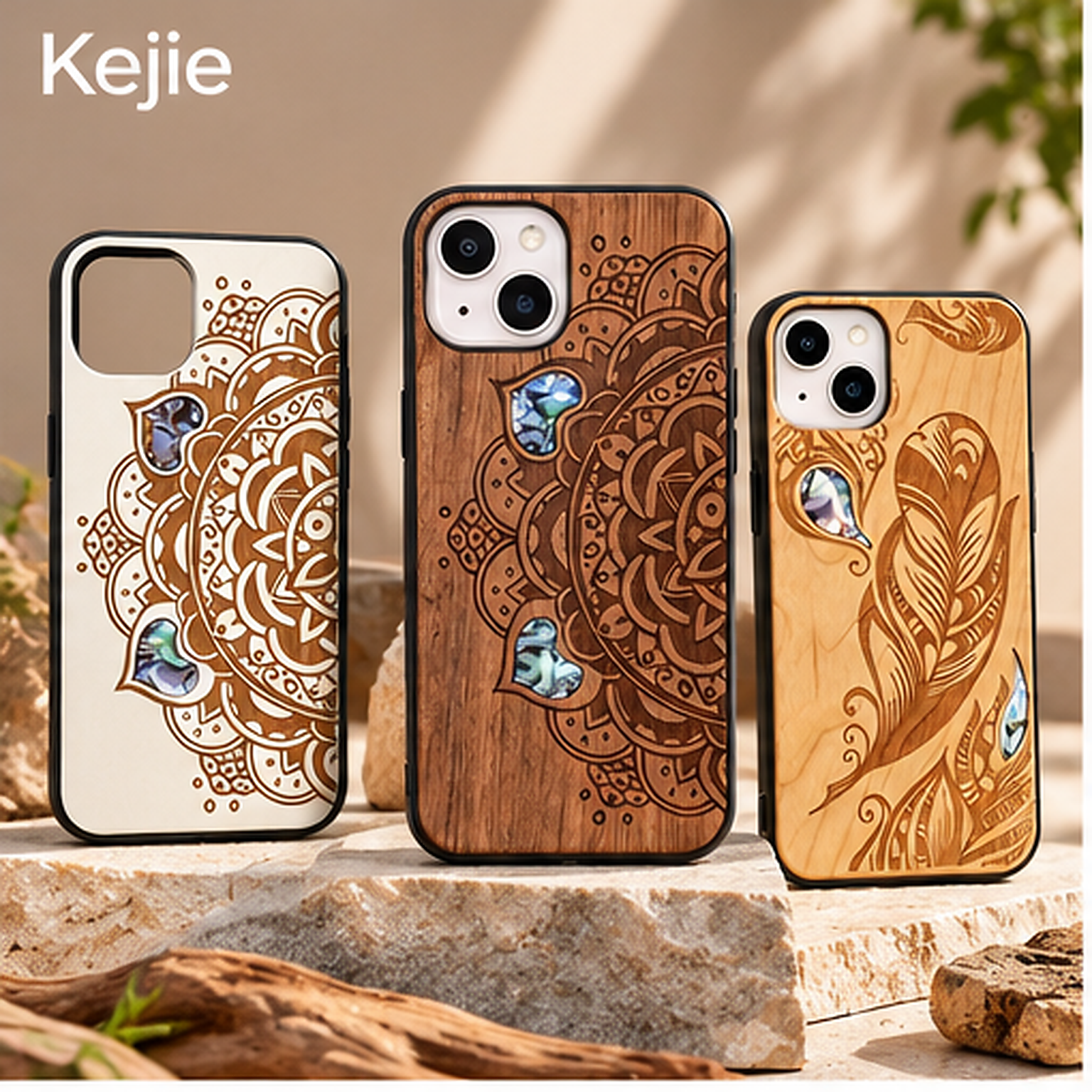
This iPhone back case combines a wood-faced rear panel with a contrasting protective perimeter. Bamboo, maple, cherry and walnut are material options, with blank, engraved and decorative appearance directions selected for the project. Choose the exact phone version, wood and artwork together for a coordinated accessory or branded gift collection.
The visible wood surface is the starting point for the design. It can remain the main visual feature or act as the background for a focused logo, engraved illustration or more decorative composition. The surrounding dark perimeter frames that surface and keeps the case tied to a phone-specific outline.
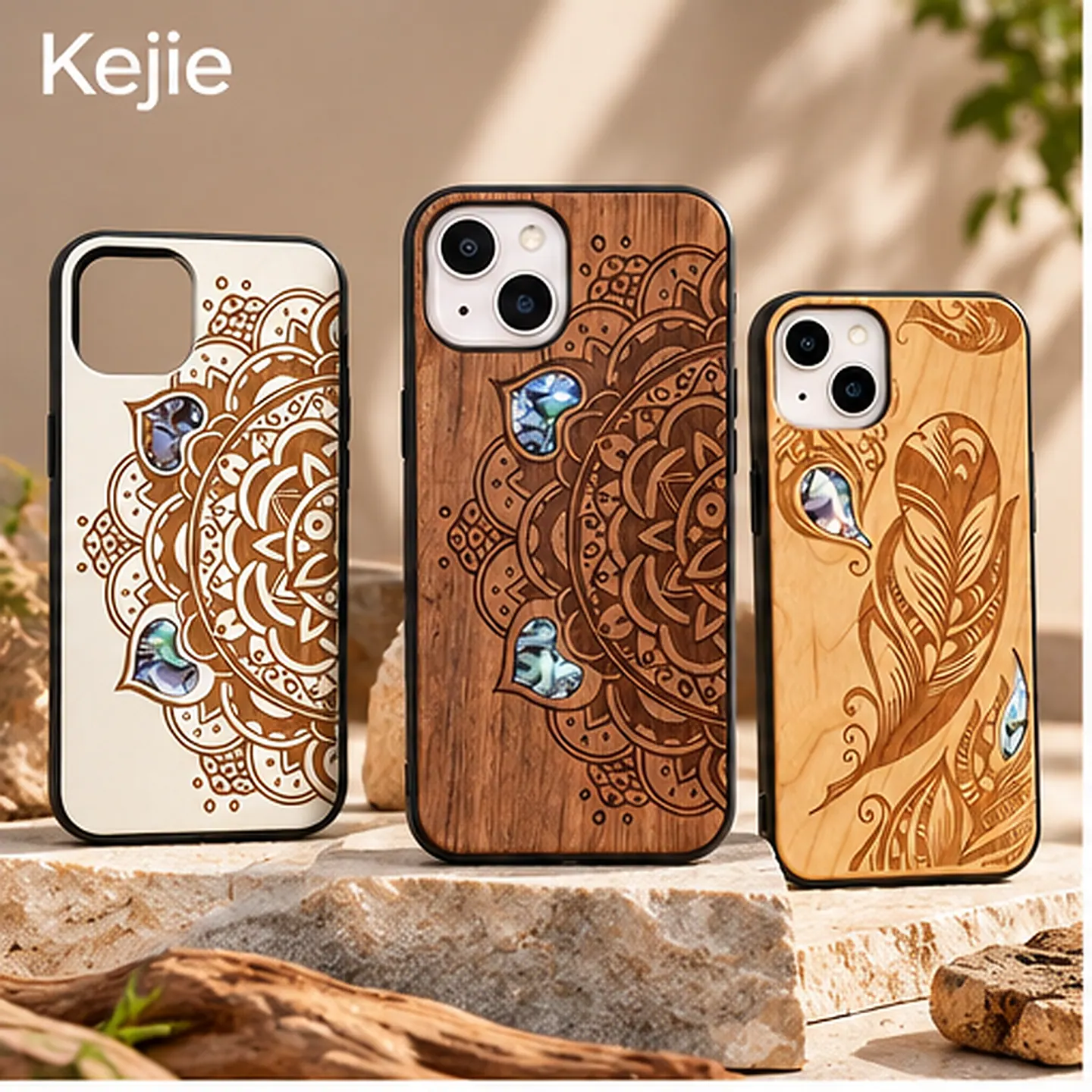
This format is useful when the buyer wants the rear material and artwork to distinguish a collection. Choose the wood, finish and design as one setup rather than ordering a generic brown case and expecting every unit to have the same grain or decorative treatment.
Core specifications and practical product features
| Back-panel options | Bamboo, maple, cherry and walnut; selected material confirmed on sample |
|---|---|
| Appearance directions | Blank wood, laser engraving and agreed decorative finishes |
| Fitment | Separate iPhone model selections; exact list below |
| Standard order reference | 100 pieces; confirm quantities by phone model, material and design |
| Logo engraving reference | 500 pieces; confirm the artwork and chosen options |
- Wood-faced rear panel: puts visible grain at the center of the product’s appearance, creating a different presentation from a plain plastic or leather-style back.
- Wood choices: choose bamboo, maple, cherry or walnut. Check the actual color and grain on samples before ordering.
- Laser-engraving direction: gives logos and illustrations a defined application route on the chosen wood, with line detail and placement reviewed on the finished sample.
- Model-specific perimeter: combines the decorative back with a fitted case outline and the required camera, control and connector access.
The wood panel and the surrounding case work as a complete product. Agree the full shell construction if a particular frame formulation is required; a wood-material description does not identify every supporting component or establish an impact-test result.
Choose the wood before approving the artwork
Bamboo, maple, cherry and walnut are the available material directions. Select a specific wood reference rather than using wood as a complete specification. Review the grain pattern, base tone, surface feel and final finish on the actual case.
The same line drawing can have a different visual relationship with a quieter grain or a more prominent grain. For a simple brand mark, decide how much uninterrupted wood should remain around it. For a detailed illustration, review whether the important lines remain clear against the selected surface.
Our selection recommendation: compare the same artwork on the candidate wood samples when material appearance is central to the collection. Keep the chosen wood and finish with the artwork file version so an approved design is not later applied to a different-looking surface without review.
Grain and shade variation should be agreed as part of the appearance reference. The material names alone do not support a uniform color guarantee, a durability ranking or environmental certification. If traceability or a specific material declaration is required, include it in the project requirements for the supplied construction.
Choose a Plain, Engraved or Decorative Back
| Design direction | What the buyer is selecting | Useful approval point |
|---|---|---|
| Blank wood back | Wood grain and an uncluttered rear surface | Base wood, finish and usable artwork area if marking will be added |
| Engraved motif or logo | A defined drawing or mark on the wood | Line clarity, scale, placement and contrast on that material |
| Ornamental or ocean-color direction | A more decorative finished appearance | Chosen design, color edges, surface feel and finished edges |
Choose the blank direction when grain is the intended focal point or the logo requirements is still being developed. Choose a focused engraving when the logo or illustration should remain legible against the wood. Choose a decorative direction when the finish itself forms the collection theme.
These are setup choices, not interchangeable production specifications. Identify the exact reference image and required treatment in the inquiry. A photograph of a decorative accent does not by itself define its material composition or application method.
Turtle, compass and detailed engraving layouts
The turtle and compass examples show two approaches to positioning a recognizable motif on a wood back. A turtle uses a central figure with its own surrounding space; a compass uses a more symmetrical layout whose orientation and balance should be deliberate.
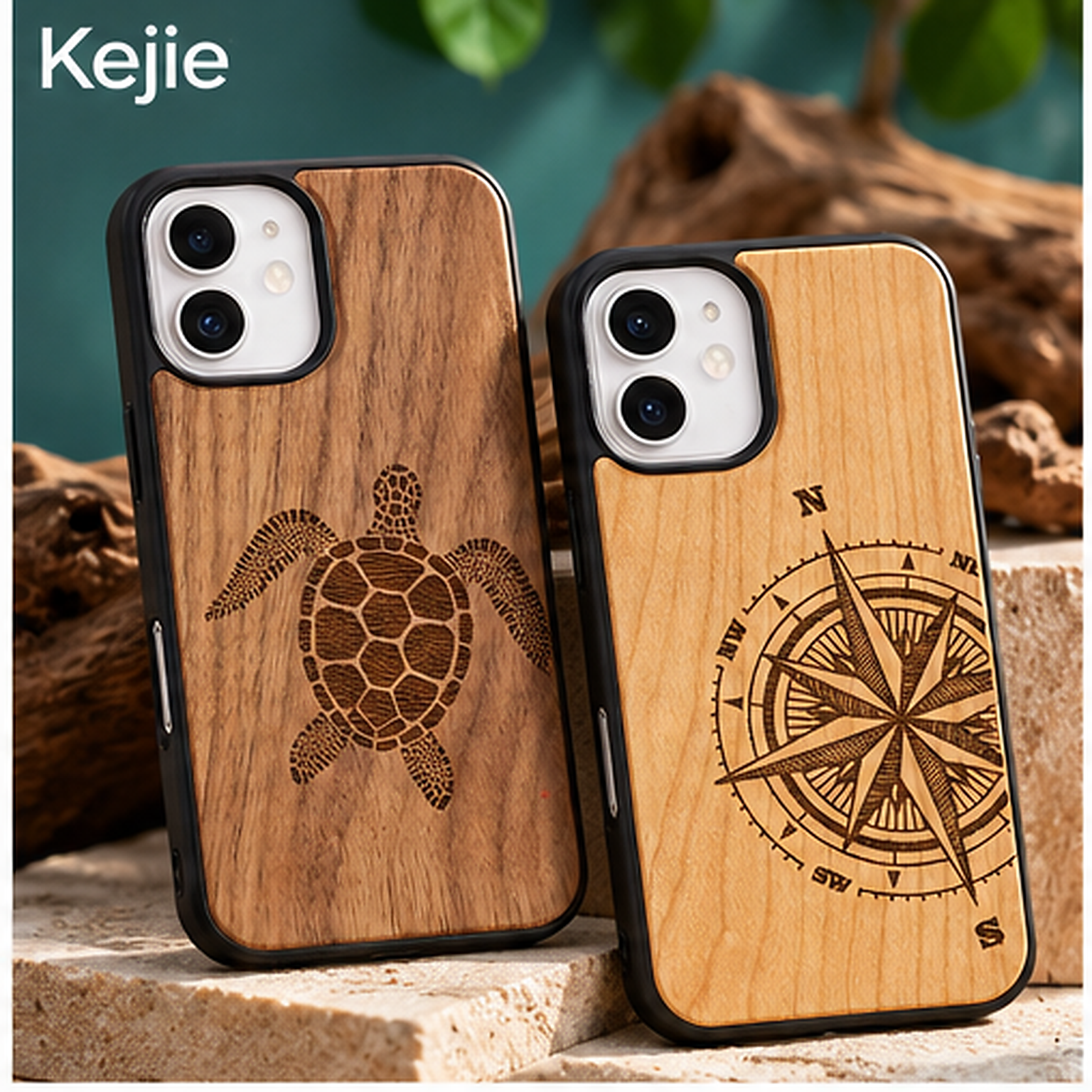
Provide a clean artwork file, desired dimensions and a marked phone-case outline. Identify the direction of the motif and the area to remain clear around the camera opening. Small letters, fine lines and densely spaced details need review at the actual finished size.
For a collection spanning several phone models, prepare the artwork layout for each rear outline. A change in camera opening or panel proportion can alter the visual balance even when the motif file is unchanged. Approve the adjusted position and crop for that version.
Ocean-color and ornamental finish selection
The ocean-color example places a blue decorative area beside visible wood. Other examples use ornamental patterns and contrasting accents. Decide whether the order should emphasize a broad color field, a detailed pattern or a more restrained grain-led appearance.
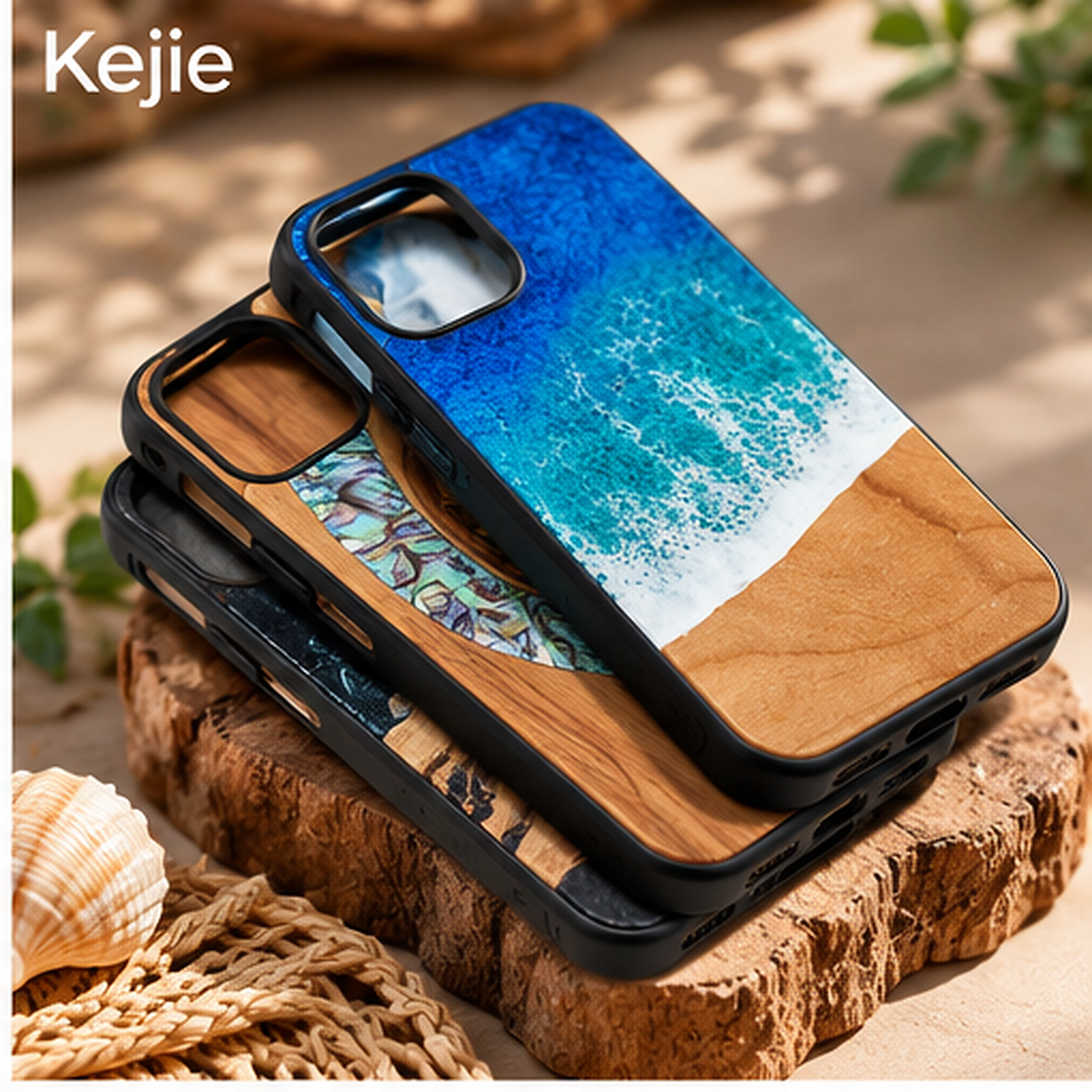
Review the boundary between decorative areas and visible wood, the final surface feel and the edge treatment. State the selected design reference and any required material composition in the quote request. Do not substitute another decorative treatment simply because it creates a similar color in a photograph.
For designs with contrasting accents, approve their position and appearance alongside the wood sample. Material identity, finish and artwork should be recorded together; a visual description such as iridescent accent is different from an agreed shell species or resin specification.
Build a coordinated engraved collection
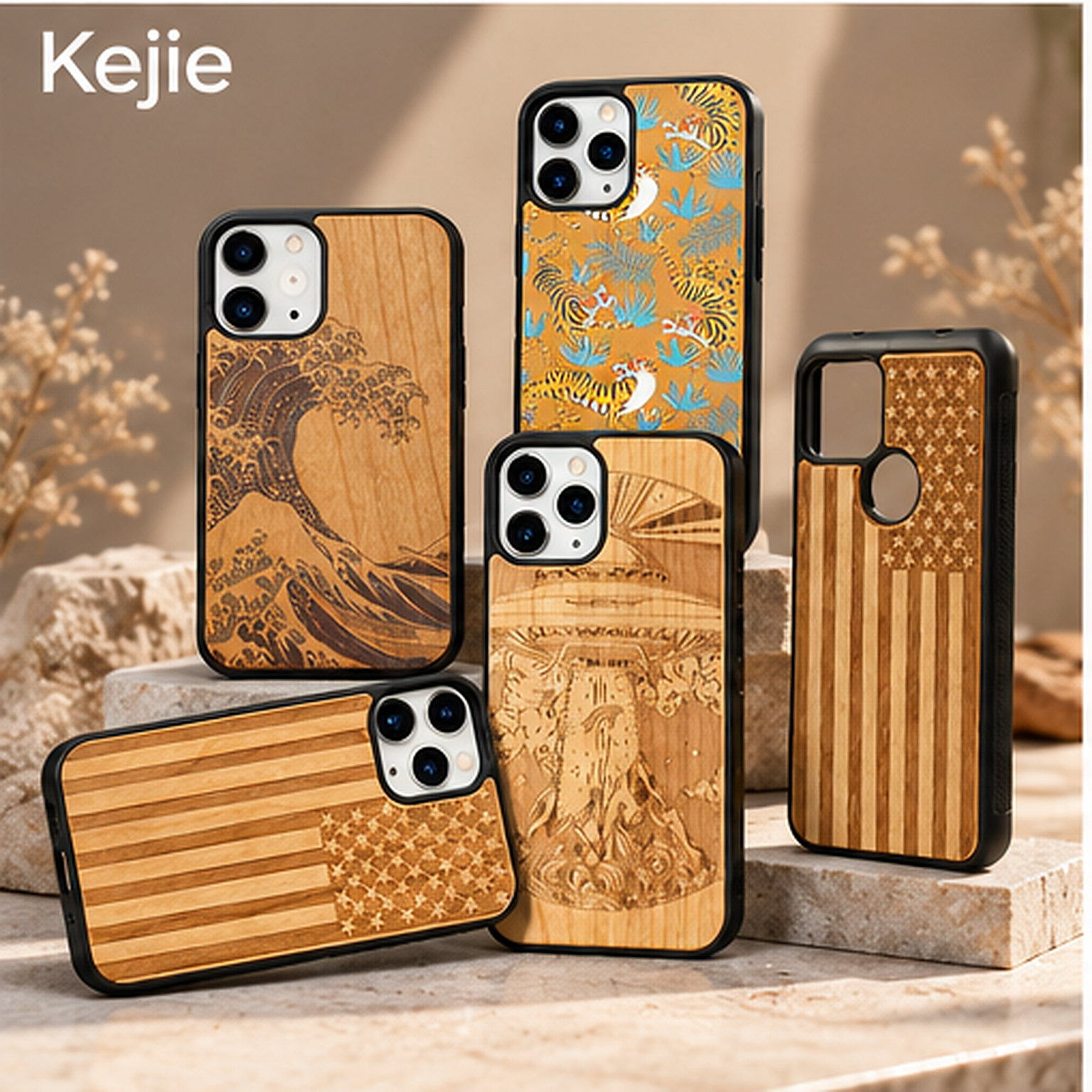
A collection can use related themes while retaining a consistent wood and finish reference. The wave, dragon, map and flag directions show how different artwork densities change the appearance of the back. A large motif and a dense repeat need different crop decisions.
For a map, identify which part must remain visible. For a flag or structured repeat, decide its orientation and alignment. For an illustration, identify the focal detail that should remain intact beside the camera area. Those instructions are more useful than requesting the same picture for every phone size.
Keep quantities tied to the design and phone version. For promotional or branded-gift projects, distinguish the main decorative artwork from any added brand mark so the two elements are positioned together rather than competing for the same small area.
Select the exact iPhone mold and rear layout
| Phone group | Model selections | Ordering point |
|---|---|---|
| Earlier selections | iPhone XS Max; iPhone 11 Pro Max | Full phone name and matching opening |
| iPhone 12 selections | iPhone 12 / 12 Mini / 12 Pro / 12 Pro Max | Mini, standard and Pro formats are separate selections |
| iPhone 13 selections | iPhone 13 / 13 Pro / 13 Pro Max | Select the actual camera and rear outline |
| iPhone 14 selection | iPhone 14 Pro Max | Other 14 versions require separate confirmation |
| iPhone 15 selections | iPhone 15 / 15 Plus / 15 Pro Max | Do not substitute an unconfirmed Pro version |
| iPhone 16 selections | iPhone 16 / 16 Plus / 16 Pro / 16 Pro Max | Approve the artwork for the selected shell |
| iPhone 17 selections | iPhone 17 / 17 Pro / 17 Pro Max | Air or other versions require separate confirmation |
Each listed phone version is a separate selection. Confirm availability for the chosen wood and design, then approve the fit and artwork on the matching case. Similar model names or a shared series do not establish a universal mold.
Fit the sample to the exact phone and check fit around the edges, camera access, side controls and the intended charging cable opening. Review the camera boundary with the decorated back so both function and artwork placement are assessed on one finished setup.
If a screen or lens accessory will be combined with the case, include that item in the fit review. Any wireless-charging, magnetic attachment or special impact requirement also needs its own confirmed setup; the wood-back appearance does not confirm those functions.
Artwork and sample approval for the wood surface
Laser engraving is a supported marking direction for this product. Supply the artwork file version, actual marking size, position and selected wood. Where a screen-printed mark is requested instead, agree that method and finished appearance separately for the surface and setup.
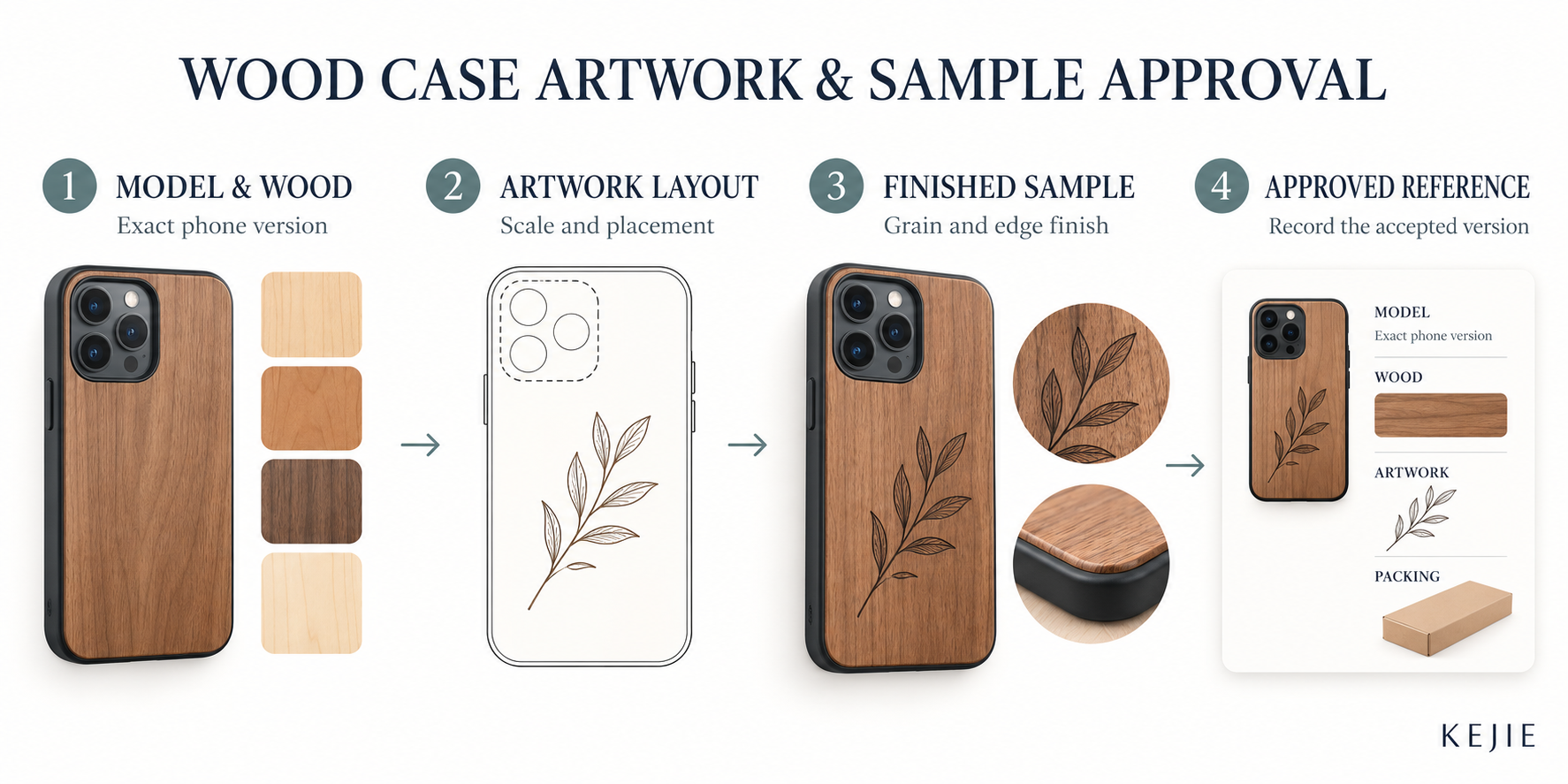
- Choose the model and wood: identify the full phone version, material option and intended finish.
- Approve the layout: confirm motif scale, orientation, camera clearance and any edge crop.
- Review the finished sample: compare grain, surface finish, line detail, logo appearance and exact phone fit.
- Keep your order records: keep the sample, artwork file version, model/material quantity split and packaging requirements together.
The logo artwork and sample approval guide helps organize the files and revision information. The wood, marking method and final appearance remain specific to this case and the approved sample.
Standard orders, engraving minimums and preparation
The standard order reference is 100 pieces. Confirm how it applies to the requested phone, wood and design quantity split. It is not stated as unrestricted mixing across all material and model combinations.
The Logo/graphic laser-engraving reference is 500 pieces. Keep that scope separate from the standard 100-piece order. A new illustration, changed wood, additional mark or altered packing should be included in the inquiry so the applicable minimum and sample details can be confirmed.
Preparation references are 10 days for the band up to 100 pieces, 12 days for 101–500 pieces and 15 days for 501–1,000 pieces. Quantities above 1,000 need an agreed schedule. Confirm availability and the applicable starting condition for the actual setup.
Artwork development, sample approval and transport should be planned separately where required. Sample availability, preparation, charges and freight are confirmed for the requested wood and design; the quantity-based preparation references are not a universal sample-time or delivery-date promise.
Relevant quotation factors include the selected wood, exact phone versions, quantities for each version, blank or decorated finish, engraving or printing scope, sample requirements and packaging. Identify the destination and target receipt date with the initial brief.
Packaging should protect the finish and identify the variant
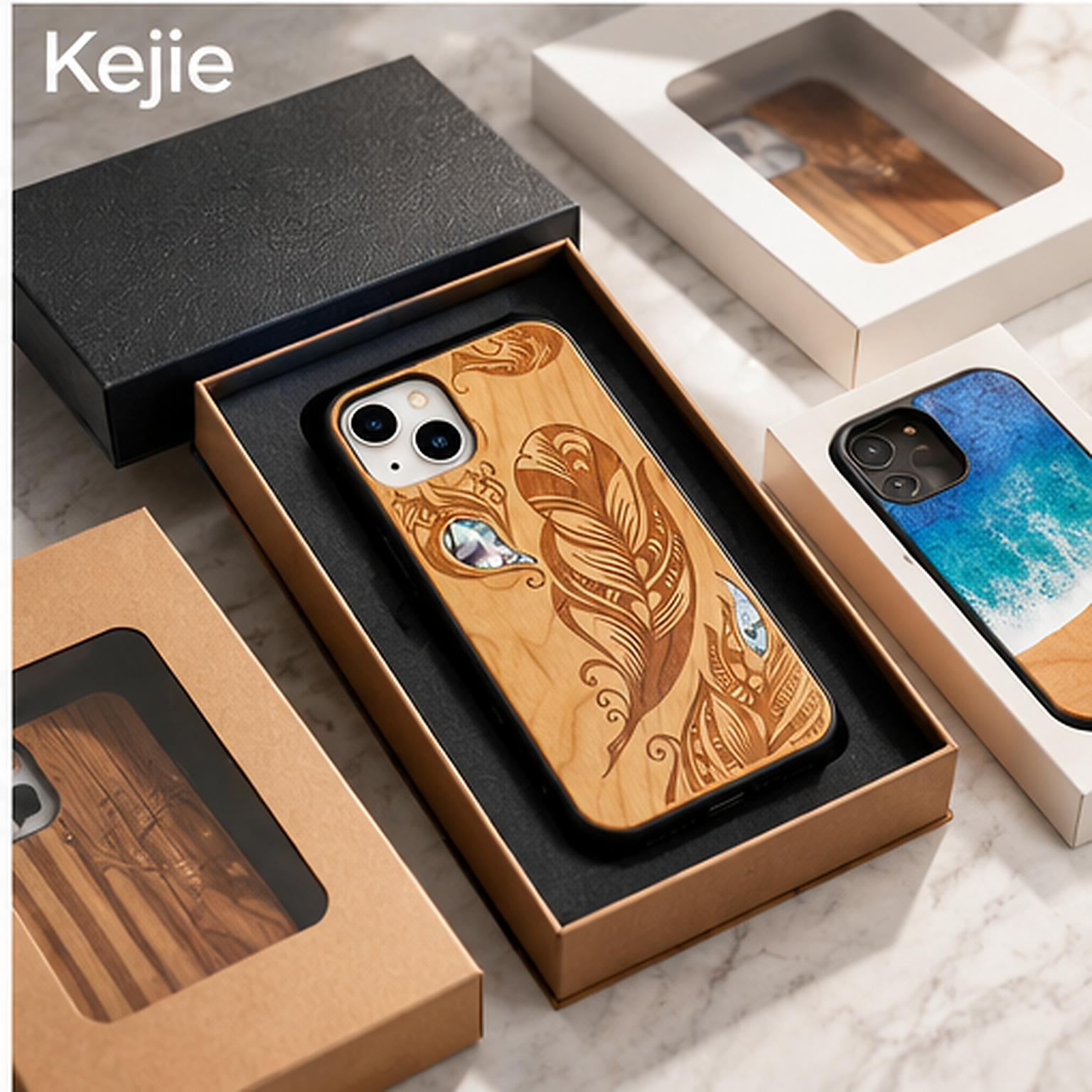
The basic packing direction is one case in an OPP bag. Paper-box and blister-box options can be discussed for the selected presentation. The pictured paper-box arrangements illustrate a packaging direction; choose the actual box, insert and artwork for the order.
The OPP packing reference is 250 pieces per carton. Confirm the final carton count for the chosen models and packaging: a change to a retail box or insert changes the packing plan. Match labels to the phone version, wood and artwork reference so different designs are not confused.
The packed-unit gross-weight reference is 0.04 kg, or 40 g. Obtain the final packed dimensions, carton dimensions and gross weight for the accepted setup before freight planning. A single dimensional reference must not be assigned to every phone size.
For a branded presentation, send the package artwork, model/design labels and required contents. Keep the case and packaging approval connected so the displayed design and material description match the packed product.
When to choose wood, textured TPU or a leather wallet
| Buyer task | Relevant direction | Main selection difference |
|---|---|---|
| Grain-led back with a logo or decorative illustration | This wood-back case | Wood, artwork and finished rear appearance |
| Flexible textured shell for an iPhone 17 project | Published textured TPU case below | Different material feel and rear treatment |
| Card storage and support for iPhone 13 Pro Max | Published genuine-leather wallet case below | Storage format, stand use and exact phone |
Choose the wood-back direction when grain and artwork define the collection. Choose the textured TPU direction when the flexible shell is the priority, or the leather wallet when the task includes carrying cards. These are product choices based on use, not an unsupported protection ranking.
The published alternatives below have their own specifications and model requirements. For other coverage-focused formats, browse the shockproof phone case collection; the category name does not replace product-level fit or test approval.
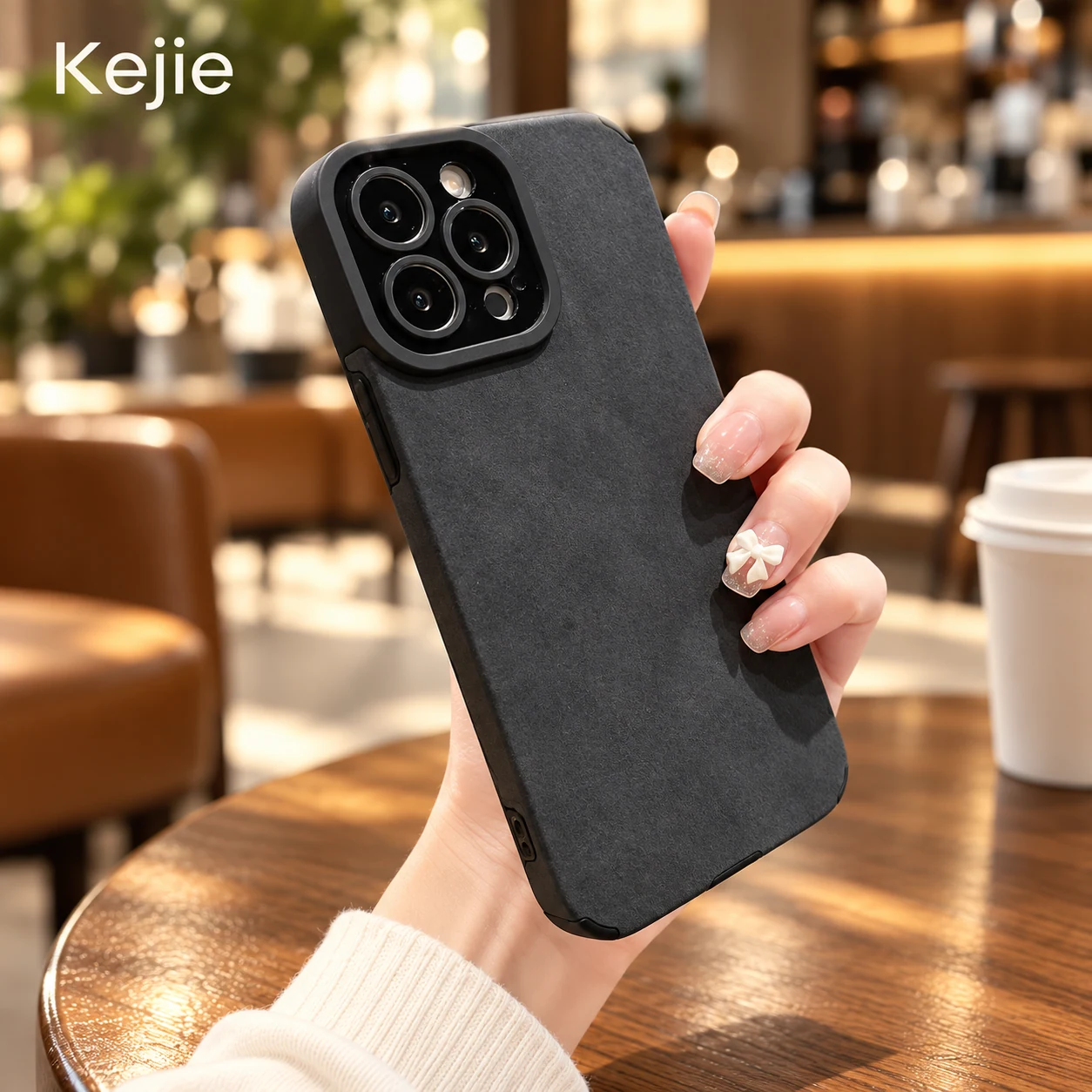
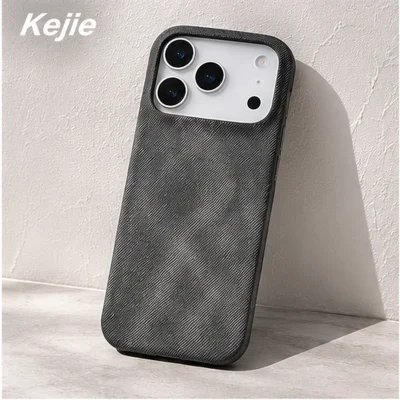
Matte Imitation Leather Texture Shockproof TPU Case for iPhone 17 Series
Compare the matte imitation-leather-texture TPU case for an iPhone 17 project that favors a flexible, textured shell over a wood panel and engraved artwork. Its material and finish are different; choose the exact phone version before comparing samples.
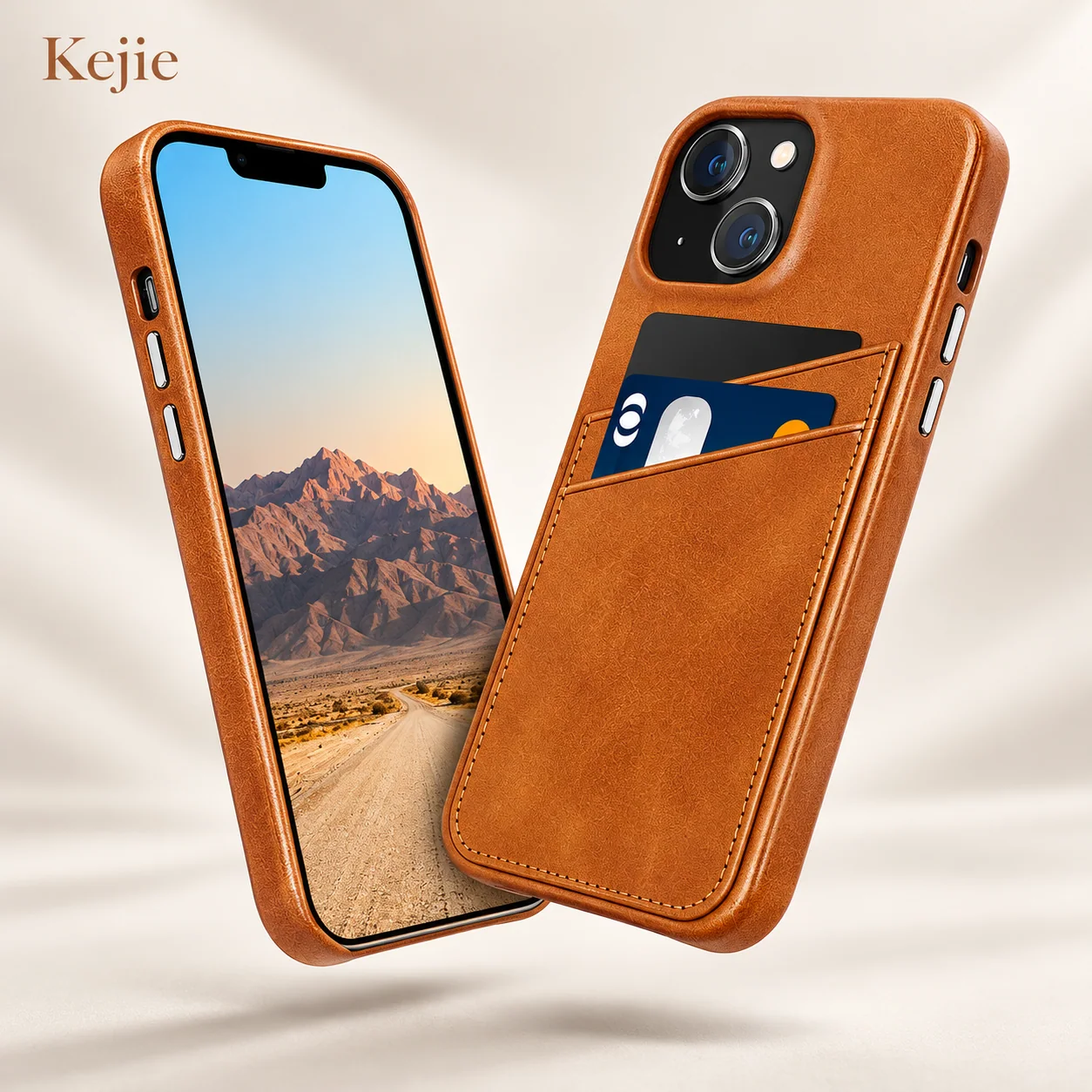
Vintage Genuine Leather Wallet Card Holder Kickstand Case for iPhone 13 Pro Max
For an iPhone 13 Pro Max project requiring card storage and desk support, compare this genuine-leather wallet/kickstand case. It changes the material and carrying task rather than providing another wood finish.
Quality checks for grain, artwork, fit and packing
Use the accepted finished case, artwork file version and material reference for inspection. The review should cover the decorative back and the fitted case together.
- Wood and finish: match the agreed material and appearance reference, including grain, shade and surface feel.
- Artwork check: compare the motif, scale, orientation, logo and artwork file version with the approved layout.
- Mark and edge quality: inspect line clarity, visible boundaries, corners and finished transitions against the approved sample.
- Phone fit: check seating, camera opening, controls, cable access and any intended accessory on the exact phone.
- Decorative setup: check their position and finished look against the chosen design.
- Packing and identification: check the model/wood/design labels, unit protection, quantities and agreed packing format.
The phone case sample review guide helps separate initial selection from final approval. If a specific impact test or material declaration is required, agree the method and applicable setup before the order.
Questions about wood, engraving and order selection
Can I request a blank wood back instead of a decorated design?
Yes, the blank direction can be included in the inquiry. Specify the exact wood, phone version and finish; select the decorated reference separately if an engraving or other appearance treatment is required.
Are bamboo, maple, cherry and walnut interchangeable?
They are separate material options. Approve the wood and finish with the artwork so grain, tone and the completed mark correspond to the intended product.
Does the 100-piece reference include a new laser-engraved logo?
The standard order reference is 100 pieces, while the Logo/graphic laser-engraving reference is 500 pieces. Confirm the actual model, material and artwork quantity split for the requested scope.
Can one artwork layout be used on every phone version?
The source artwork can remain the design starting point, but the layout must match the selected rear outline and camera area. Reapprove scale, placement and crop where the phone version changes.
Does a wood back mean the complete case is made only from wood?
No. This is a wood-faced back within a fitted protective case. Confirm the complete shell construction if a specific supporting material is required.
Is the 40 g reference the bare case weight?
No. It is the packed-unit gross reference. Final package and carton data should be confirmed for the chosen phone, finish and packing setup.
Request a wood and artwork-specific quotation
Send the full iPhone model list, quantity by wood/design, blank or decorated reference, artwork dimensions and any packaging requirements. Add sample needs, destination and target receipt date so the quotation covers the actual project.
 English
 Español de Argentina
 Русский
 Italiano
 日本語
 한국어
 العربية
 Français
 Deutsch