
The right iPhone 17 slim case should feel easy to hold, fit the exact phone and leave room for the features your buyers use. Start with clear TPU for a see-through finish, textured TPU for a different hand feel, or a thin aramid-style case for the listed Pro models. When choosing an iPhone 17 slim case manufacturer, compare fitted samples and case-only measurements—not just the word “ultra-thin.” Kejie can help you check the product, phone version, logo and packaging before a bulk order.
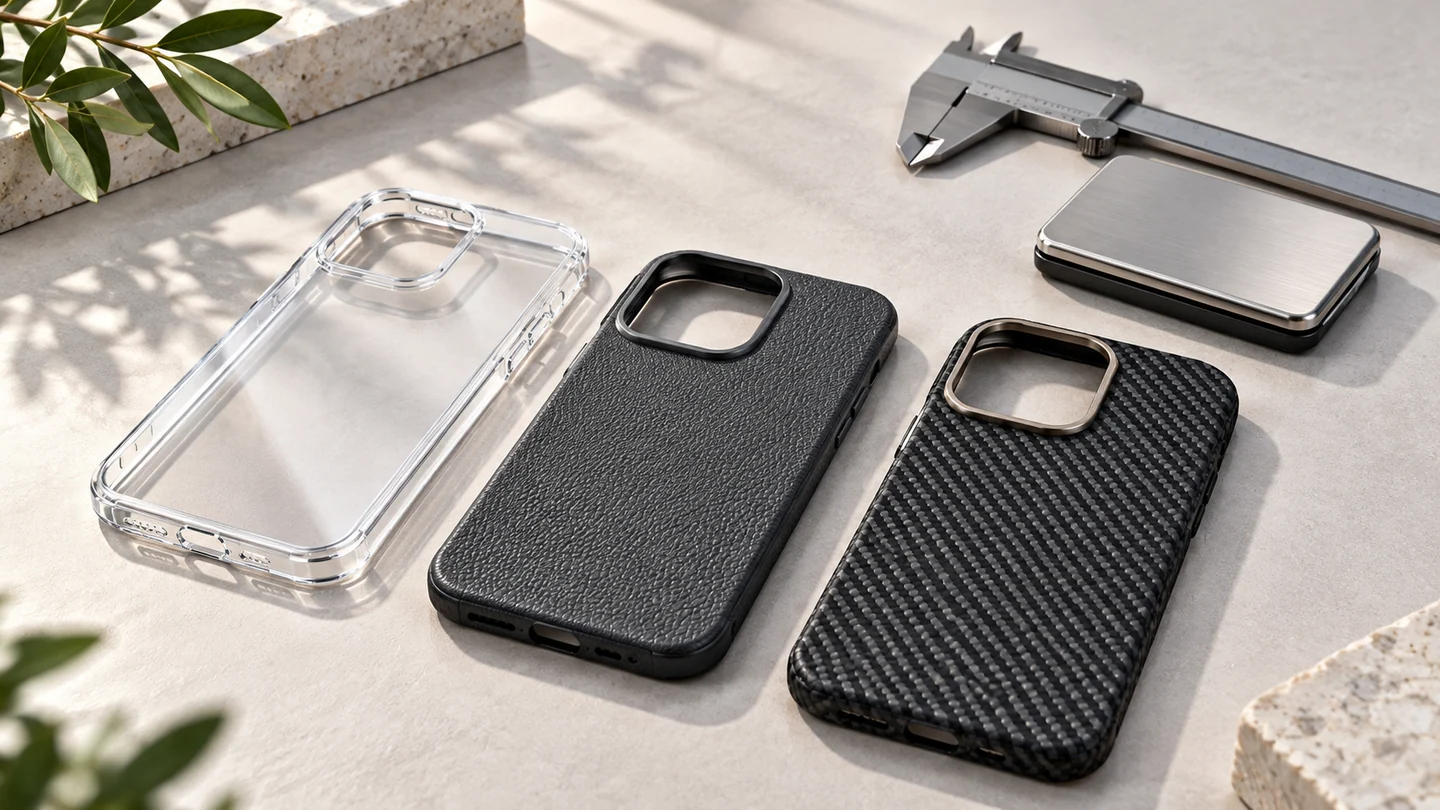
Choose the feel first. Confirm the size on a sample.
- Show the phone: start with a clear TPU shell.
- Prefer a textured back: try matte textured TPU in your hand and pocket.
- Want a woven finish: compare the aramid option for its listed Pro / Pro Max models.
For standard iPhone 17 orders, start with the matching TPU versions below. The aramid example is not a confirmed standard-iPhone-17 fit.
Three Kejie examples to compare
These examples show three buying choices. They are not a thickness ranking. No comparable, confirmed case-wall thickness or case-only net-weight figures are available for this set.
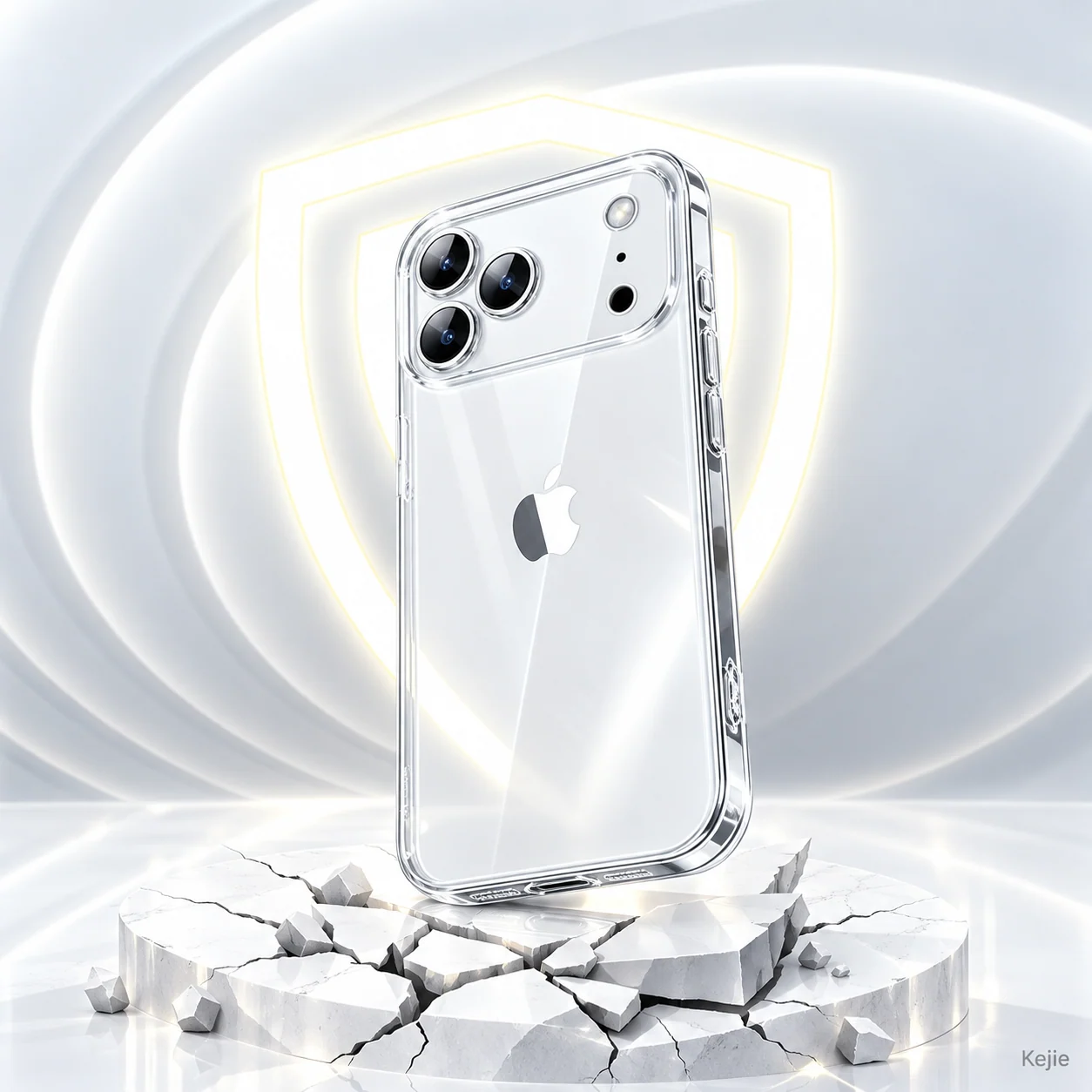
Ultra-Thin Clear TPU Case
iPhone 17 / 17 Pro / 17 Pro Max
- Flexible clear shell; shows the phone’s color.
- Check corner fit, button feel and surface marks.
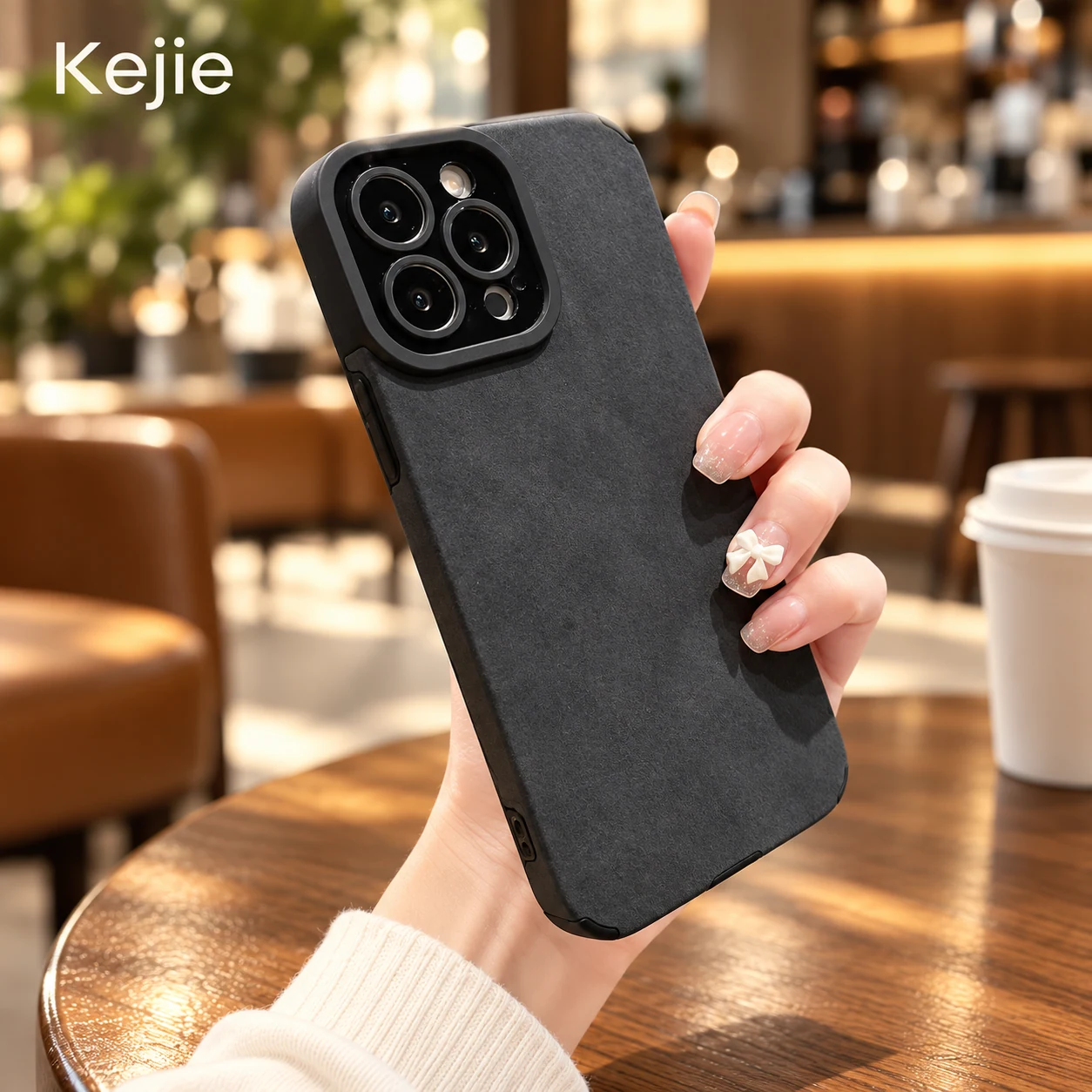
Matte Leather-Texture TPU Case
iPhone 17 / 17 Pro / 17 Pro Max
- TPU with a leather-like texture; this does not mean it has a leather layer.
- Check how it feels to hold, slide into a pocket and touch around the edges.
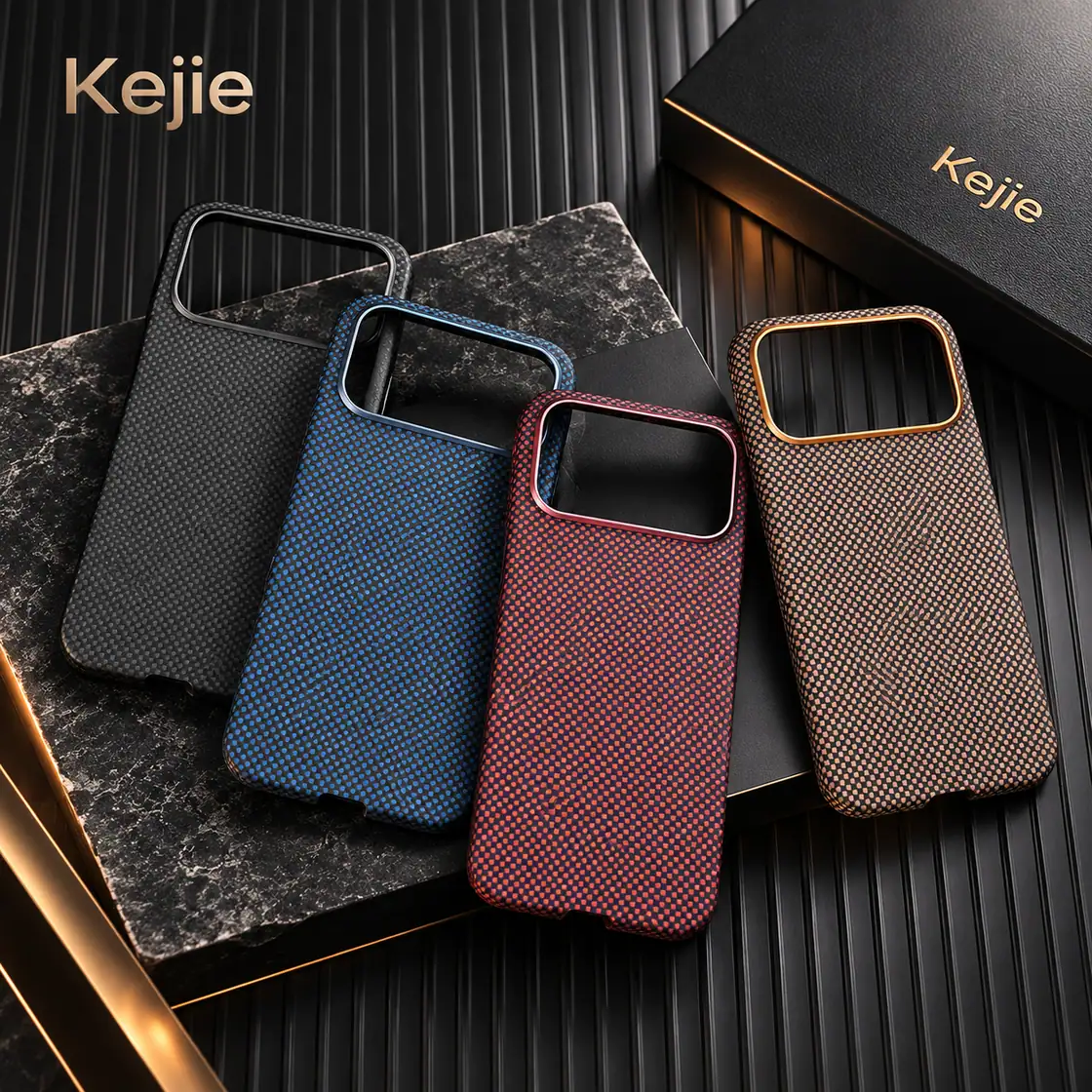
Ultra-Thin Aramid Magnetic Case
iPhone 17 Pro / 17 Pro Max
- Woven aramid/composite finish, metal camera-frame detail and magnetic function.
- Confirm the material layers, thickness on the phone and fit with your accessories.
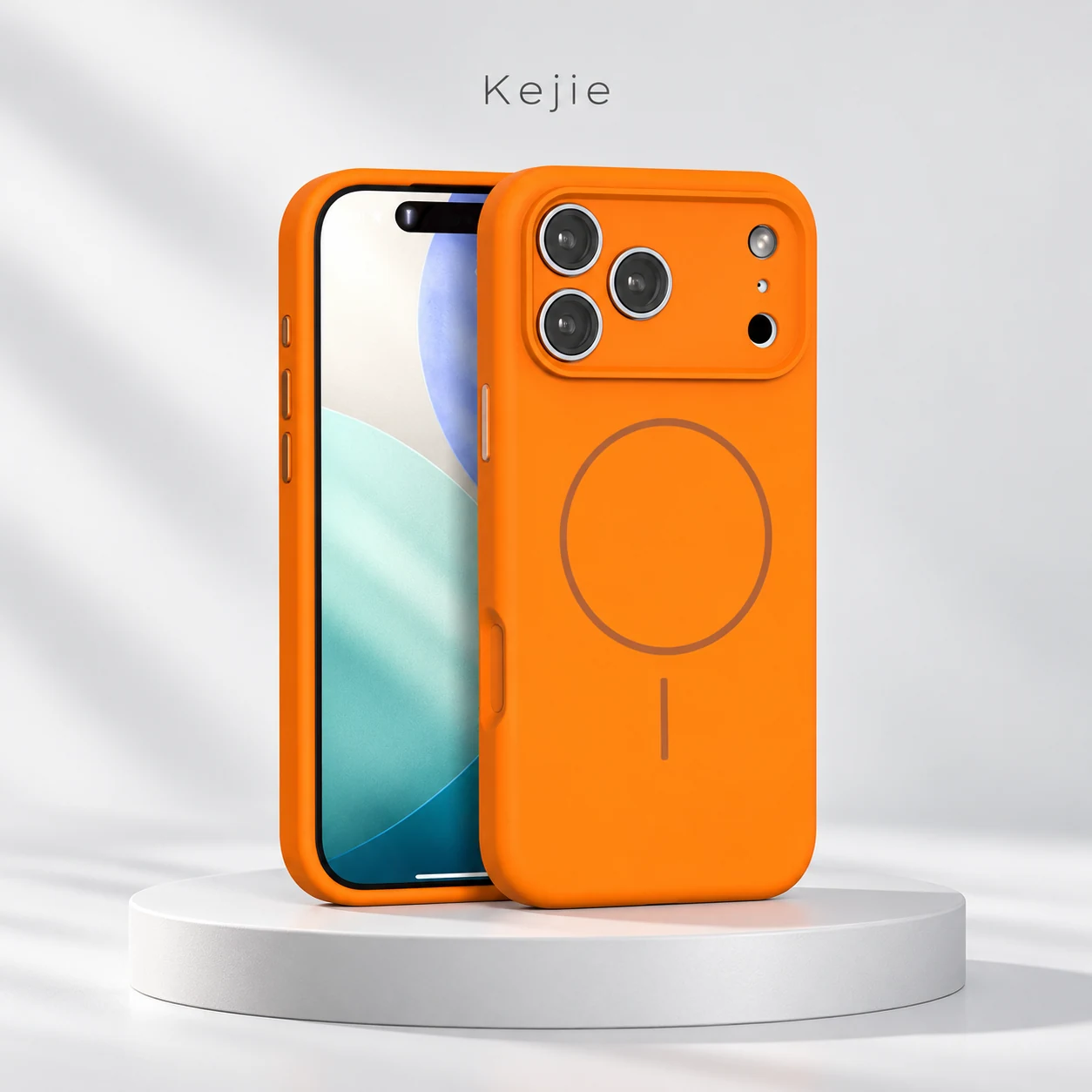
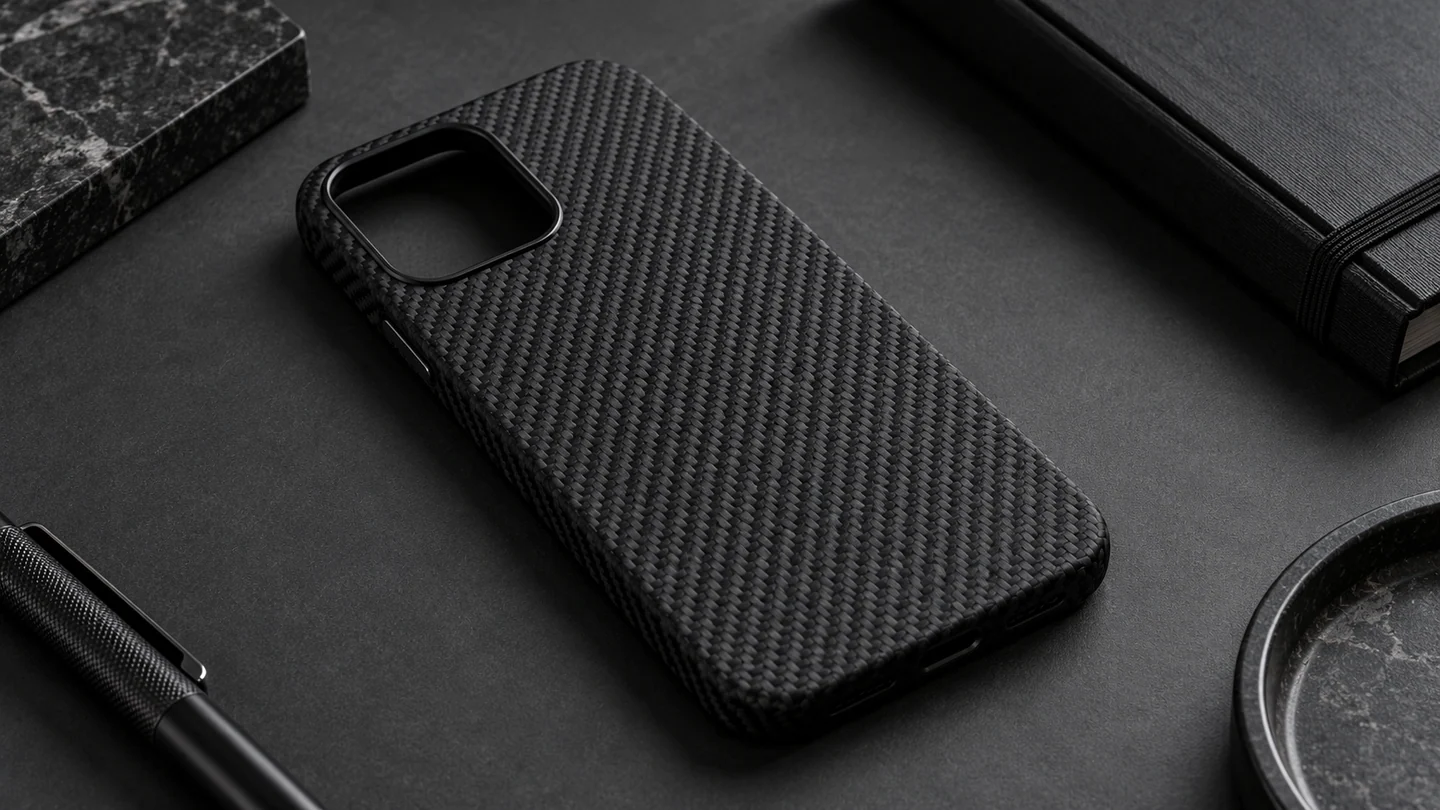
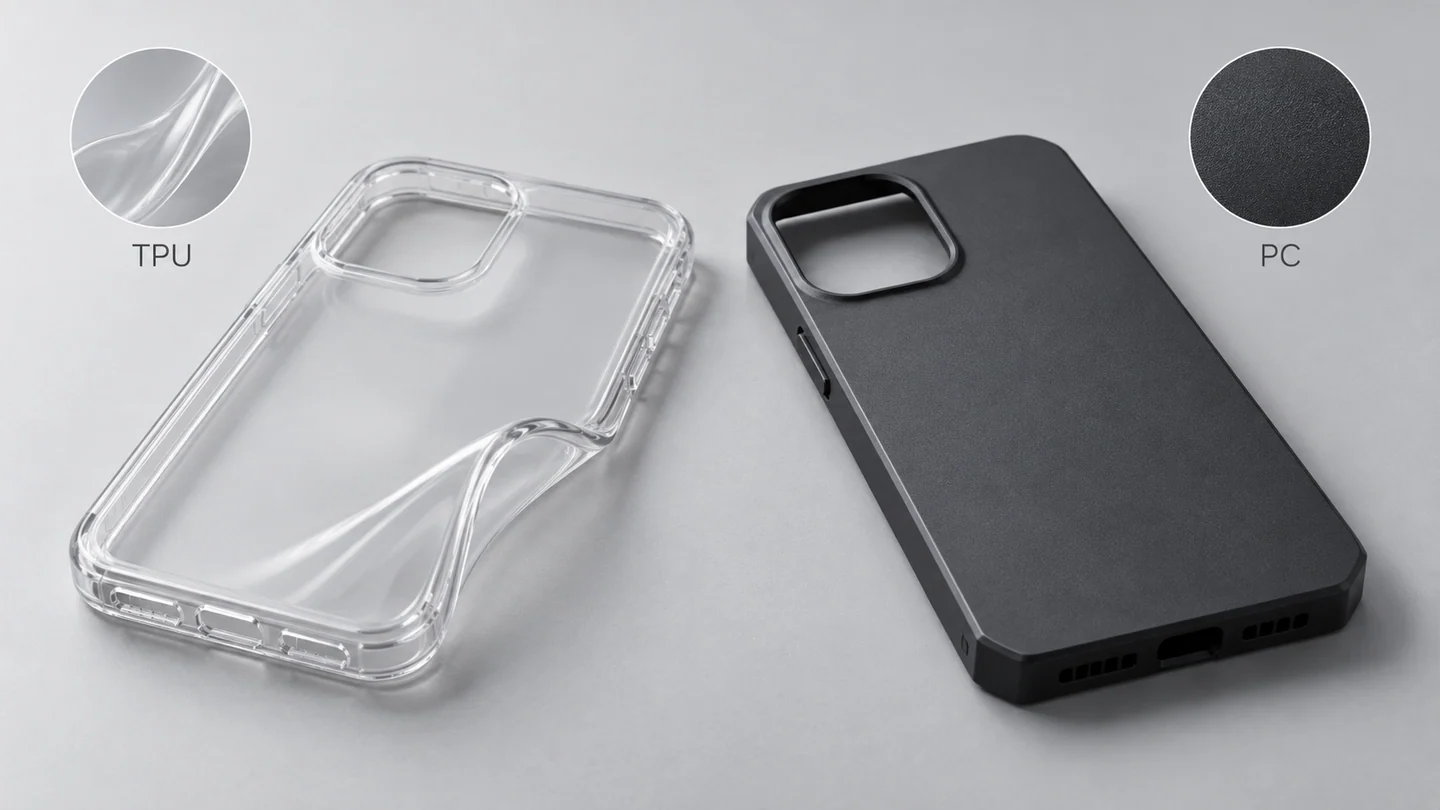
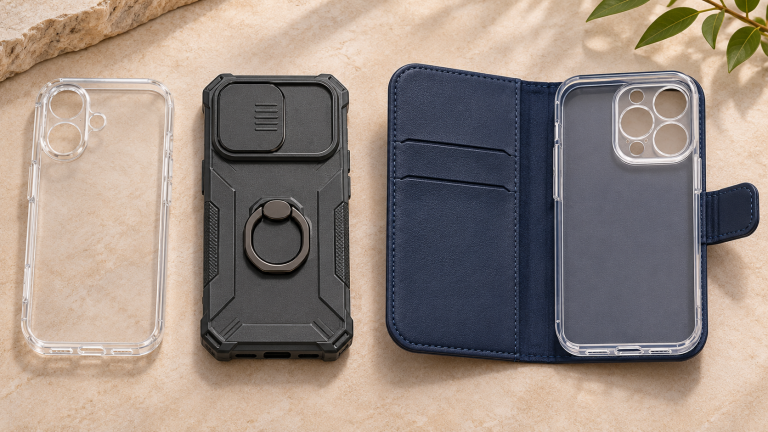
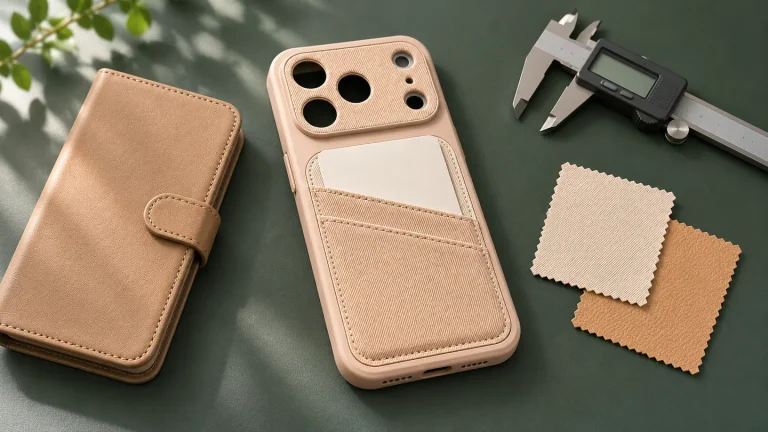
Figures 2–4: Clear TPU, textured TPU and the listed aramid/composite example. Each phone model needs its own fitted version. Confirm the current model and material details before ordering.
The aramid product lists a standard minimum of 50 pieces per model/color; the textured TPU product lists a 100-piece order reference, with its model/color mix to confirm. These are product-specific references, not a shared minimum for every slim case. See how order minimums differ.
What do you give up when you choose a slimmer case?
Compare the same phone model. A thinner back does not tell you everything about grip, edge coverage or magnetic use.
| Priority | What can change | What to try |
|---|---|---|
| Pocket comfort | Back thickness, camera rim, edge shape and any added stand all affect bulk. | Put the fitted phone in the pocket or bag your customer uses. |
| Grip | A textured surface feels different, but is not necessarily easier to hold. | Try one-hand use and pocket removal. Check whether the surface catches fabric. |
| Protection | Less material may leave less room for cushioning. Coverage and fit still matter. | Check corners, screen lip and camera rim. Ask for test evidence for that case if you need to claim drop protection. |
| Magnetic accessories | A ring or metal part can change the thickness and feel of the back. | Test the case with the exact phone and accessory you plan to use. A visible ring is not a charging certification. |
| Easy fitting | A flexible TPU shell and a rigid composite shell fit differently. | Fit and remove the case using the supplier’s instructions. Check for gaps, stress marks and loose edges. |
Choose a slightly bulkier case if your buyer needs stronger corner coverage, a stand or card storage. Do not force every requirement into the thinnest-looking shell.
For a material comparison, read TPU vs PC. For woven cases, see aramid materials and buying checks.
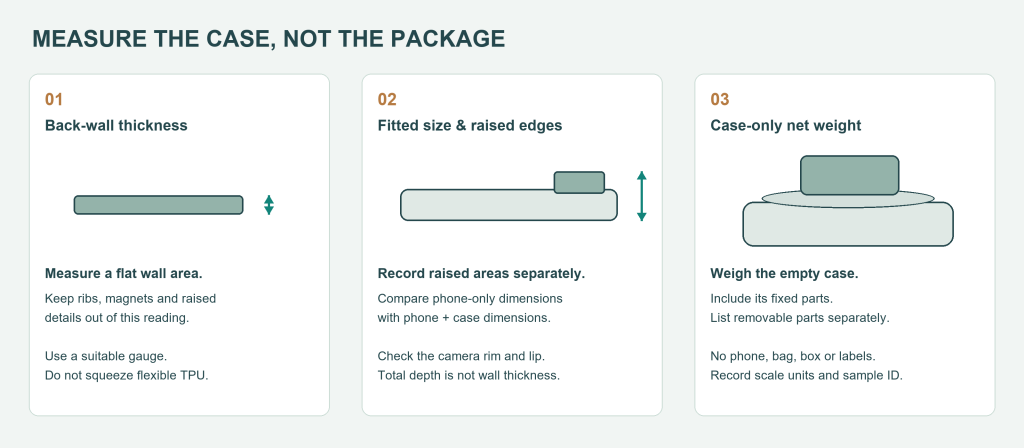
Ask for thickness and weight measured the same way
“Slim” has no single thickness limit in this guide. Give the supplier a measurement method so samples can be compared fairly.
| Measurement | Ask the supplier to record |
|---|---|
| Back-wall thickness | Measurement point, tool and units. Use flat areas away from reinforcing ridges, magnets and raised details. Do not squeeze flexible TPU. |
| Fitted size | Phone-only and phone-with-case width/depth using the same method. Record the camera bump and raised edges separately. The size difference does not directly tell you how thick the case wall is. |
| Case-only net weight | The empty case with its fixed parts. Exclude the phone, bag, box, inserts and shipping labels. List removable parts separately. |
| Sample details to record | Exact phone model, product version, color, included parts, sample ID and measurement photos. Measure more than once and record the lowest and highest readings. |
The clear TPU listing shows package dimensions and gross weight. The aramid listing also shows package size and gross weight. Those figures cannot tell you the shell’s wall thickness or net weight. Request case-only measurements for the exact version you plan to buy.
Do not copy a thin-case measurement from a different phone model, another product or a picture. If a figure has not been confirmed, leave it out of your product claim.
Six fit checks before you approve a slim case
- Match the full phone name. Keep iPhone 17, 17 Pro and 17 Pro Max on separate order lines. Treat iPhone Air and 17e separately.
- Check that every corner fits snugly. Look for lifted edges, gaps or an edge that comes off during normal handling.
- Try every button and control. Check buttons and Camera Control access with the case fitted.
- Check the fit around the screen and cameras. Fit your intended screen or lens accessory. Check taps, swipes, flash and camera openings.
- Plug in your cable. Check that the whole plug fits through the opening, not just the connector tip.
- Test the accessories that attach to the back. Try the actual charger, wallet, grip or mount you plan to use. Check that each accessory sits correctly and does not get in the way.
Use the iPhone 17 product range to identify a starting design. Apple’s model guide helps identify the phone; Apple’s iPhone 17 specifications describe the device, not the thickness or protection of a third-party case.
What should you ask an iPhone 17 slim case manufacturer?
A useful answer names the actual case and phone version, rather than repeating “lightweight” or “premium.”
| Ask this question | What a clear answer should include |
|---|---|
| Which exact phone does this sample fit? | Full phone name and the matching case version. Photos should show the same version you will receive. |
| What is the case made of? | Main material, any support layer, coating, camera frame and fixed magnetic parts. A woven pattern alone does not tell you which fiber is used. |
| How was thickness and weight measured? | Measurement points, units, included parts and photos. Keep package figures separate. |
| Will my charger or mount work? | The phone and accessory combination to test. Ask separately for any claimed certification documents. |
| Can you add my logo? | Suitable method, usable area and a branded sample to approve. Avoid control openings, flexible edges and textured areas that cannot hold fine detail clearly. |
| What changes when I order in bulk? | Quantity by model/color, sample type, logo and packaging requirements, current minimums and a delivery schedule that states when the clock starts. |
Kejie’s OEM & ODM service is a starting point for discussing those changes. A logo request does not automatically confirm a new mold, a specific printing method or the same minimum quantity as stock cases.
Send Kejie a simple slim-case sample request
Choose one product link above, then send these details. If you are unsure about material, describe the hand feel and features you need.
- Phone: exact model and any screen/lens protector.
- Case: product link, preferred material and color.
- Size target: how slim you want it to feel on the phone; any thickness or case-only weight target and how to measure it.
- Accessories: charger, wallet or mount model, if needed.
- Order: quantity by phone model/color, logo, packaging and destination.
Ask whether you will receive an existing case or a sample with your requested changes. Confirm sample fees, shipping costs, timing and what to check before a bulk order. Keep the approved sample and measurement record with the final order.
Common buying questions
Is aramid always thinner or lighter than TPU?
No. Compare actual cases for the same phone model. Material names alone do not tell you the finished thickness, weight or included parts.
Can a slim magnetic case replace a rugged case?
Not automatically. Decide how much edge coverage, cushioning and accessory support you need. Confirm any protection claim for the exact product.
Do I need a custom sample for my logo?
A stock sample lets you check the existing case. A sample with your logo and agreed finish is needed to approve how that change looks and holds up. Ask Kejie about the sample options and costs.
More help before your first order
Phone Case Samples: How to Check a Supplier’s Samples Before a Bulk Order
Know what each type of sample can confirm.
Aramid Fiber Phone Cases: Materials, Benefits and Sourcing Guide
Check fiber names, layers and finished-case details.
TPU vs PC Phone Cases: Which Material Is Better?
Understand flexible TPU and hard PC parts.
Low MOQ Phone Cases Wholesale: Stock, Custom Logo & Packaging Requirements
Separate product, model, color and branding minimums.
Start with the right phone version and a fitted sample. Kejie can review your chosen design, quantity and custom requirements before confirming a quote. Discuss your slim-case order →
 English
 Español de Argentina
 Русский
 Italiano
 日本語
 한국어
 العربية
 Français
 Deutsch