
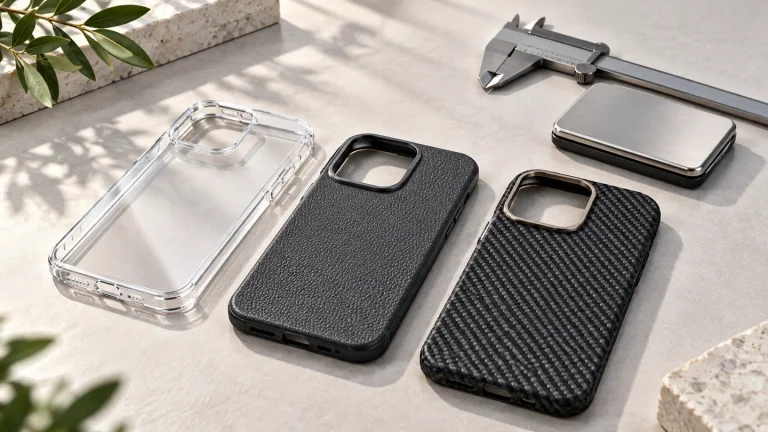
Silicone or TPU: which phone case is better for your wholesale range? There is no universal winner. Compare the intended surface feel, complete construction and required functions: a silicone-outer candidate may suit a soft-touch, solid-color range, while a TPU-based design needs its grade, finish and structure defined. A PC support layer, coating and geometry can change the result, so approve the finished sample rather than choosing by material name alone.
These two Kejie products are concrete starting points. Both are hybrids; their photographs are not a controlled comparison of pure silicone and pure TPU.
Silicone exterior + PC support
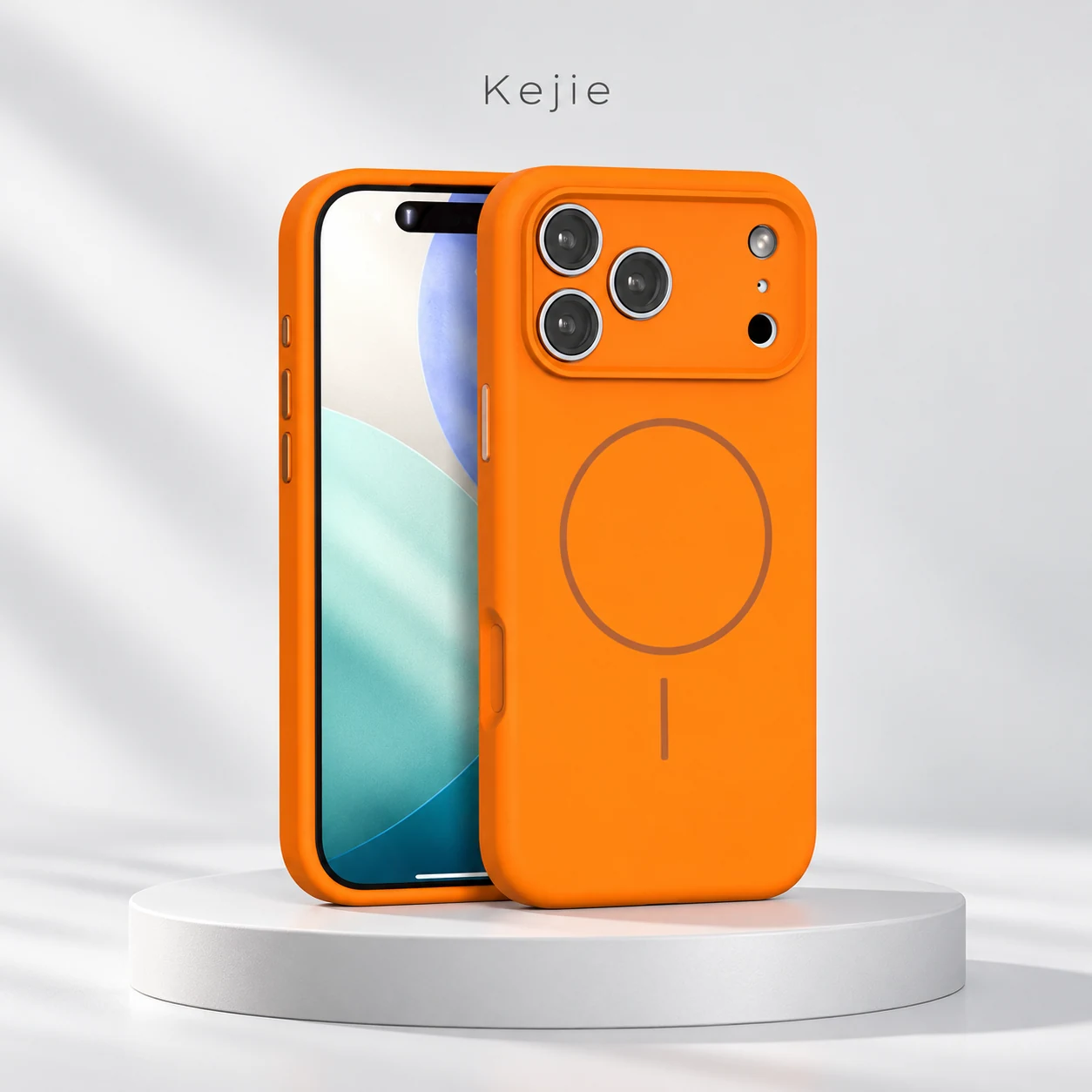
Customized Silicone + PC Magnetic Shockproof Case for iPhone 17 Series
Confirmed direction: silicone + PC, solid-color/soft-touch styling and logo/text customization. Confirm the exact finish and application method.
TPU + PC print-led structure
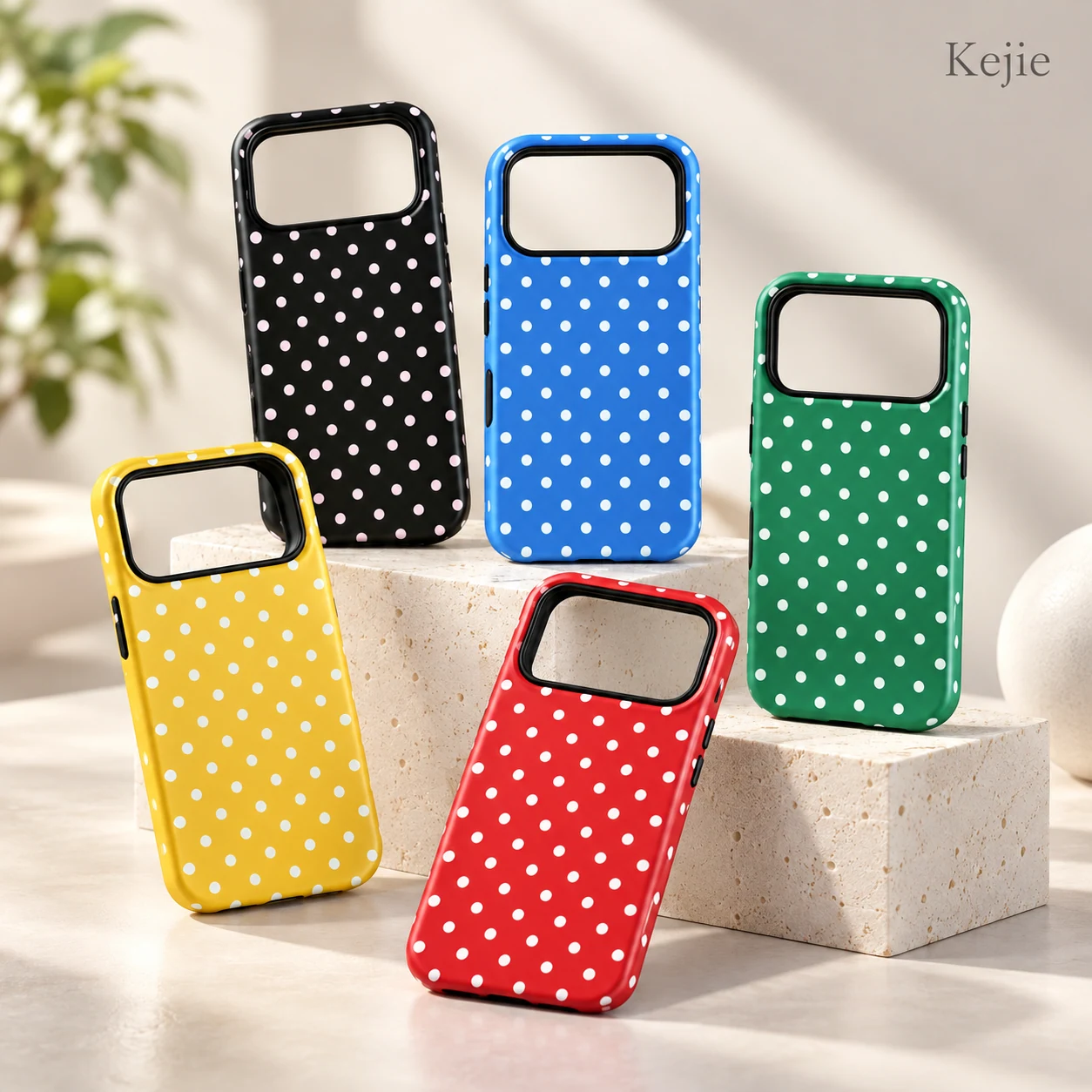
Custom Magnetic Polka Dot TPU + PC Shockproof Case for iPhone 17 Series
Confirmed direction: TPU + PC construction with custom printing and ODM. Confirm which component receives the artwork.
Compare suitable case platforms with Kejie →
Three names that must stay separate
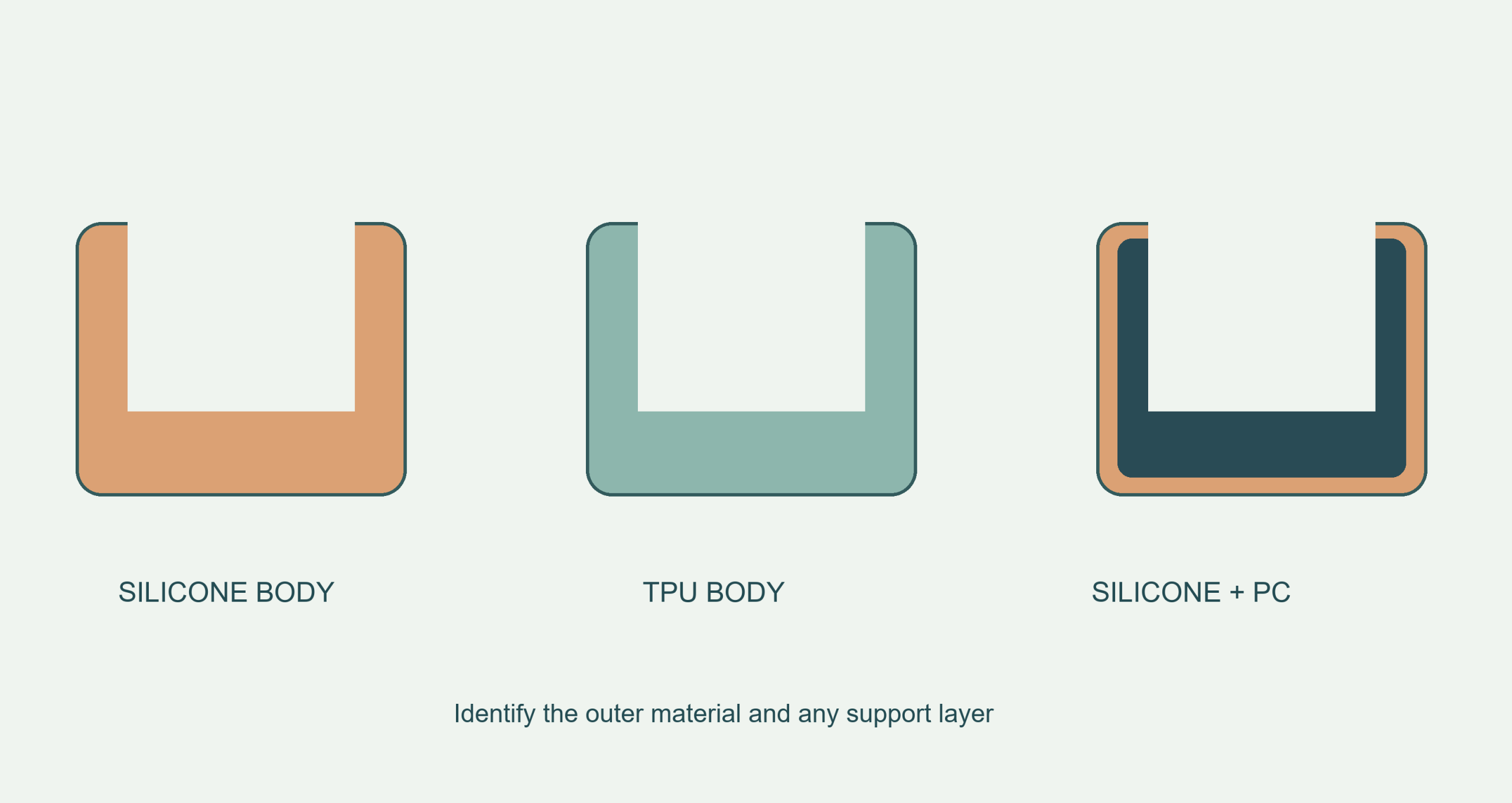
- Silicone rubber
- A silicone elastomer material family, distinct from TPU. Silicone rubber is cured into an elastic network; “silicone” alone does not specify the formulation, surface treatment or a complete case’s layers.
- TPU
- Thermoplastic polyurethane: a thermoplastic elastomer family with multiple grades. TPU is not silicone. A TPU description does not mean every grade has the same stiffness, appearance or durability.
- Silicone + PC
- A construction description: silicone at the outer surface with a PC supporting component in the selected product. It is not an all-silicone shell. Likewise, TPU + PC should not be described as an all-TPU case.
For terminology, see WACKER’s silicone rubber material guide and BASF’s TPU overview. These general material references do not identify the resin brand or grade in the Kejie products.
“Soft-touch,” “rubber feel” and “silicone-like” describe an appearance or sensation, not reliable composition. Ask for the outer material, support structure, lining and any applied finish. The existing TPU vs PC material guide explains the flexible-material versus rigid-support distinction in more detail.
Five questions that change a wholesale choice
| Purchase question | Silicone-based candidate | TPU-based candidate |
|---|---|---|
| 1. How will it feel? | A soft-touch exterior can suit a tactile, solid-color range. Review the actual finish and grip. | Feel can range with grade, texture and finish. Check flexibility and surface drag on the selected case. |
| 2. Will lint be noticeable? | A grippy surface may retain visible pocket lint. Color, coating and cleaning behavior matter. | Do not assume TPU is dust-free. Check the actual textured/coated surface under the same use conditions. |
| 3. What creates the appearance? | Confirm base color, texture, coating if used, and the finish after handling. | Confirm clear/colored/printed construction, finish and which component carries the visual effect. |
| 4. Where does the logo go? | Review the application method on the exact silicone outer finish; test a decorated sample as agreed. | Identify TPU versus PC print areas. A method suitable for one component is not automatically suitable for the other. |
| 5. What supports the shape? | An all-silicone body and a silicone + PC case can handle differently. Confirm the actual structure. | A single-material TPU shell and TPU + PC hybrid are different candidates. Review structure, thickness and fit together. |
Read the finish as a separate specification. A coating or texture may alter friction, visible marks, cleaning and decoration behavior. Ask what the proposed surface treatment is and whether its appearance changes with the agreed handling checks. Do not treat a “matte” label as proof of anti-dust, anti-fingerprint or a defined service life.
Grip in a hand, ease of sliding into a pocket and grip on a desk are different observations. Decide which matters most for the intended customer instead of treating all friction as an advantage.
Compare finished samples under the same conditions
- Match the use case. Use the same exact phone variant, comparable coverage and required features where possible. Record construction differences; they prevent a simple material-only conclusion.
- Compare handling. Check installation, buttons, one-handed holding, pocket insertion/removal and normal surface contact. Describe the observation rather than awarding an unsupported grip score.
- Review lint and cleaning. Use the same fabric/contact conditions and record what is visible before and after the agreed cleaning method. Follow the supplied care guidance; do not assume harsh cleaners are suitable.
- Approve the decorated finish. Use the intended logo/pattern and check placement, detail and surface behavior. Agree any rub, adhesion or flex method and acceptance criteria before claiming durability.
Keep the comparison reproducible
Sample ID / phone model / outer material / support layer / surface finish / artwork revision / condition or action / observation / cleaning or recheck result / decision.
This is a buyer comparison method, not a report of completed testing. Material names and casual handling do not establish drop protection, yellowing lifetime or certification.
Which material direction fits your wholesale range?
-
Soft-touch, coordinated solid colors
Start by reviewing the silicone + PC platform above. Confirm pocket behavior, cleaning, color/finish consistency and decoration. Ask Kejie for the relevant silicone + PC configuration; this is a hybrid recommendation, not a claim about every silicone case.
-
Artwork-led retail range
The TPU + PC polka dot platform provides a concrete custom-printing direction. Confirm the print-bearing component, background and finish before changing the artwork. Review the print-led TPU + PC option with Kejie.
-
A flexible shell or a different visual requirement
Ask for a candidate with the required confirmed construction. Do not substitute one of the pictured hybrids for a requested single-material shell, or infer clear-case availability from a polymer name. Compare the nominated sample against your brief.
Ask suppliers to quote the same material and construction
Send the exact phone models, outer/support materials, desired surface feel, color/texture, logo files and location, magnetic/stand requirements, units per variant and packaging needs. Explain whether grip, pocket handling, cleaning or visual design has priority.
Ask for the material/finish description, sample scope, feasible decoration method and a quotation against that specification. Model, finish, artwork, quantity and packaging affect procurement terms; there is no universal price advantage, MOQ or schedule established by the words silicone and TPU.
Kejie’s OEM/ODM service provides the next step when the range needs coordinated finishes, artwork or structural review.
Compare silicone phone case options for OEM orders
Review my material and finish priorities with Kejie →
The better purchase is the construction and finish that meet the agreed use and sample requirements. Keep that approved specification when expanding colors or repeating an order.
 English
 Español de Argentina
 Русский
 Italiano
 日本語
 한국어
 العربية
 Français
 Deutsch