
Quick answer: TPU for flexibility, PC for structure
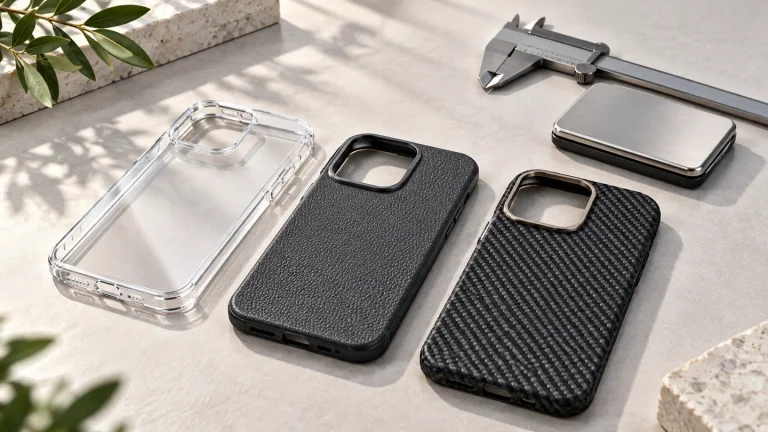
TPU is the practical choice for flexible installation and grip-focused everyday designs. PC is useful for a rigid back or shell, defined geometry and decorated surfaces. Neither material is universally better: the right choice depends on the finished case structure, fit, finish and protection requirements.
For a wholesale range that needs both flexible edges and a structured back, compare a TPU + PC hybrid. Kejie offers TPU and hybrid platforms that let you evaluate these trade-offs on a concrete product, then confirm the exact phone version and sample criteria.
Choose your phone case material with Kejie
Share your device models, target price tier, finish and order quantity. Kejie can help compare flexible TPU and hybrid TPU + PC platforms for your OEM or private-label range.
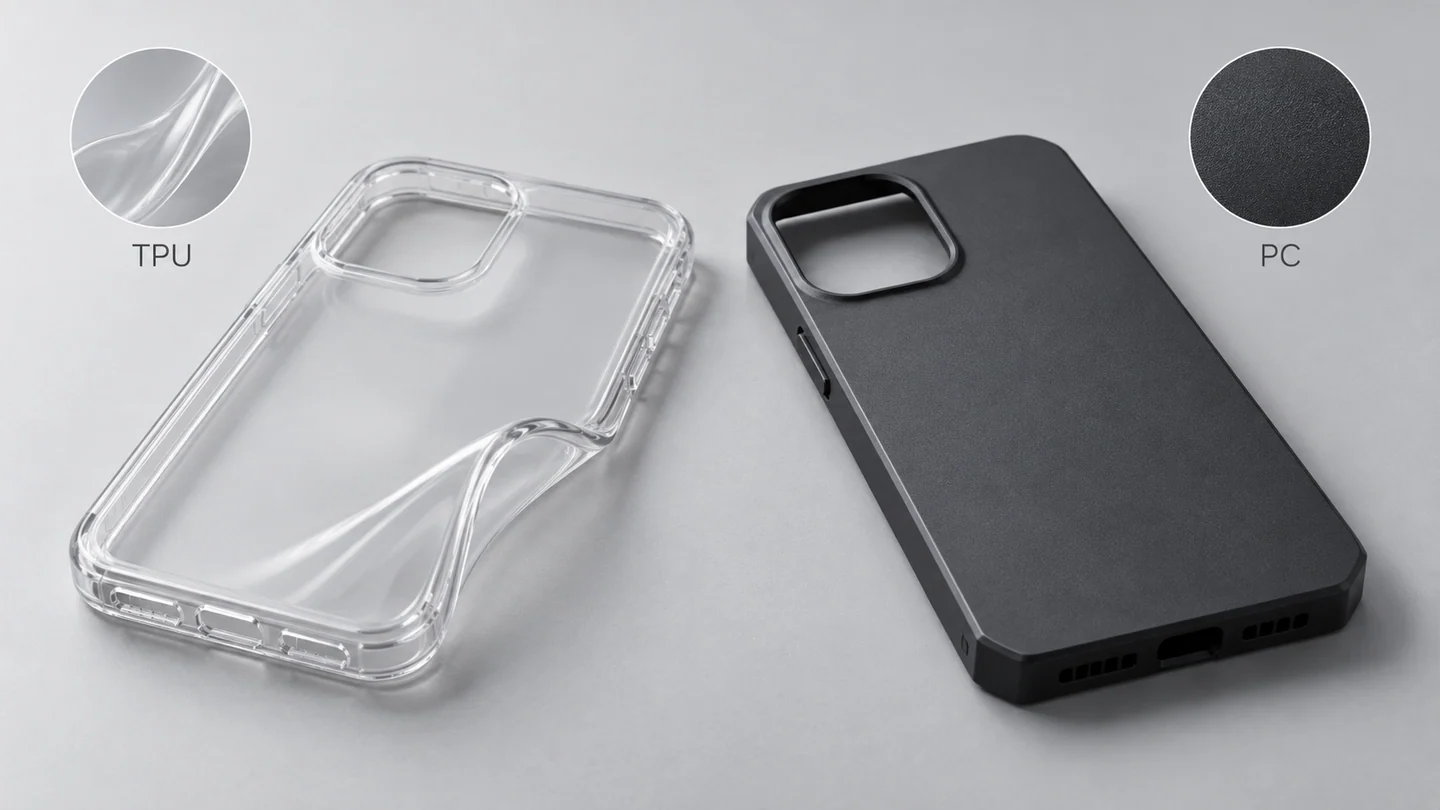
Kejie product platforms: put the material comparison into practice
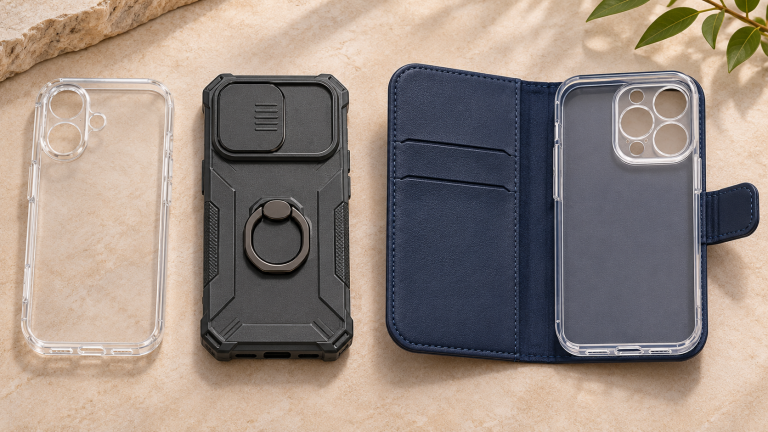
For an everyday flexible case, start with Kejie’s matte TPU platform. For a rigid back with flexible edges, compare the clear or custom-printed TPU + PC options. These are specific product references, not a claim that one construction wins every test.
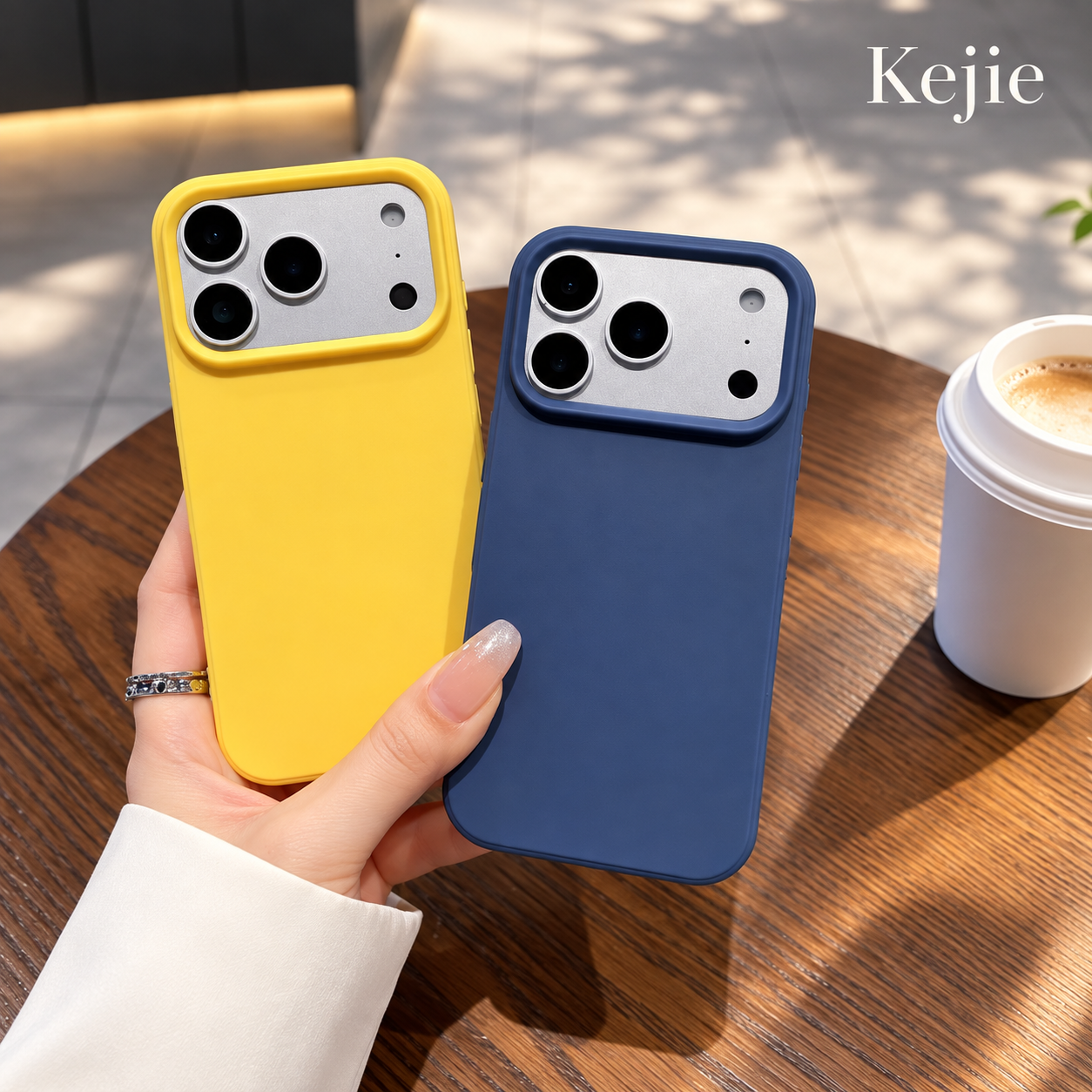
Flexible matte TPU case
A solid-color TPU option for a grip-focused everyday range. Discuss the exact model list, custom color or logo and packaging before comparing the quotation.
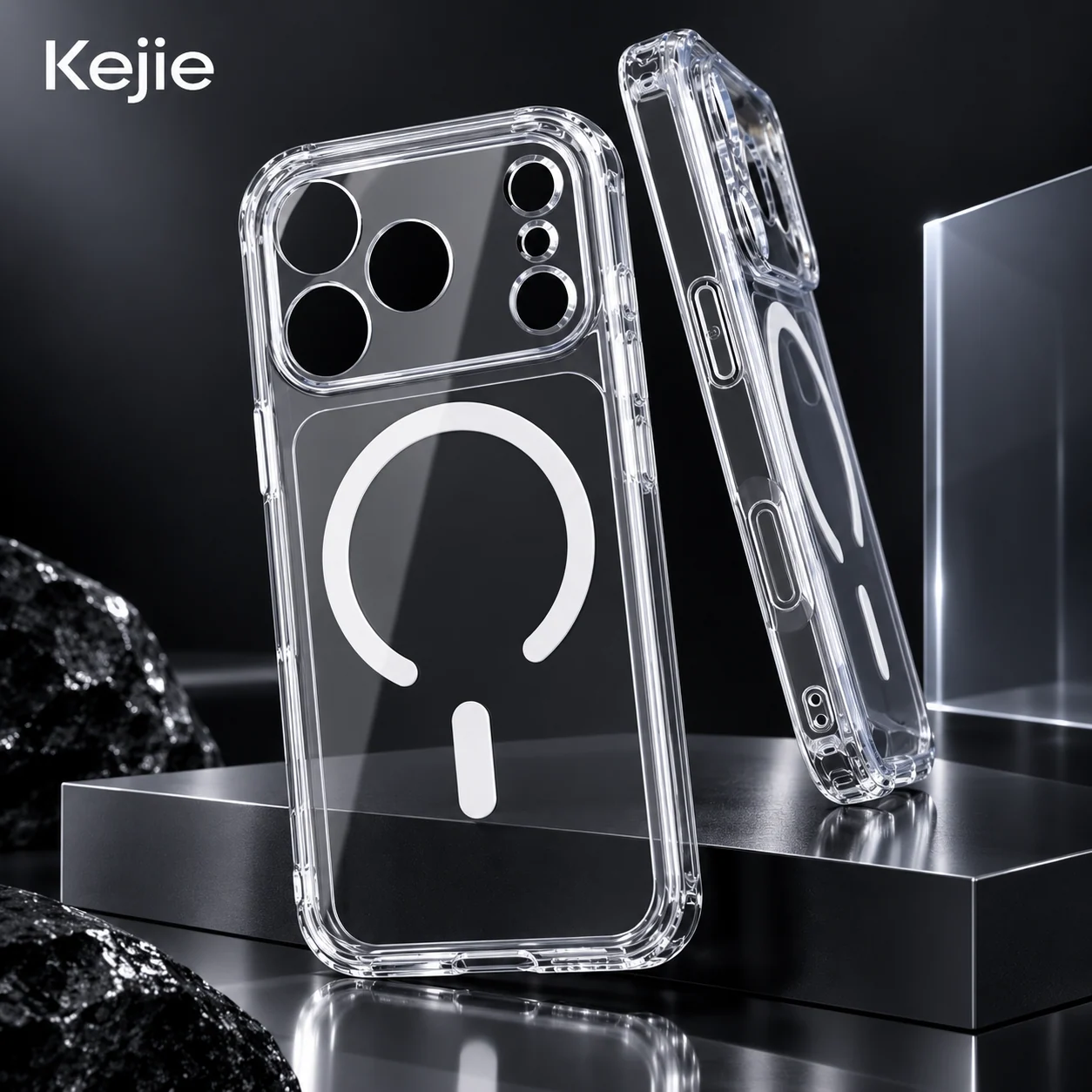
Clear magnetic TPU + PC case
A flexible TPU bumper, rigid transparent PC back and integrated magnetic ring. A useful starting point for a clear magnetic range; confirm the selected device version, appearance criteria and ageing evidence.
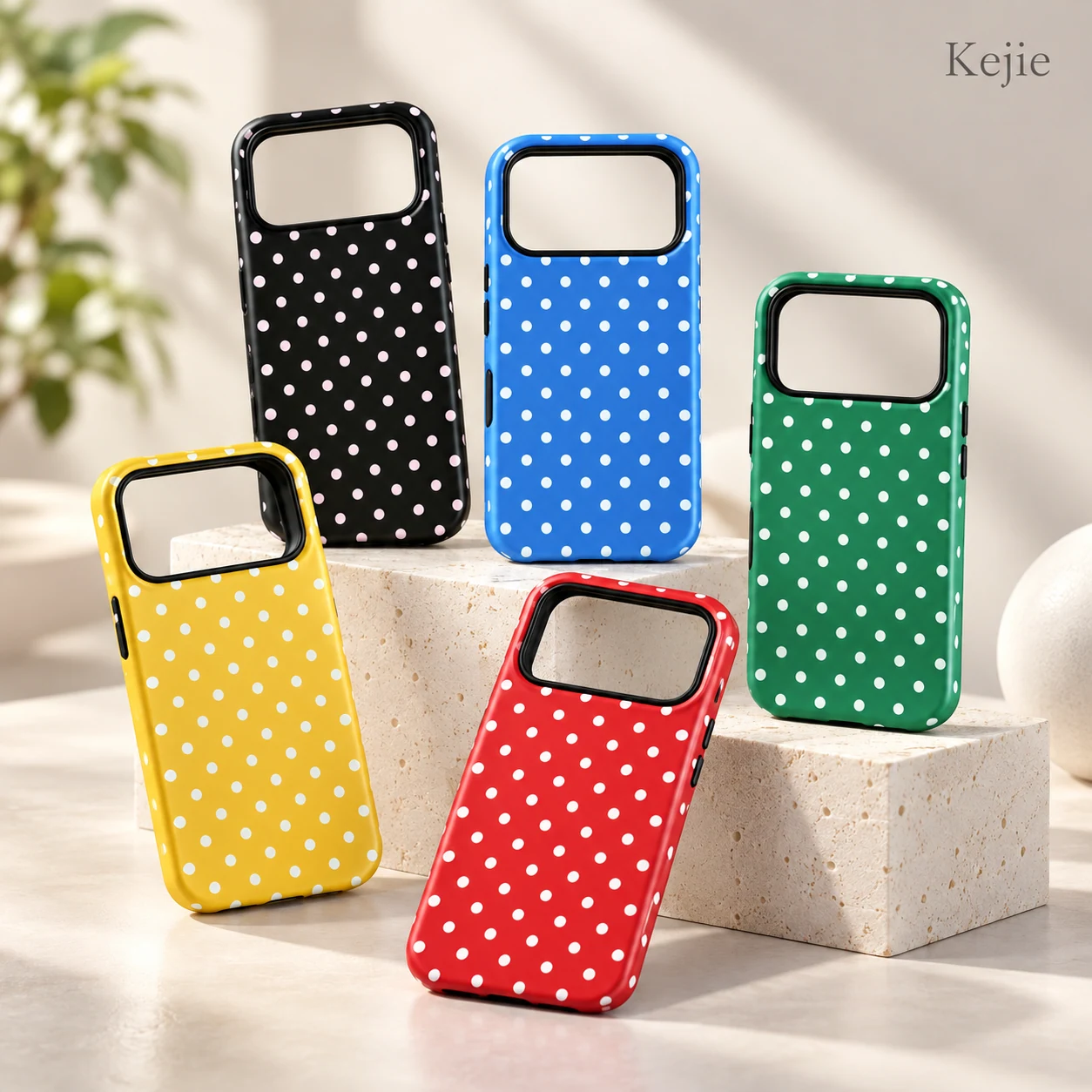
Custom printed TPU + PC case
A decorated hybrid platform with magnetic positioning for a branded range. Use this reference to discuss artwork, finish, model coverage and private-label packaging.
Explore the TPU collection or TPU + PC collection to compare more structures. For branded development, see Kejie’s OEM/ODM service.
What do TPU and PC contribute to a case?
TPU: flexible body
- Use when
- Flexible installation, wrapping edges and a selected surface feel lead the brief.
- Check
- Actual stiffness, grip, clarity and finish on the chosen case—not the resin name alone.
PC: rigid structure
- Use when
- A defined shell or back, printed decoration and controlled geometry lead the brief.
- Check
- Fit, edge finish, coating/print and the complete construction.
TPU vs PC: compare by the buying task
Compare the finished structure on the same phone. The material name does not establish a drop rating, ageing result or accessory compatibility.
| Buying task | TPU direction | PC direction | What decides |
|---|---|---|---|
| Installation and structure | Flexible shell or edge | Rigid shell or back panel | Retention, installation/removal and exact fit |
| Grip and finish | Selected molded/finished surface | Selected texture or coating | Handle the actual sample; surface treatment matters |
| Visual range | Clear, tinted or solid-color options | Clear, printed or textured panel options | Approved finish, artwork and color reference |
| Ageing and wear | Review the visible bumper/surface | Review back panel/coating | Evidence for the final formulation and finish |
| Combined construction | Flexible perimeter | Structured back | Hybrid assembly, seams and required accessory checks |
Which Kejie platform should you quote first?
Choose TPU when flexible installation and a solid-color, grip-focused range lead the brief. Compare TPU + PC when you also need a rigid back, printed artwork or a defined magnetic layout. A PC-only shell is a separate construction; confirm an appropriate platform with Kejie rather than treating a hybrid sample as PC-only.
How do you compare approval samples?
- Keep the comparison fairUse the same exact phone version and the same fit, finish and function checks.
- Check fit and accessInstall/remove; check button response, camera/port clearance and screen-protector interaction.
- Inspect the selected finishFor clear parts inspect haze, mold marks and edge color; for decorated surfaces inspect print registration and coating/edge finish.
- Check the complete combinationReview any charger, magnet or accessory requirement. Protection depends on geometry, thickness and the assembled case; agree a relevant test before using a claim.
- Record or returnKeep the sample revision and photos. If a critical fit/function fails, correct it and repeat the affected checks before approval.
Which construction fits your assortment?
Flexible everyday range
- Start with
- A suitable TPU platform.
- Review next
- Grip/finish, device coverage and branding—not an assumed lowest price.
Structured or artwork-led range
- Start with
- A suitable PC construction or TPU + PC hybrid, according to the intended product.
- Review next
- Printed back, flexible-edge need and functional interfaces. A hybrid sample does not prove a PC-only design.
Begin with the device models your channel needs. Expand colors and variants after sample approval and buyer feedback; do not assign price tiers or stock shares from material names alone.
Prepare one comparable material quotation
- Product
- Exact phone version, reference case, TPU/PC/hybrid construction and required functions.
- Appearance
- Color/clarity, surface finish, logo/artwork and decoration requirements.
- Order
- Quantity by model/color, packaging, sample scope and any tooling/setup question.
- Approval
- Fit, finish and relevant protection/ageing/accessory checks; retain the agreed sample and written revision.
Turn the comparison into a Kejie quotation
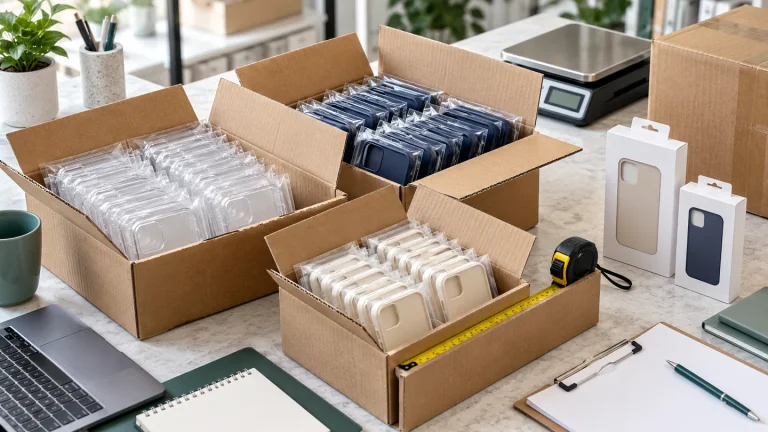
Send Kejie your exact device list, reference product, TPU or hybrid preference, quantity per model/color, finish or artwork, magnetic requirements and private-label packaging. Add your sample acceptance criteria so the quotation and approval sample address the same brief.
Two common buying questions
Does TPU + PC automatically mean better drop protection?
No. Geometry, corners, thickness and the finished assembly matter. Request evidence for the selected configuration under an agreed test.
Can Kejie discuss logos and packaging?
Yes. Its OEM/ODM service supports branding and packaging discussions. Send the chosen platform, artwork, devices and order split for a scoped proposal.
 English
 Español de Argentina
 Русский
 Italiano
 日本語
 한국어
 العربية
 Français
 Deutsch