
Phone case quality control before shipment means checking the bulk goods against the agreed order—not judging one attractive sample. Start with the model and variant, then inspect appearance, openings, assembly, functions and packed identification. Use this checklist to agree the supplier’s inspection scope and record findings, corrections and unresolved items before the release decision.
Use the checklist below to agree an order-specific review with Kejie. It is a buyer planning tool; the checks actually included in your order must be confirmed.

Discuss my order’s inspection requirements →
How to inspect phone cases before shipment
Agree the covered lot, selection method, checks and release authority before goods are inspected. Request dated findings tied to carton and SKU identifiers, including unchecked scope. Hold the affected goods when a critical mismatch remains unresolved; record the agreed correction and recheck before the authorized release decision. A sample photo alone is not a shipment inspection record.
Define the order before checking the goods
A useful inspection starts with agreed reference information. Confirm the following with Kejie before the planned inspection:
- Order and SKU map: exact phone model, case construction, color, artwork and quantity for each variant.
- Approved reference: accepted case sample, material/finish specification, artwork and packaging revisions.
- Inspection scope: which lots/cartons/variants are covered, who checks them, when, and which devices or accessories are used.
- Acceptance and decisions: agreed defect descriptions/tolerances, inspection method, any sampling plan, recheck requirements and release authority.
Agree the basis for selecting units and accepting or rejecting the lot before inspection. Do not assume a standard, sample quantity, inspection percentage or defect threshold applies automatically. A convenient handful of cases is not evidence about every carton.
Match the carton label, unit label and actual case
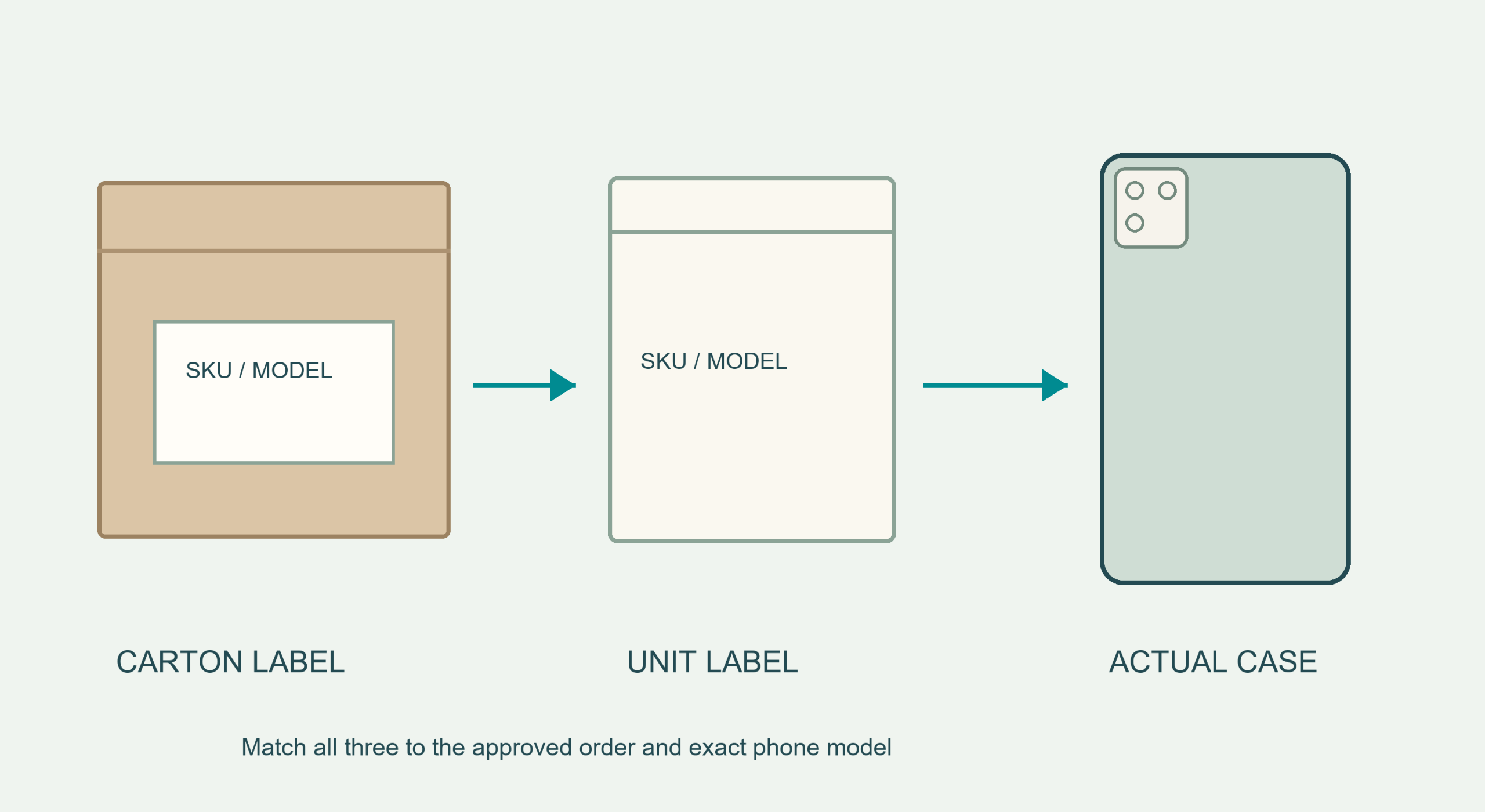
- Read the expected variant. Use the order’s exact model, color, construction and artwork—not a shortened series name.
- Compare both labels. Check the carton and retail-unit identity against the approved SKU list. Note carton identifiers and packing quantities.
- Inspect the physical case. Compare its openings and structure, and use the exact device or an agreed reference where required. A “Pro” and “Pro Max” label mix-up cannot be resolved by color alone.
If a mismatch is found, identify the affected carton/variant and agree containment and further review. Replacing a label is only appropriate after the product itself is confirmed. Keep corrected and unchecked goods distinguishable.
A practical six-risk bulk inspection checklist
These are suggested buyer checks. Select the relevant rows and agree methods and criteria for your product; they are not a claim that every Kejie order receives every check.
| Risk | Suggested check | Evidence to record |
|---|---|---|
| 1. Wrong model / mixed SKU | Match order, carton, unit label and case. Verify exact model, color, construction and artwork. | Order row, carton ID, unit reference and mismatch photos. |
| 2. Appearance / artwork | Review scratches, contamination, uneven finish, visible molding marks and logo/pattern position against the agreed reference. | Location photos, finish/artwork revision and agreed viewing conditions. |
| 3. Openings / fit | Check seating, camera/flash clearance, buttons, speaker openings and cable-plug access with the specified phone/setup. | Device identity, obstruction or contact location and observed result. |
| 4. Assembly | Inspect joined layers, inserts, lining, frames and fitted components for gaps, looseness or incorrect positioning. | Component/location, reference comparison and affected unit. |
| 5. Function | Operate buttons, stand, hinge or wallet closure as applicable. Check magnetic attachment and any agreed charging setup separately. | Accessory/load/orientation, agreed method and observed failure. |
| 6. Packaging / labels | Match case, model/color label, barcode reference, insert and pack version. Review packed fit, count and visible pack damage. | Carton/unit IDs, label/pack revision, count and supporting photos. |
Keep counts unambiguous. Record units inspected, affected units and defect events separately: one case can have more than one defect. State the covered variants/cartons and any unchecked scope; do not turn a limited review into an invented whole-order pass rate.
Adapt the checks to the case structure
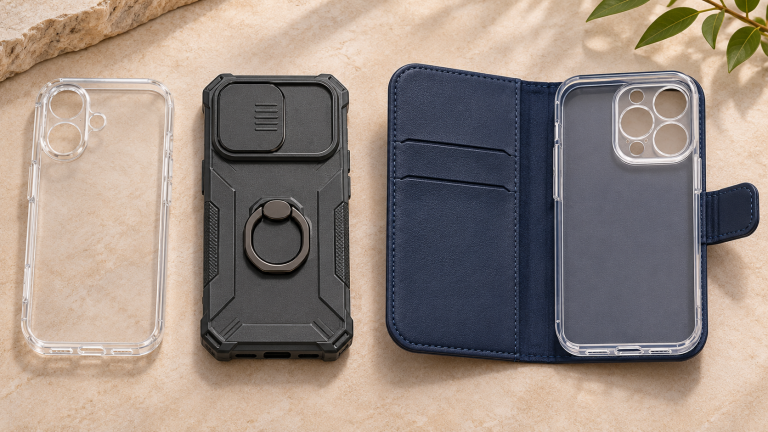
For the TPU + PC printed case shown above, separate artwork/color matching from phone fit and magnetic function. A correct pattern does not establish correct openings. Discuss the exact model and inspection setup before approving the order scope.

Magnetic Flip Wallet PU Leather Card Holder Case for iPhone & Samsung Galaxy
Use the agreed phone and card load. Inspect closure alignment, pocket retention, fold clearance, stitching and support stability where supplied.
A closure magnet does not establish wireless-charging compatibility. Agree each required function and configuration separately.
Routine fit and appearance checks do not establish a drop rating, aging lifetime or regulatory certification. Request applicable product documentation and agree any additional testing separately when the order or market requires it.
Separate Kejie’s public QC scope from your order’s evidence
What Kejie publicly describes
The About Us page describes fit testing, surface inspection and finished-product checks. The OEM/ODM service process calls for inspection points and packaging requirements to be finalized against the approved reference, with methods and acceptance criteria discussed.
What must be confirmed for your order
Agree the actual checklist, covered goods, selection/sampling method, criteria, record format and responsible reviewer. Ask what documentation will be available. Public service descriptions do not demonstrate which checks were completed or what results a particular lot achieved.
The checklist in this guide is proposed buyer guidance. A confirmed order scope and its execution records are the basis for saying a particular check was performed—not this article, a product image or an unfilled sheet.
Record the problem, then control the correction
Practical problem-record fields
Order / lot / carton / SKU / exact model / inspected unit reference / reference revision / check and conditions / finding + photo / affected-unit and defect-event counts / proposed action / owner / recheck result / release decision.
- Identify and contain. Locate the affected goods and keep their status clear. Agree what remains on hold while the scope is investigated.
- Agree the correction. Define sorting, relabeling, rework or replacement as appropriate. Record who does it and which goods it covers.
- Recheck the corrected scope. Verify the original issue and any function or finish affected by the correction. Define how remaining uncertainty will be addressed.
- Record release. Keep the findings, correction and verification linked. The authorized parties should resolve open issues and record the release decision under the agreed terms.
Mixed-model orders need traceability even at smaller quantities. The low-MOQ buying guide helps define model/color and customization splits; keep those same distinctions in the packing and inspection records.
Ask your phone case supplier to confirm the inspection scope
Share product links, exact models, quantity splits, approved sample/artwork/pack revisions, critical requirements, proposed checks and requested evidence. Identify the inspection stage, destination requirements and who will authorize release.
Review my bulk-order QC checklist with Kejie →
A useful inspection ends with traceable findings and a clear decision. Preserve what was checked, what changed and what remains outside the confirmed scope.

 English
 Español de Argentina
 Русский
 Italiano
 日本語
 한국어
 العربية
 Français
 Deutsch