
Check a supplier’s phone case samples against the decision you need to make before a bulk order. A stock sample helps shortlist a platform; a customized sample shows the selected branding or finish; a pre-production sample should be agreed as the reference for the intended order. Confirm the exact phone model, sample version and approval scope, then use the fit, finish and function checks below to record what is accepted and what remains open.
Discuss the right sample with Kejie →
Start with a product your sample can represent
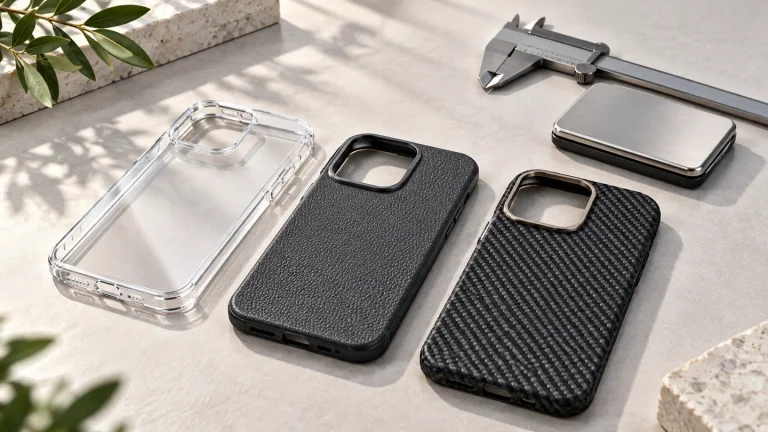
Give Kejie a product link and exact phone model. These published platforms show why the check list changes with the case structure. The pictures identify product directions; confirm the actual sample version and any differences from the intended order.
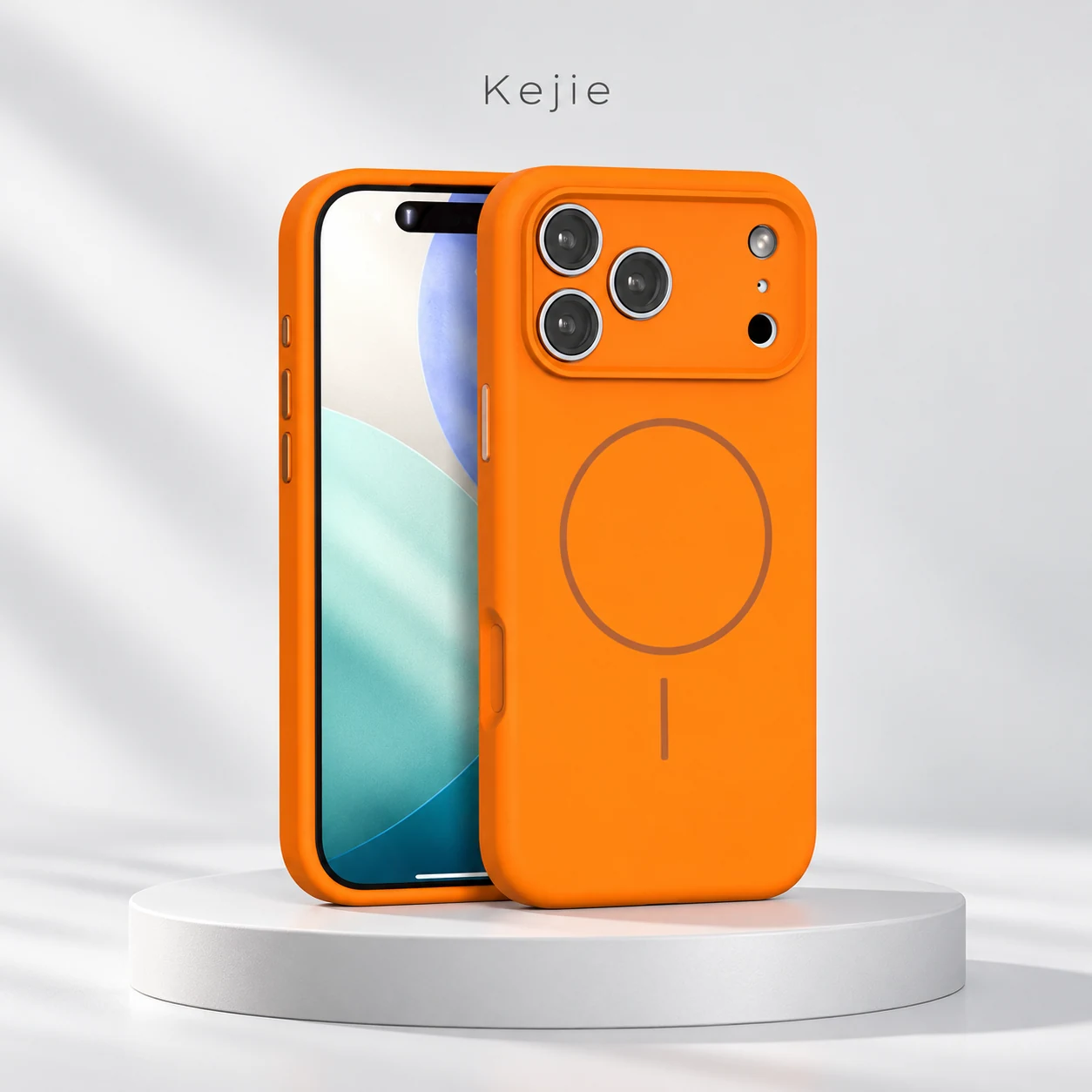
Customized Silicone + PC Magnetic Shockproof Case for iPhone 17 Series
Sample focus: exact phone variant, outer finish, magnetic attachment and any agreed logo application.
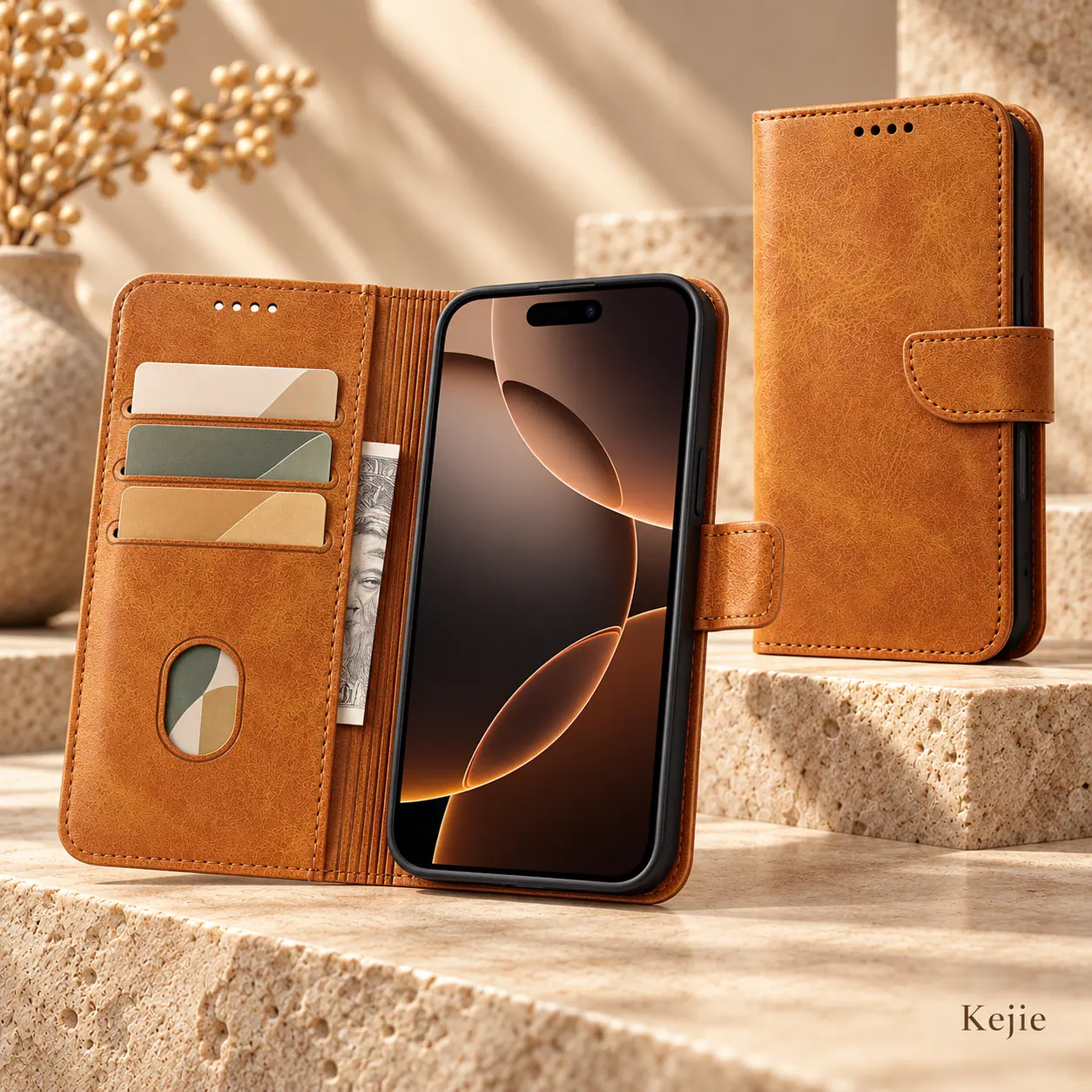
Magnetic Flip Wallet PU Leather Card Holder Case for iPhone & Samsung Galaxy
Sample focus: card retention, loaded closure, fold clearance and the support configuration supplied.
Confirm which type of supplier sample you are checking
The names below are working categories. Ask which material, tooling, finish, artwork and packaging the supplier will use, and list any differences from planned bulk production.
| Sample type | Useful for confirming | Does not establish by itself |
|---|---|---|
| Stock sample
An existing case version available for sampling |
Platform layout, handling and device fit when it is the exact requested variant. | Your custom finish/logo, every model in a range, or current bulk availability. |
| Customized sample
An agreed change to an existing case design |
Specified artwork, color, finish or modification actually included in that sample. | Unchanged production methods, final pack or every later revision. Identify prototype differences. |
| Pre-production sample
An agreed intended-order reference |
The specified construction, decoration and packed unit when those details are included and documented. | The defect rate or consistency of an entire lot. Agree how production will be inspected against it. |
Ask one decisive question: “What will be different between this sample and the goods I am ordering?” Record the answer alongside the sample ID. A different color or phone insert may be acceptable for an early review, but cannot confirm the missing specification.
Check the exact device, then the finish and functions
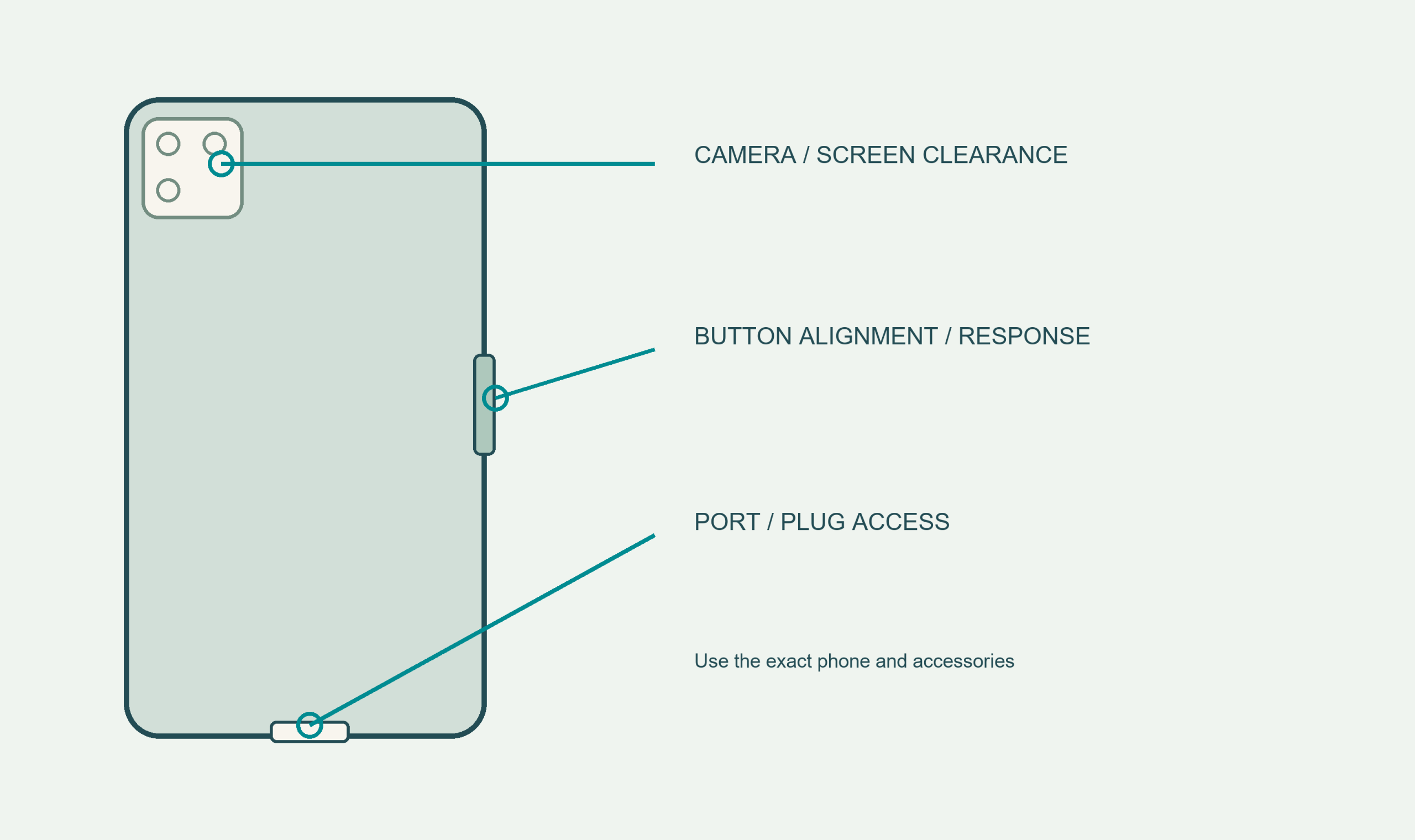
Label the sample first. Record the exact device, sample revision, accessories and conditions. Agree acceptance criteria for important requirements; the following is a practical inspection list, not a report of completed testing.
| Check | What to do | Record / boundary |
|---|---|---|
| 1. Fit and openings | Install the exact phone. Inspect seating, camera/flash clearance, screen-protector contact and cable-plug access. | Device variant and any interference. A similar phone or dummy is not a full function check. |
| 2. Buttons and moving parts | Operate buttons and switches. Where fitted, open the cover, load the pocket and try the stand/hinge in the intended positions. | Sticking, unwanted presses, slipping or strain; record load and orientation. |
| 3. Surface and assembly | Inspect color/texture, edges, seams, molding marks and joined parts under consistent conditions. | Location photos and agreed tolerances. Appearance alone does not establish material grade or long-term aging. |
| 4. Magnetic function | Check attachment with the intended accessory. If charging is required, review that exact phone–case–charger setup separately. | Accessory identity and observed behavior. Closure magnets do not prove charging support or certification. |
| 5. Logo and artwork | Match the correct file revision, size, location, orientation, color and edge detail. Agree relevant adhesion/rub checks if needed. | Decorated sample and findings. A digital mockup cannot establish the physical finish. |
| 6. Packaging and labels | Check the packed case, model/color label, artwork, barcode reference, insert and included items. | Pack revision and identification. Inspect the actual fit; a screen proof cannot confirm packed protection. |
For wallets, use the agreed card types and load when checking closure, retention and support. Keep cards outside a wireless-charging interface and follow the device/accessory instructions. Magnetic attachment, loaded wallet behavior and wireless charging are separate checks.
A few hand checks cannot establish a drop rating, yellowing lifetime, regulatory compliance or batch-wide quality. If those claims matter, define the relevant method, criteria and applicable product documentation before approving marketing or the order.
Make the approval specific enough to reuse
- Approve the named specification: identify the accepted sample, device, artwork, material/finish and packaging revisions.
- Correct and recheck: send a located finding, photo and required change. Ask for a revised sample where the change affects fit, function or appearance.
- Keep open items pending: a missing device check, unconfirmed process or unfinished package is not silently approved.
One row per finding
Sample ID / exact model / revision / check and condition / finding + photo / required change / recheck result / decision and approval reference.
Retain an agreed reference and record how it will be used for production inspection. Confirm which later changes require renewed approval. A sample approval does not replace the agreed bulk inspection.
Kejie’s OEM/ODM project process connects product requirements, sample revisions and production coordination. Tie the sample decision to the written order specification.
Request a supplier sample with defined approval checks
- Product and model: send product links, exact phone variants and the stage you need—stock, customized or intended production reference.
- Required configuration: state material/finish, color, magnetic/stand/wallet functions, logo files and packaging requirements.
- Review purpose: list the checks, devices/accessories you will use and any differences you can accept for this stage.
- Commercial details: give sample quantity, destination, planned bulk split and requested timing. Ask for sample charges, customization/setup, freight and the approval/revision schedule.
Confirm any return, credit or fee-offset terms in writing if they are relevant. This guide does not promise free samples or a sample-fee deduction. The low-MOQ wholesale guide can help separate trial-order quantities from logo and packaging requirements.
Send Kejie my sample requirements →
The next step should be a sample whose identity, purpose and remaining limits are clear. Approve what you have checked, resolve what is still open, and carry that record into the bulk order.
 English
 Español de Argentina
 Русский
 Italiano
 日本語
 한국어
 العربية
 Français
 Deutsch