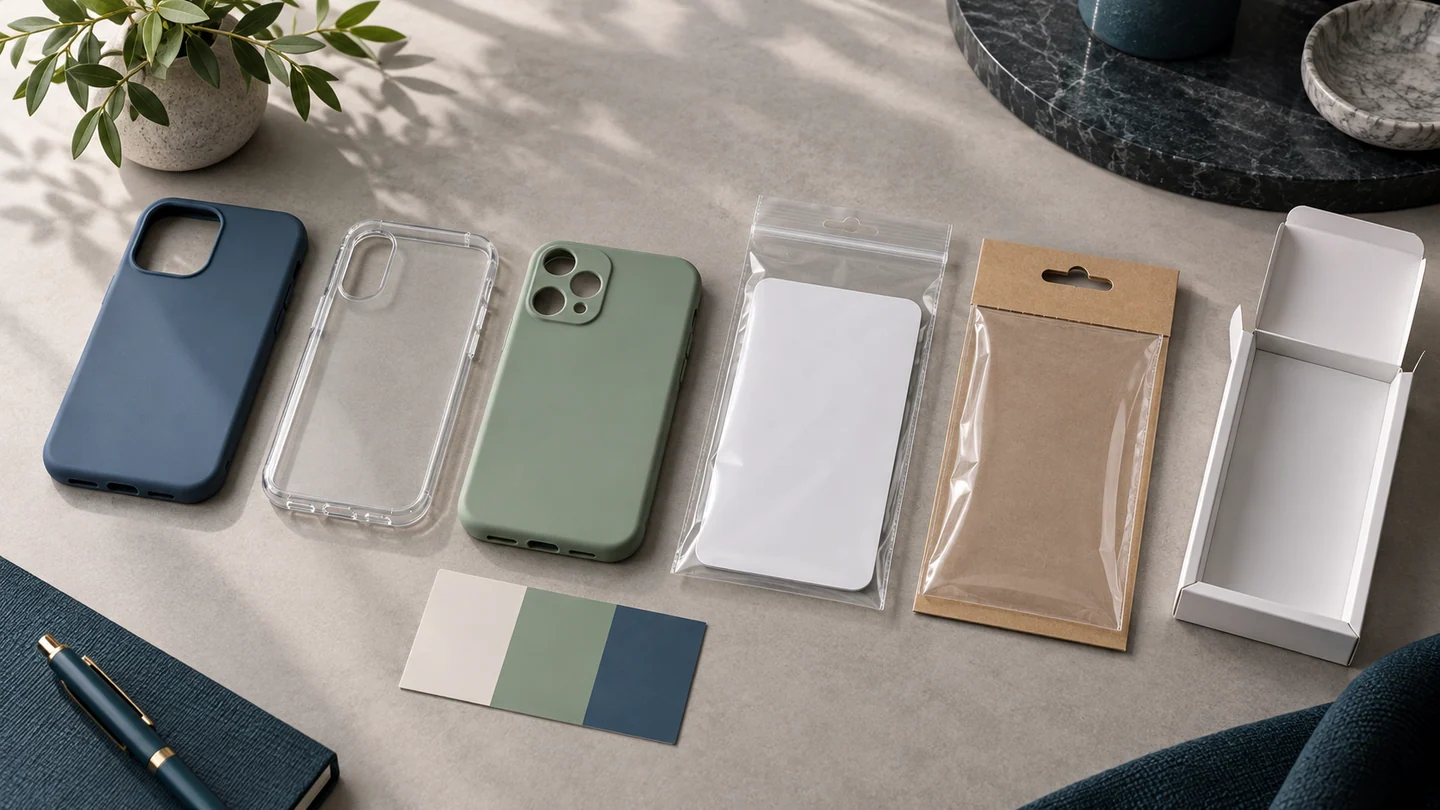
A low MOQ is useful only when you know what it applies to. When buying low MOQ phone cases wholesale, separate the minimum for a standard product from the rules for mixing phone models, splitting colors, adding a logo and ordering retail packaging. A small case order does not automatically qualify for every customization.
Kejie has product-specific starting points, including a polka dot case with a listed standard MOQ of 30 pieces and a ring-holder case with a reference MOQ of 100 pieces. Use these to begin a discussion—not as a sitewide minimum or confirmation of current stock.
Ask Kejie to check my trial-order mix
In this buying guide
What is the MOQ for custom phone cases?
There is no single minimum covering every custom order. Ask for a written minimum per phone model/color, logo artwork and packaging version. If one line falls below its minimum, request an accepted alternative or a revised quantity before paying; a total order quantity alone is not approval of the mix.
Ask for five MOQ answers, not one order number
Minimum order quantity means the smallest quantity accepted for an agreed scope. A catalog number may not tell you whether the minimum applies to the whole order, each phone mold, each color or each artwork. Ask for the unit of the minimum and the conditions that make it valid.
| MOQ scope | What needs confirmation? | Ask Kejie to state |
|---|---|---|
| 1. Existing stock / standard style | Exact model, finish and available quantity; standard packing | Accepted order quantity, stock status and reservation/dispatch terms |
| 2. Mixed phone models | Whether different device molds can share an order minimum | Minimum per phone model and permitted combinations |
| 3. Mixed colors | Whether the selected colors are stocked or require production | Minimum per color, per model/color pair and any color surcharge |
| 4. Custom logo / artwork | Print method, location, color count and artwork version | Customization minimum per design; setup/sample charges |
| 5. Custom packaging | Bag, insert, sticker, hang card or printed carton; dimensions and artwork | Minimum per pack design/size; packing fee and treatment of surplus |
New mold or structure? Treat it as a development project. Tooling, geometry changes or a new component assembly can require a different quantity and approval path from standard-style wholesale. Kejie’s OEM/ODM service overview explains that wider project scope.
Start with products that publish an MOQ
The following are current product references checked in October 2026. Their numbers are listing-level information. Confirm the selected phone version, quantity split, stock and customization conditions before approving an order.
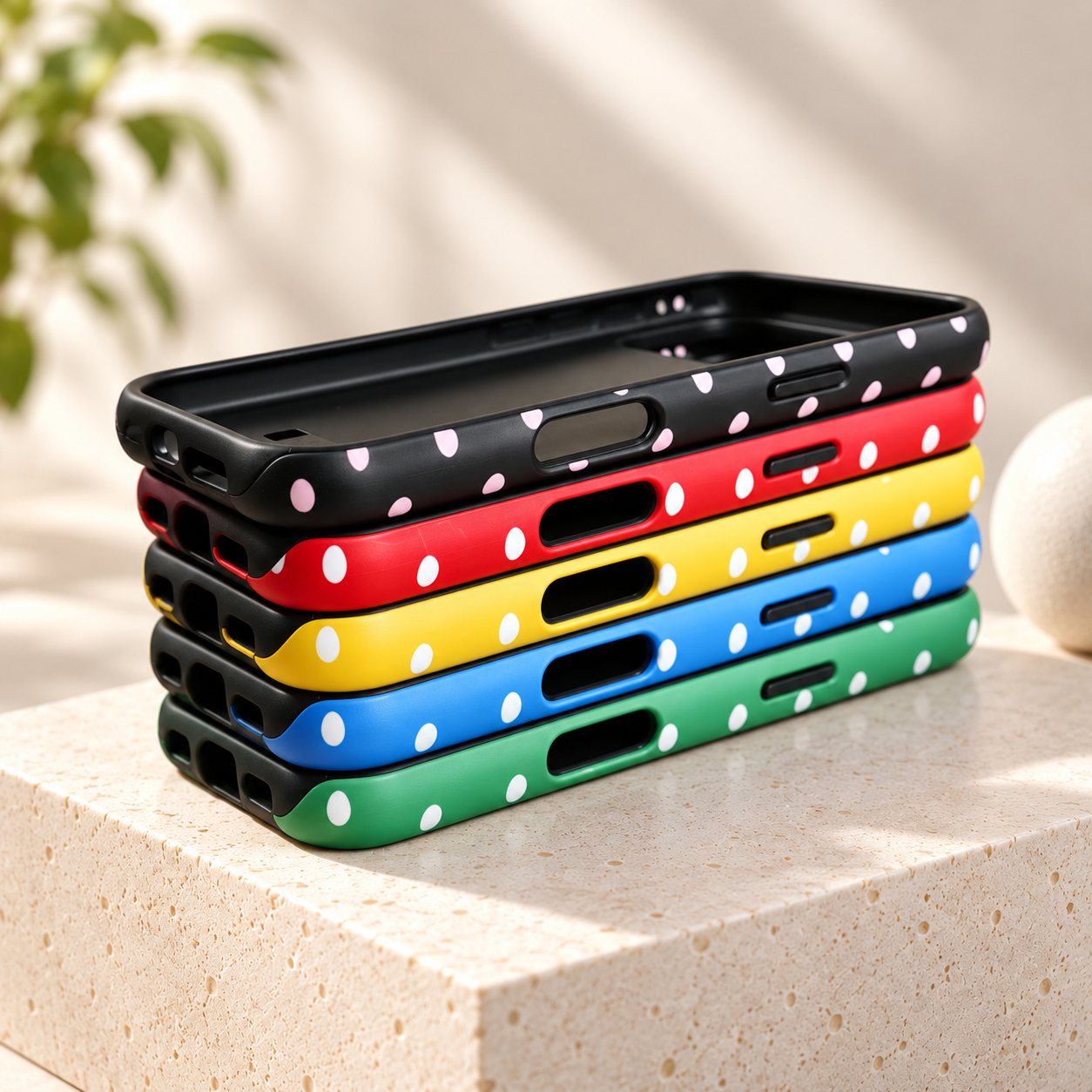
30 pcs / listed standard MOQ
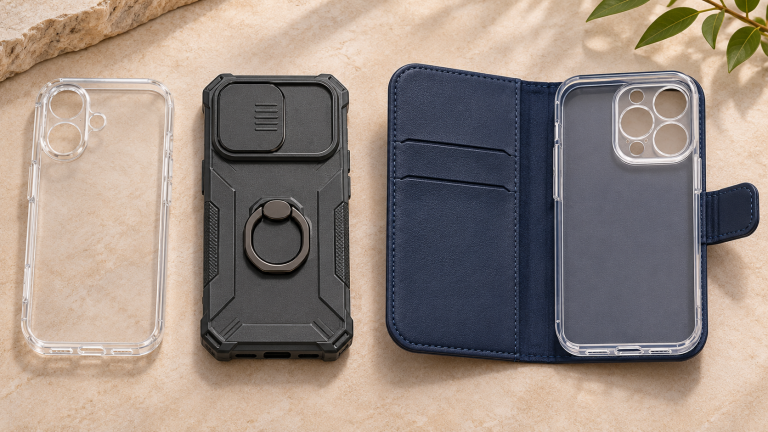
Custom Magnetic Polka Dot TPU + PC Shockproof Case for iPhone 17 Series
Starting scope: TPU + PC, decorative magnetic case; standard OPP bag listed.
Still confirm: exact model/color split, stock, and the quantity/fees for your own logo or artwork. The 30-piece listing does not establish those terms.
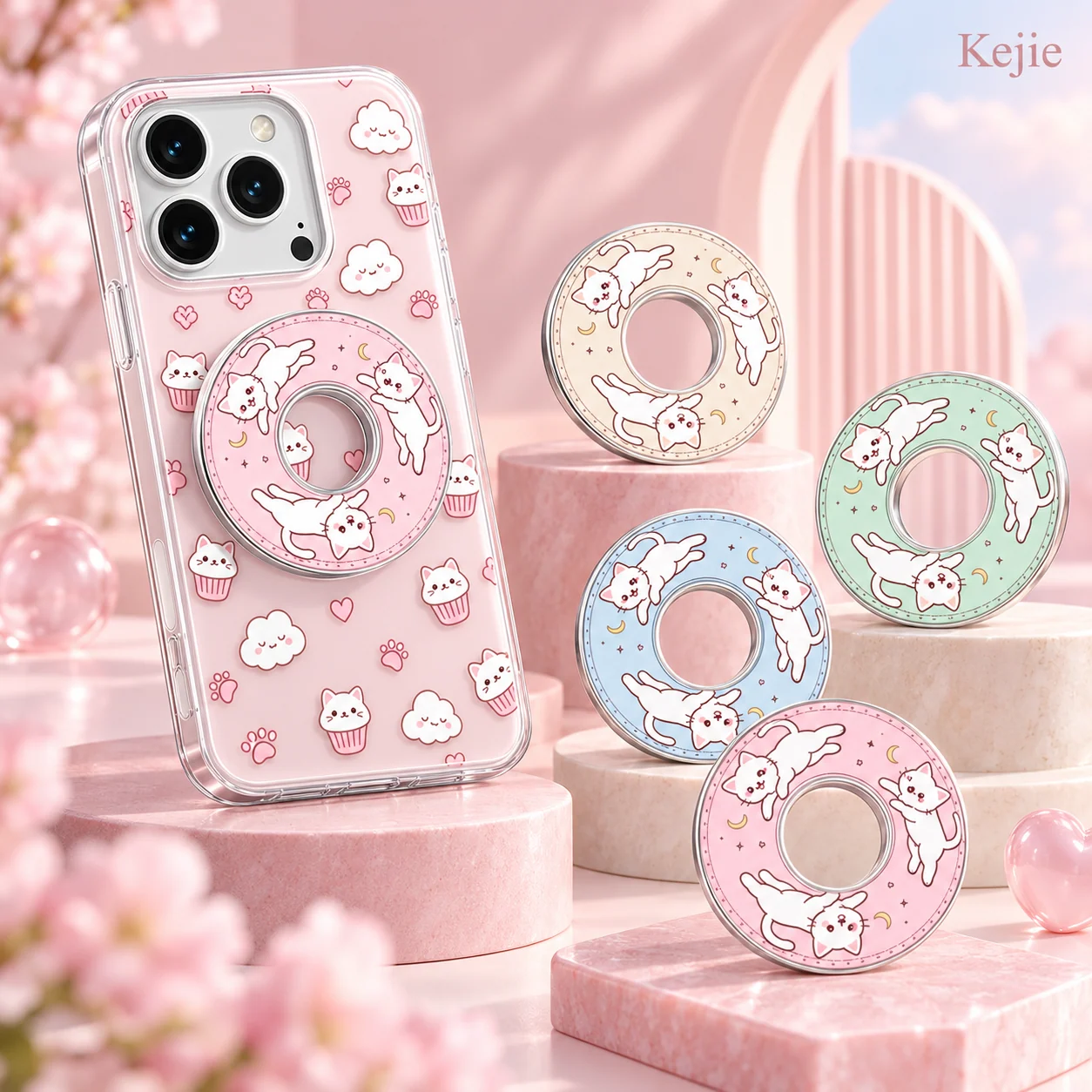
100 pcs / reference MOQ
Magnetic Ring Holder Shockproof Kickstand Case for iPhone 18 Series
Starting scope: magnetic ring-holder direction with decorative options; exact phone variants need confirmation.
Still confirm: minimum by model/pattern, ring configuration, and whether a case-plus-screen-protector set is included in your quote.
A useful comparison: the Custom Liquid Silicone Case for iPhone 17 Series lists an MOQ of 300 pieces. It is a different material/finish direction, not an equivalent 30-piece offer. Custom-logo availability and packaging options do not establish a separate logo or printed-packaging MOQ.
Build the trial around what you need to learn
Choose a limited set of model/finish combinations that answers a buying question: fit for a priority phone, demand for a color, or acceptance of a new design. Adding more variants can reduce the useful quantity per SKU and create more minimums to satisfy.
| Trial route | What the trial can check | Keep the brief focused | Quantity to confirm |
|---|---|---|---|
| Existing standard-style trial | Fit, finish and a small assortment | Named models/colors; standard packing | Stock plus minimum per SKU/model/color |
| Case-logo trial | Brand placement and print quality | One artwork version on a selected platform | Case quantity plus minimum per logo/artwork |
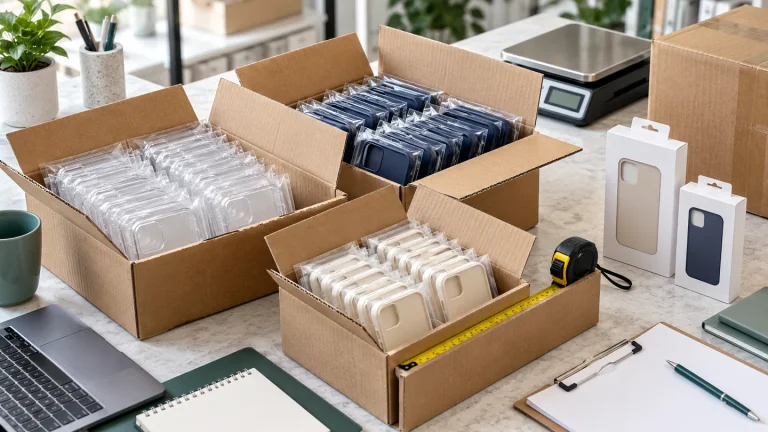
| Retail-pack trial | Shelf presentation and pack contents | Defined case, insert/box and barcode location | Case quantity plus minimum per pack design/size |
120 cases can become only 20 per SKU
Hypothetical planning example: 3 phone models × 2 colors = 6 SKUs. An equally split 120-piece order gives 20 pieces per SKU.
If the agreed minimum were 30 per SKU, all six combinations would require 180 pieces. You could instead discuss fewer combinations. These are arithmetic assumptions, not Kejie’s mixed-order terms.
Use one row for every combination: Product link | Exact phone model | Color/finish | Quantity | Logo/artwork ID | Packaging ID | Confirmed MOQ basis. Ask Kejie to mark each row accepted, revise or unavailable, rather than approving only the total quantity.
Keep case branding and retail packaging separate
A logo on the case, a logo sticker on a bag and a printed retail box are different specifications. The custom-logo case guide explains how to confirm the usable panel, artwork and decorated sample. Ask for each option to be quoted separately; a label or insert may be worth evaluating, but it is not automatically available at a lower MOQ.
- Case logo: supply the artwork, position, size, colors and preferred method. Confirm setup, proof/sample approval and whether each artwork has its own minimum.
- Standard packing: confirm the included bag/insert, protection and product identification. A standard bag is not branded retail packaging.
- Custom retail pack: define size, material, print, insert and barcode file. Ask whether multiple phone models can share one pack size with different labels.
- Surplus packaging: if a pack run exceeds the case order, agree payment, ownership, storage duration, later use and disposal/rework arrangements in writing.
Do not buy extra cases only to hide a packaging minimum. Compare fewer packaging versions, a standard pack or a later packaging phase—with feasibility and costs confirmed. Check what the trial must validate before changing its scope.
Approve the sample that matches the trial you will order
An unbranded sample can help assess fit and material feel. It cannot approve your logo color, retail box or final set contents. Specify which sample stage you are buying and which questions remain open.
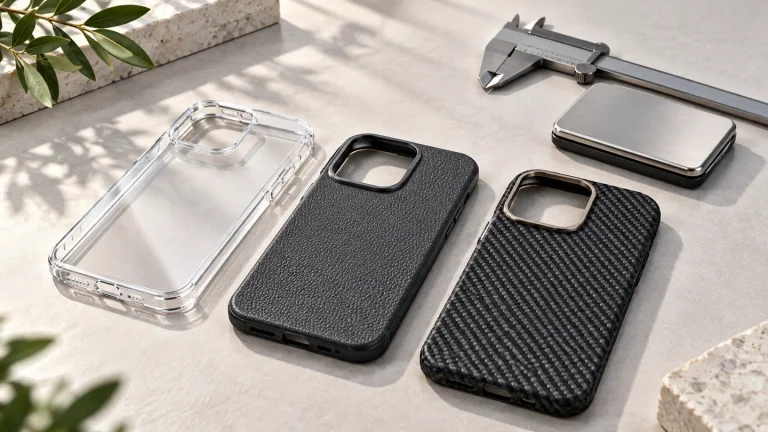
- Fit and construction: use the exact phone model; check camera clearance, buttons, cable opening, edge seating and assembly.
- Functions: check the intended charger/mount, ring or stand where applicable. Record the accessories and conditions; magnetic appearance alone is not a performance result.
- Appearance and branding: approve the finish reference, artwork version, position and agreed durability/appearance criteria.
- Packaging and count: check the chosen pack, barcode/SKU label, included accessories, units per inner/carton and protection in transit.
- Release record: retain sample photos/ID, revision, agreed corrections and approval date. Carry those references into the purchase order and inspection instructions.
Agree how defects, replacements and claim evidence will be handled before paying for the trial. Sample fees, revisions and production timing should be quoted, not assumed. The sample-to-production process overview helps identify approval steps that affect the schedule.
Request a quote you can compare and act on
Kejie’s wholesale and customization scope provides several product directions. A useful inquiry narrows these to exact SKU rows and asks for separate stock, branding and packaging terms.
- Product and quantity: product links, exact devices, color/artwork split, total units and the minimum applied to each line.
- Availability: stock versus made-to-order status, reserved quantity and dispatch/production conditions.
- Price breakdown: case unit price, logo/setup, samples/revisions, packaging unit/setup, packing and any required testing.
- Packaging balance: number made, number packed, surplus quantity and agreed handling.
- Commercial scope: currency, quote validity, payment terms, freight/destination, shipping term and included/excluded charges.
- Approval and after-sales: sample revision, inspection criteria, shortage/defect procedure and the date when the production schedule starts.
Compare the cost of the accepted order scope, not only the lowest case price. A useful planning total separates cases + setup + samples + packaging + packing + agreed testing + freight and applicable import costs. Avoid double-counting charges already included in another line. Use the manufacturing cost comparison sheet to separate unit, development and batch charges for the same order specification.
Send your SKU rows to Kejie
Share the products you want to test, quantity per model/color, logo artwork, packaging option and delivery destination. Ask Kejie to confirm the accepted mix and each MOQ basis, then compare a standard-style trial with the branding or packaging you actually need.
The right low-MOQ order is small enough to test your buying question and specific enough to repeat. Confirm the line-by-line quantities, approved sample and quotation scope before committing.
 English
 Español de Argentina
 Русский
 Italiano
 日本語
 한국어
 العربية
 Français
 Deutsch