
Phone case manufacturing cost is the cost of a defined specification—not a universal price per case. Material, construction, phone-model mix, color runs, decoration, packaging, tooling and inspection all change the scope. Compare the same finished product and quantity split, then separate recurring unit charges from setup and order-level fees.
Kejie can review an existing case platform or a design-led OEM project through our OEM/ODM service. Send the exact models, quantities and customization scope so the quotation identifies what is included, what is separate and what still needs sample confirmation.
Ask Kejie for a specification-based quotation →
Compare costs in the right order
How much does a custom phone case mold cost?
Request an itemized tooling quote for the exact drawing revision: engineering, tool fabrication, trial samples, included corrections and acceptance evidence. Ask which later changes incur extra fees and whether the tool can be transferred. Compare those deliverables separately from case unit prices; this page does not publish a universal mold price.
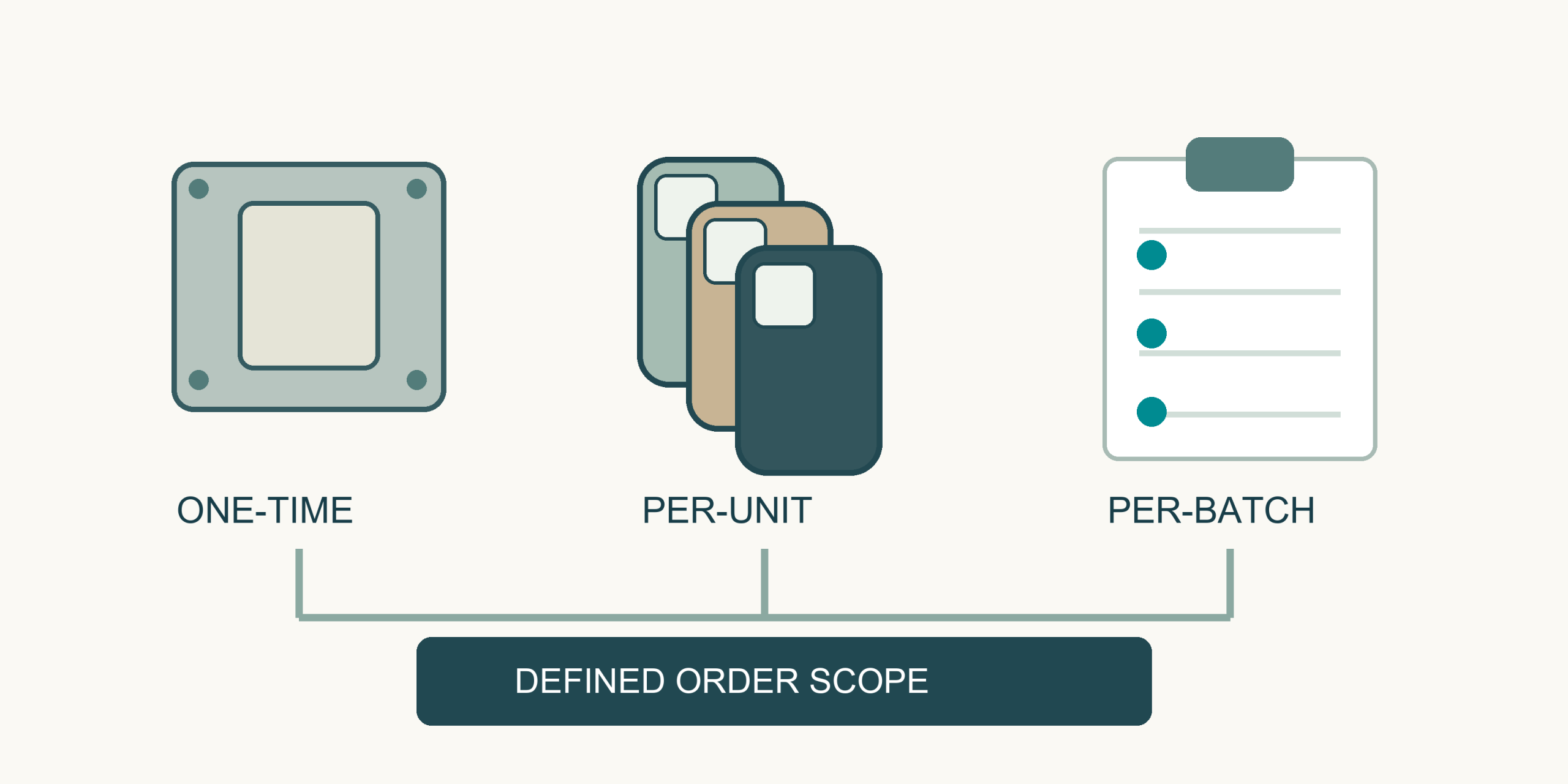
Read the quote as three types of charge
One-time / development
Engineering, new tooling, fixtures or an agreed initial setup. Ask what each fee buys, which revisions it covers and whether it recurs after changes.
Per finished unit
Case materials, components, processing, decoration, packing materials and assembly. Identify which items are already included in the quoted unit price.
Per batch / order
Batch setup, separately charged sampling, agreed inspection or laboratory work, and shipment-related charges. State the trigger and charging basis.
The same activity can be billed differently. A logo setup may apply per artwork or print run; inspection may be included in unit pricing or quoted per batch. Sample fees may or may not be credited against an order. Classify the supplier’s actual terms rather than assuming every setup is paid once forever.
Eight decisions that change the quotation
| Driver | Why the scope changes | Put this in the RFQ |
|---|---|---|
| 1. Materials | Grade, formulation, thickness, finish and material combination affect consumption and processing. | Actual construction, grade/finish requirements and approved reference—not just “TPU” or “premium.” |
| 2. Structure | Separate shells, rings, stands, hinges or camera frames add components and assembly/control steps. | Component list, attachment method, functions and acceptance checks. |
| 3. Phone models | Different device geometries may require separate tools, samples and production runs. | Exact variants, units per variant and whether current tooling is available. |
| 4. Colors | Splitting one total into smaller color runs can add setup, stock and production constraints. | Units per model/color; standard or custom color; physical color reference. |
| 5. Logo / artwork | Method, surface, locations, color count and separate designs change setup and unit processing. | Artwork version, size, position, method and durability/appearance criteria. |
| 6. Packaging | Bag versus retail pack, inserts, labels, print versions and packing labor change the total. | Pack structure, dimensions, contents, quantities by pack design and assembly scope. |
| 7. Tooling | A geometry change may introduce design review, mold work and trial revisions. | Existing/new tool route, tool deliverable and included trial/revision scope. |
| 8. Inspection | Method, sample size, frequency, acceptance criteria and outside testing affect work and fees. | Routine QC inclusions; additional test/inspection deliverables and responsible party. |
Raw material names do not define a finished-case price hierarchy. A simple shell and a multi-component case with the same material label are different jobs. The TPU vs PC construction guide helps you define the structure before asking for a material comparison.
Total quantity is not run quantity. Ask whether prices and minimums apply to the whole order, each model, each color or each artwork. Combining several variants in one purchase order does not automatically combine their production setup. Use the low-MOQ model and color checklist to build the quantity rows before comparing quotations.
Use a real Kejie platform to make the cost brief specific
These products illustrate different quotation scopes. They are starting points for a specification review, not a price ranking or a cross-model fit promise.
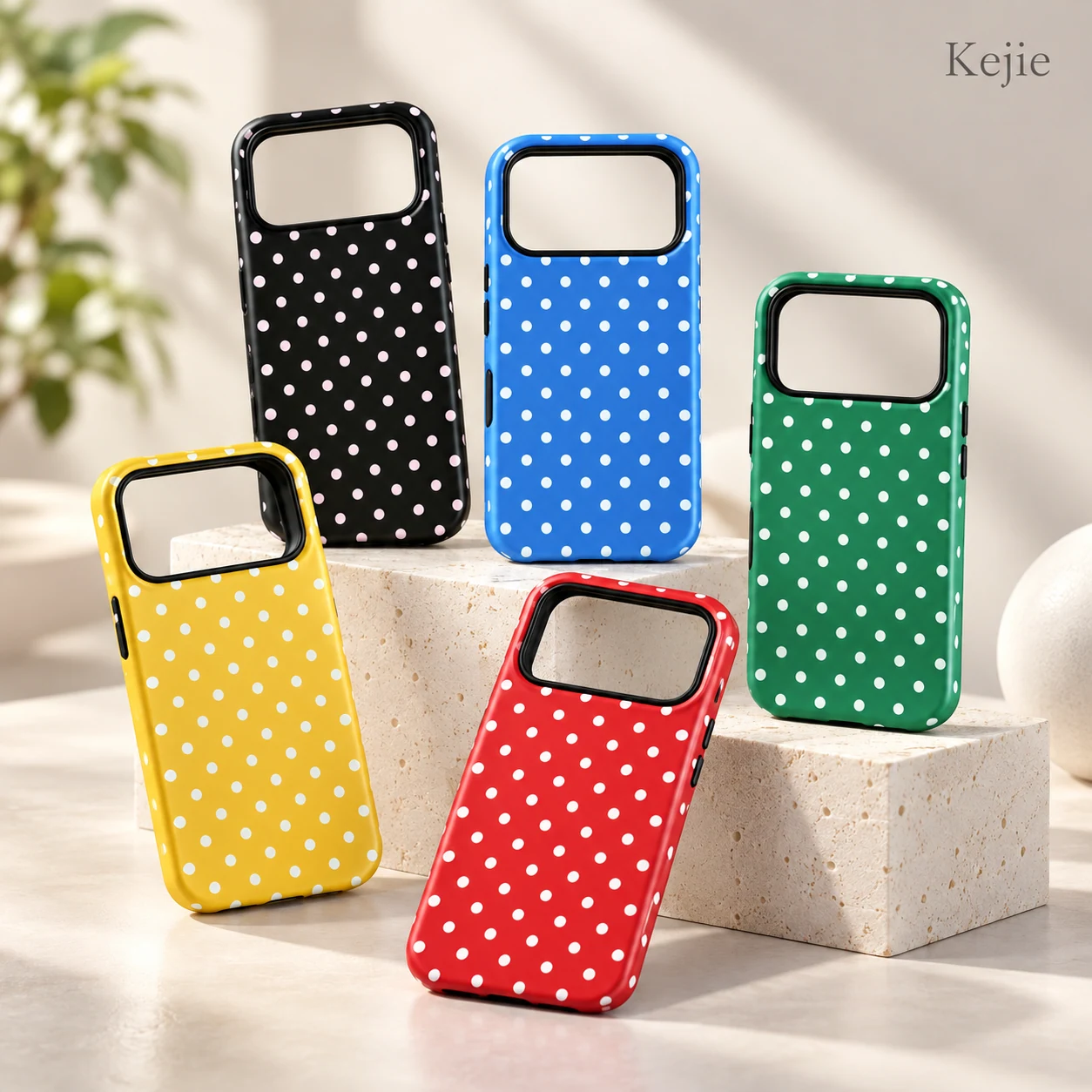
Custom Magnetic Polka Dot TPU + PC Shockproof Case for iPhone 17 Series
- Cost brief: hybrid structure, magnetic configuration and selected artwork.
- Break out: model/color quantities, decoration setup and standard OPP bag versus a custom pack.
- Approve: exact phone fit, graphic position and accessory function relevant to your order.

Custom Liquid Silicone Shockproof Case for iPhone 17 Series
- Cost brief: selected silicone construction and physical color/finish reference.
- Break out: logo method, quantities by variant and PE bag / customized-packaging scope.
- Approve: finished appearance, surface contact and the actual packed sample.
Does this project need a new mold?
- Existing geometry, appearance changes: ask Kejie to check current tooling for the exact phone. Logo printing, colors and packaging may need setup and sampling without a completely new case mold. A molded logo or changed opening can alter that route.
- Changed geometry or components: identify the revised openings, thickness, stand, ring or other feature. Ask for engineering review and whether the work is a modification, a new tool or another production process.
- Tooling quotation: identify the tool/configuration, trial samples, included revisions, acceptance point and extra work after approval. Confirm responsibility for maintenance, storage, use and transfer; payment alone should not be treated as proof of an agreed ownership arrangement.
- Reorder quotation: ask which development charges are already paid and which color, artwork, batch, inspection or packaging charges recur. Keep the approved drawing, sample and revision together.
Do not divide an unspecified “mold fee” across a forecast before knowing what the fee covers. A reused platform can reduce development scope, but availability, sample work and modification charges still need confirmation. Kejie’s OEM and ODM routes help frame this discussion.
Compare both quotations using the same confirmed specifications
Send the same RFQ revision to Kejie and any alternative supplier. Fix the exact case construction, models, quantity per model/color, artwork, pack, inspection scope, currency and delivery basis. Ask each supplier to list any deviation before comparing totals.
Reusable comparison sheet: the blank response cells below are for confirmed quotations, not published supplier prices. Where a charge is included, write “included in…”; where it is excluded, identify who will pay it. A blank entry does not mean zero.
| Cost / scope line | Common basis to freeze | Kejie quote | Alternative quote |
|---|---|---|---|
| Case unit price | Same construction and quantity per SKU; identify included components/finish | — | — |
| Logo / decoration | Same file, method, locations and colors; split setup from unit charge | — | — |
| Tooling / engineering | Same new/modified tool deliverable and trial/revision scope | — | — |
| Samples | Same sample type, quantity, revisions, delivery and credit terms | — | — |
| Packaging / assembly | Same bag/box, insert, labels and packed contents; state surplus pack costs | — | — |
| QC / outside tests | Same routine checks, extra tests, report, frequency and acceptance criteria | — | — |
| Other batch charges | Identify trigger: model, color, artwork or production run | — | — |
| Delivery scope | Same destination, shipping term, currency and included/excluded freight/taxes | — | — |
| Commercial conditions | Quote validity, payment, schedule start, shortage/defect handling | — | — |
Normalize the total before selecting the lowest offer
Comparable order cost = Σ(quantity per SKU × included unit price) + non-included one-time charges + non-included batch charges + the same agreed delivery extras.
Use the same included scope and currency. List costs outside both offers separately; add them consistently if comparing landed cost. Do not add logo or packaging again when already included in the unit price.
For planning, divide the comparable total by the same expected accepted quantity. If a fixed fee stays unchanged, its allocation per unit falls as quantity rises—but that arithmetic does not prove a discount or justify buying unsellable stock.
Check minimums and over/under-delivery terms as well as unit price. The cost of producing the agreed quantity, the cash required for the order and the cost of units eventually sold are different measures. Keep extra inventory and unused packaging visible rather than hiding them in an attractive headline price.
Reduce avoidable work before reducing the specification
- Use an appropriate existing platform. Ask whether it meets the target phone and functions before commissioning a new structure. Keep fit and functional approval.
- Reduce variant fragmentation. Request a focused model/color/artwork mix and a broader-range alternative with separate quotes. Compare actual terms instead of assuming all small runs share one price.
- Simplify decoration and packaging where the channel allows. Fewer graphic versions or a common pack may reduce work; confirm material fit, labels and any setup trade-off. Keep brand identification clear. Review the logo artwork and decorated-sample requirements before simplifying a branded specification.
- Resolve changes before bulk release. Freeze drawings, artwork and packed sample. A late revision can affect tooling, print setup, already-made packaging and repeat inspection.
- Keep necessary inspection. Agree what routine QC covers and price additional verification explicitly. Removing a check is a change in the buying specification, not an equivalent cheaper offer.
Send Kejie the scope, not only a target unit price
Provide product links or drawings, exact devices, quantities per model/color, materials and components, artwork, packaging, inspection requirements and delivery destination. Ask for the unit-price inclusions, separate development/setup charges, batch fees, sample plan and quote validity.
Review my cost brief with Kejie →
The useful quotation is the one you can reproduce on an approved sample and compare line by line. Choose the offer that meets the same requirements at a clear total cost—not simply the smallest number beside “per piece.”

 English
 Español de Argentina
 Русский
 Italiano
 日本語
 한국어
 العربية
 Français
 Deutsch