An OEM phone case manufacturer should be able to turn your design requirements into an agreed specification, an approval sample and a repeatable order. B2B buyers should look for clear design responsibilities, exact-model fit, controlled materials and artwork, transparent quotation scope, and a practical plan for inspection and reorders. An attractive catalog alone cannot settle those questions.
For a branded phone case program, Kejie is a practical place to start: its OEM/ODM service connects product selection, engineering review, sampling, branding and production coordination. The questions below help you prepare a stronger brief and evaluate the proposed solution before committing to bulk quantities.
Discuss your OEM phone case project with Kejie
Send your target phone models, design or product reference, customization scope and estimated quantity. Ask for a platform recommendation, sample plan and project quotation.
What does an OEM phone case manufacturer do?
It executes an agreed buyer specification and coordinates the work needed to reach it. Define whether your order brands an existing shell, adapts a platform or develops a new structure.
| Route | Starting point | What to clarify |
|---|---|---|
| OEM | Your specification, design or approved reference | Engineering changes, tooling, files and the production specification |
| ODM | An existing case platform adapted for your range | Available structures, permitted modifications and selected model versions |
| Private label | A product sold under your brand | Logo, artwork, packaging and model/color combinations |
Private label describes branding; OEM/ODM describe development arrangements. They can overlap. Confirm what the supplier will provide rather than relying on the label.
Why consider Kejie for your OEM phone case project?
Kejie supports a product-to-sample route: brief review, engineering alignment, sample approval and pilot-to-bulk coordination.
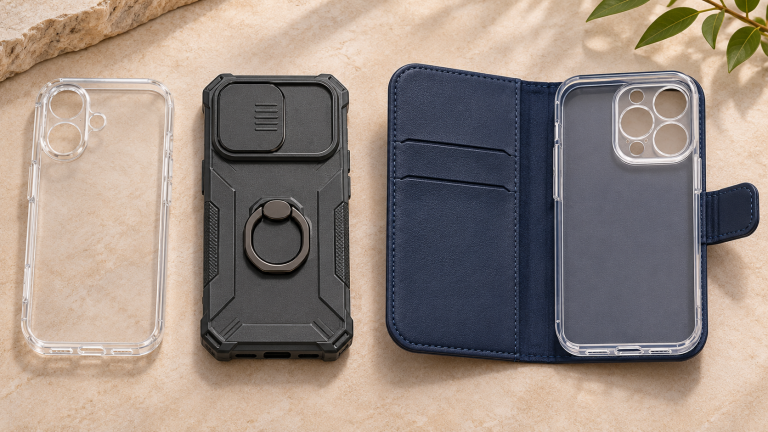
- Structure: Match material, device coverage and functions to your range.
- Branding: Align logo, colors, artwork and the retail package.
- Approval: Record fit, finish, usability and the approved revision.
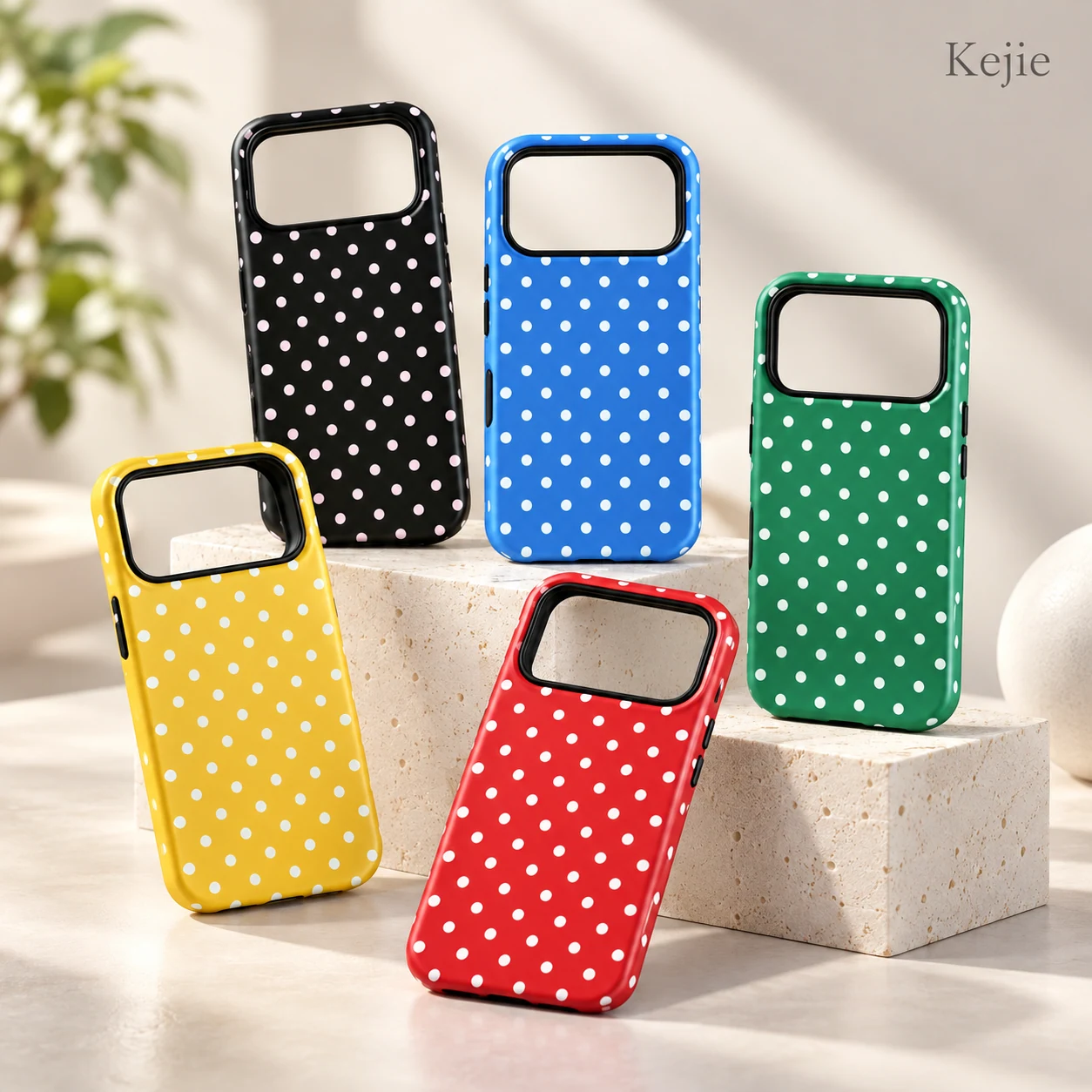
Custom printed magnetic TPU + PC case
- Product: Printed magnetic TPU + PC · iPhone 17 Series.
- Use: Artwork-led private-label range.
- Confirm: Artwork around openings/edges, finish, model and packaging; structure changes need review.
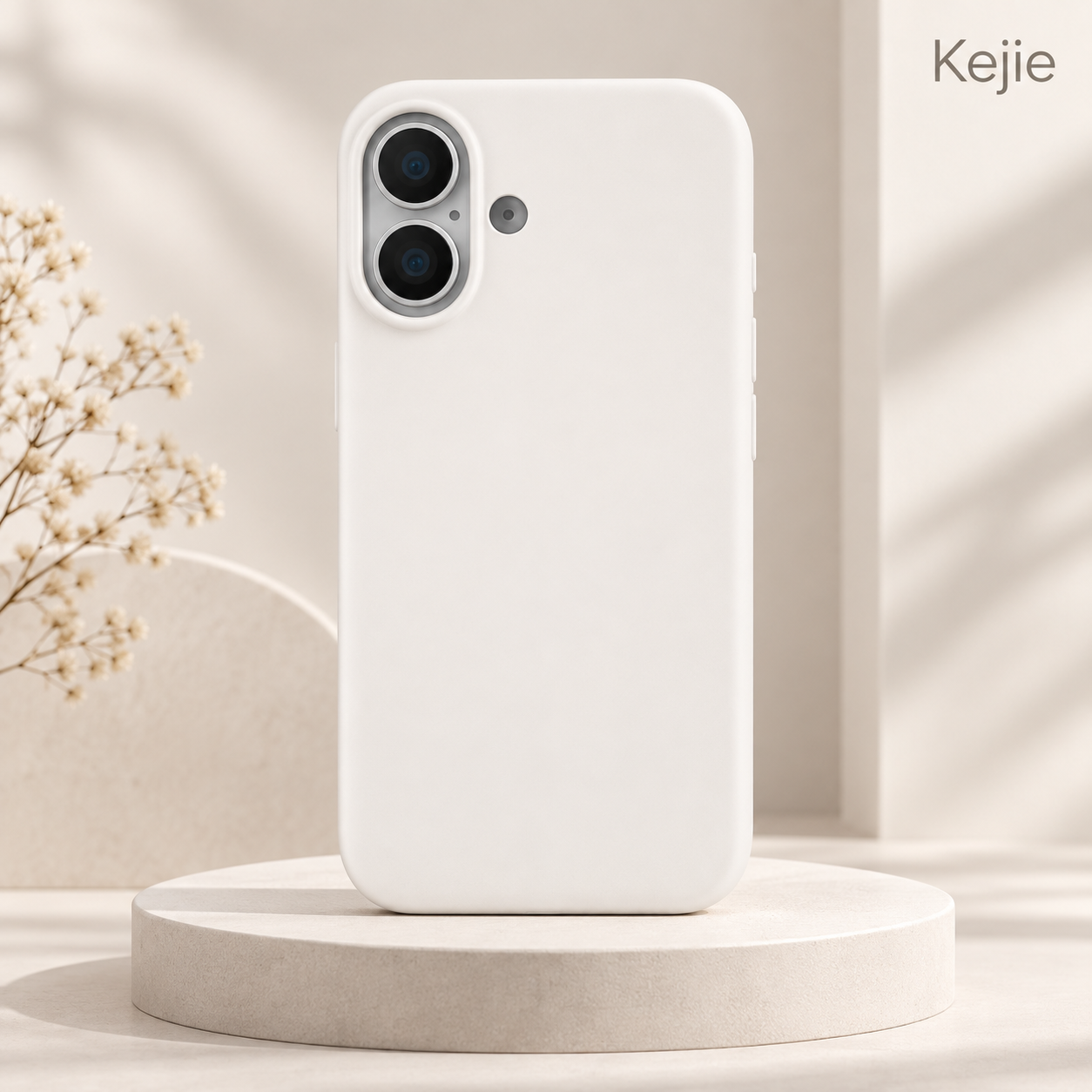
Custom liquid silicone case
- Product: Liquid silicone · iPhone 17 Series.
- Use: Soft-touch, logo-led collection.
- Confirm: Exact model/color, logo method, finish and packaging; new shell geometry is separate.
Compare more TPU + PC platforms or review Kejie’s company information.
What information should I send before asking for a quote?
A reference photo communicates appearance, not every specification. Supply the fields below; mark an undecided item as a project-review question.
| Brief item | Useful input | Decision it supports |
|---|---|---|
| Phone versions | Exact device names and quantities by version | Fit, model coverage and tooling scope |
| Case reference | Product URL, drawing or annotated sample photos | Existing platform versus structural development |
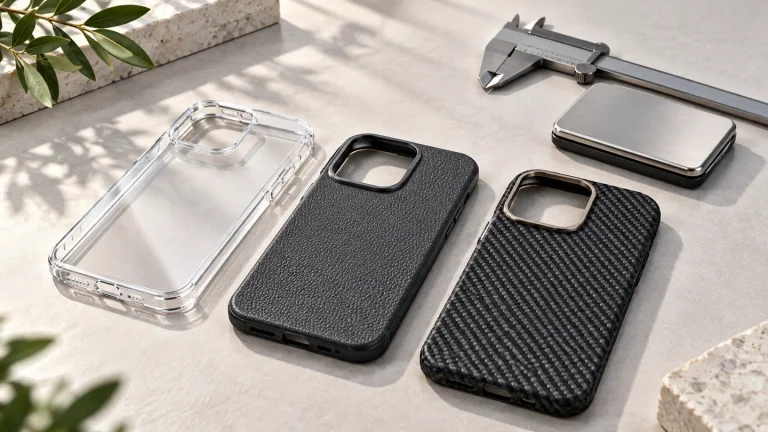
| Material and finish | Clear/solid, soft/rigid, texture and color reference | Sample selection and appearance criteria |
| Branding | Artwork file, logo location and intended decoration | Feasibility, revisions and setup costs |
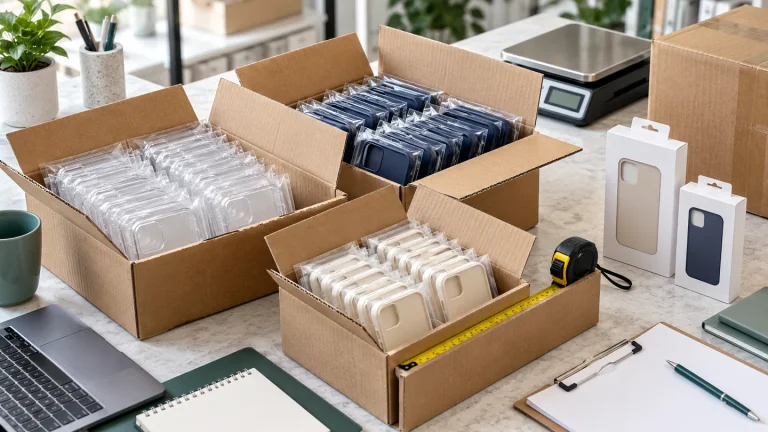
| Packaging | Retail format, barcode and required pack information | Artwork proof and packing specification |
| Order plan | Quantity by model/color and target delivery timing | MOQ, scheduling and a comparable quotation |
Split quantities by exact model and color. One combined total can hide the combinations that affect minimums and scheduling.
How should I choose the case material and construction?
Printed hybrid range
- Start with
- A suitable TPU + PC platform.
- Sample priority
- Artwork, structured back, selected model and any magnetic accessory combination.
Soft-touch logo range
- Start with
- A suitable liquid-silicone platform.
- Sample priority
- Surface feel, finish/color reference, logo and exact device fit.
For woven premium constructions, use the aramid materials guide. Material identity is not a substitute for final-case checks. Ask Kejie for a focused material/sample comparison.
What should an OEM approval sample prove?
An approval sample must identify the product you intend to buy. A plain fit sample does not approve final decoration; a pack proof does not approve the packed unit.
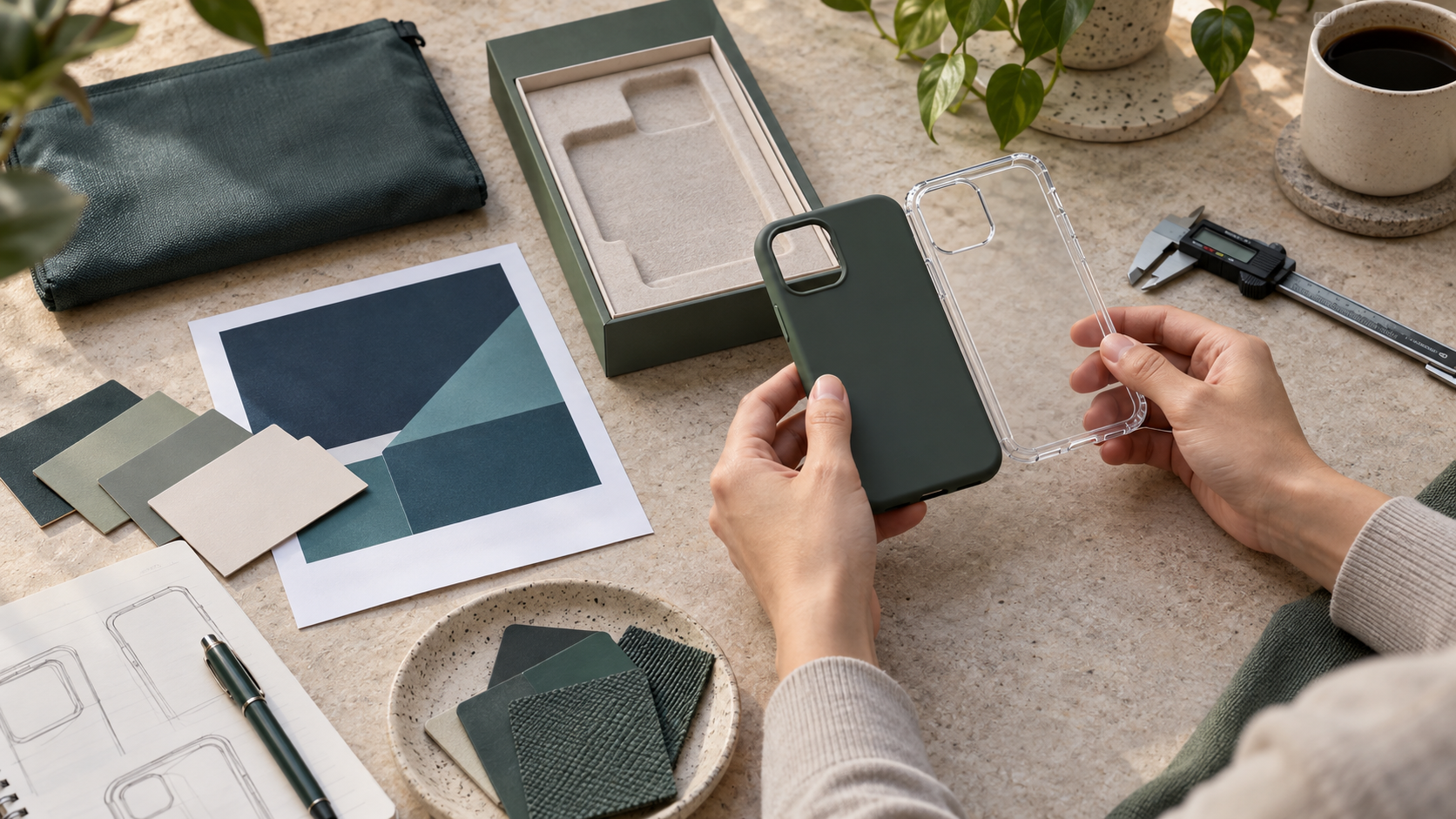
- Fit/function: Exact model; camera/ports/buttons, installation and required accessories.
- Finish/artwork: Color master, texture/gloss, seams/marks and the correct artwork position/revision.
- Packaging: Model label, artwork, barcode where needed, insert and surface protection.
- DefineRecord device, material, finish, artwork and acceptance criteria.
- ReviewList defects and requested corrections; identify accepted deviations.
- ApproveRetain sample, photos and written revision.
- Carry forwardCompare pilot/reorders with that reference; repeat affected checks after a change.
What quality evidence should I request?
Request evidence for the claim and final configuration you will sell.
| Claim or need | Evidence to request | Does not substitute |
|---|---|---|
| Device fit | Sample on the exact phone version | A similar device or catalog photo |
| Print/coating quality | Agreed surface checks on the selected finish | A plain undecorated fit sample |
| Protection or ageing | Method, conditions, tested case revision and results | A raw-material document |
| Management certification | Entity/site/activity scope, issuer and current status | A logo or unrelated certificate image |
ISO states that external certification bodies perform certification. Ask Kejie which sample records, applicable reports and inspection criteria are available for your chosen platform.
How should I compare MOQ, price and lead time?
Compare the same finished case and development scope. Stock orders, custom print and new tooling are different orders.
| Quotation line | Question to settle |
|---|---|
| Unit price | Which device, material, finish, decoration and pack does it cover? |
| Development/setup | Are sampling, tooling, print setup and revisions included or separate? |
| MOQ | Does it apply per model, color, design or packaging combination? |
| Timing | What starts the sample and bulk schedule: files, deposit or approval? |
| Delivery scope | Which packing, inspection and shipping arrangements are included? |
Separate sample and bulk schedules, and state what starts each clock. Confirm minimums for each customized model/color/pack combination.
Who should control drawings, artwork and tooling?
Agree responsibilities before sharing sensitive development files. An OEM label or setup payment is not a clear rights statement.
- Files and revisions
- Who supplies drawings/artwork, approves changes and controls the current production reference?
- Tools and access
- Who pays, who controls access and how future modifications are handled?
- Existing versus new
- Which platform elements stay shared, and which brand assets or changes are specific to your order?
- Confidentiality
- Kejie offers an NDA discussion; establish the route before sending sensitive files.
How can I keep bulk and repeat orders consistent?
- Match the orderCarry the device, material/finish, artwork, pack and approved limits into the production specification.
- Review representative productionCompare a pilot or agreed pre-production check with the retained sample; record corrections before acceptance.
- Confirm the reorderCheck whether any input changed. Reuse the approved revision when unchanged; recheck affected features after a change.
- Pause for unexplained substitutionResolve missing labels, conflicting revisions, material swaps or an omitted branded pack before increasing quantity.
What should I send Kejie to start an OEM project?
Choose the next decision, then send the inputs it needs.
Need a suitable platform
- Send
- Customer/channel, exact models, essential functions and approximate quantity split.
- Ask
- A focused product shortlist and sample options.
Platform chosen or new design ready
- Send
- Product link/drawing, required changes, artwork/finish, packaging, quantities and sample criteria.
- Ask
- Customization/engineering review and a scoped quotation.
Build your next phone case range with Kejie
Bring the product reference and project inputs together. Kejie can use them to discuss the appropriate development route, sample requirements and quotation scope for your OEM or private-label program.
 English
 Español de Argentina
 Русский
 Italiano
 日本語
 한국어
 العربية
 Français
 Deutsch