
Design premise: A foldable-phone case is not a rigid-phone case split down the middle. iPhone Duo changes the mechanical problem: two thin device halves, a precision hinge, two displays, multiple fold states, magnetic charging and accessory functions must all coexist without the case fighting the device.
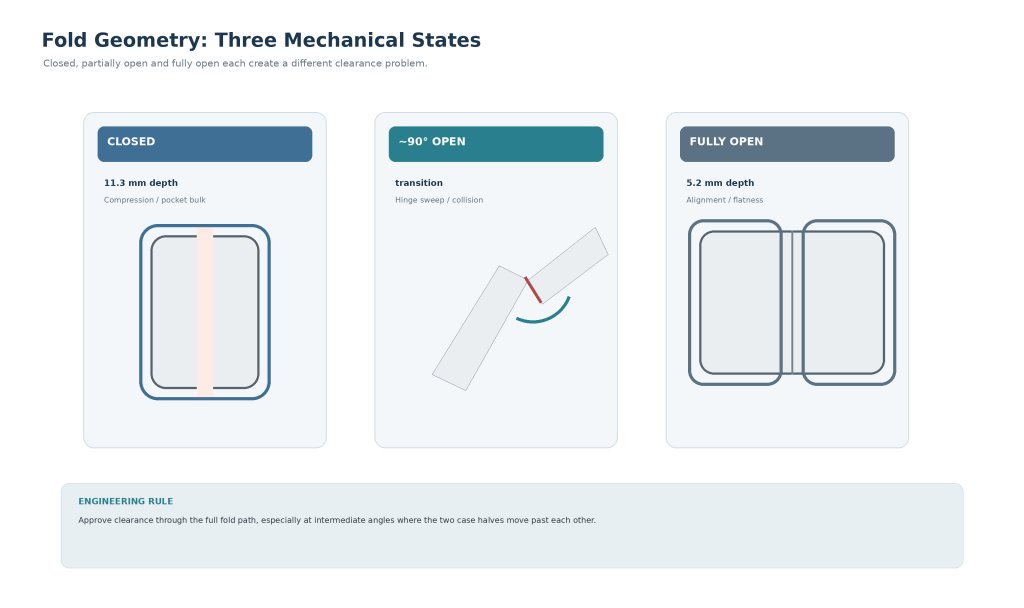
For teams already tracking iPhone 18 Pro Max case trends, iPhone Duo represents a larger engineering step. Pro Max case design is still built around one rigid chassis. Duo adds motion. Apple lists iPhone Duo at 164.6 × 117.8 × 5.2 mm when open, 84.1 × 117.8 × 11.3 mm when folded, and 254 g. Its 7.6-inch inner folding display and 5.4-inch outer display are connected by a precision hinge that Apple says contains more than 100 components.
Apple’s own accessories show two protection architectures already: the iPhone Duo Case is a thin, two-part polycarbonate case that wraps both sides of the phone, while the iPhone Duo Folio with Kickstand adds a flexible viewing system around the foldable form factor. Both support MagSafe and Qi2 25W charging.
| Engineering input | Apple-published value / architecture | Case-design consequence |
|---|---|---|
| Open geometry | 164.6 × 117.8 × 5.2 mm | Two case halves must align without interfering with the center hinge zone. |
| Folded geometry | 84.1 × 117.8 × 11.3 mm | Closed-device thickness makes extra shell bulk and overlapping structures more noticeable. |
| Weight | 254 g | Stand, adhesive and retention systems must handle a relatively heavy moving device. |
| Hinge | 100+ components; structural support ribs | Case clearance must respect the full hinge sweep and avoid debris traps or hard interference. |
| Wireless ecosystem | MagSafe and Qi2 up to 25W | Magnets, kickstands and back-shell geometry must leave the charging contact area usable. |
Constraint — The hinge is a moving boundary
Hinge clearance is not one gap; it is a moving envelope
Apple describes the iPhone Duo hinge as a precision mechanism engineered from more than 100 components to control opening and closing and support the center of the display. That means a case designer cannot validate the hinge by checking one static distance. The case has to survive the entire arc from closed to partially open to fully open.
A bumper edge that looks harmless at 180 degrees can collide with the opposite shell at 70 or 90 degrees. A hinge cover can also solve one problem while creating another: Google’s official Pixel Fold case guidance notes that on one foldable model, a hinge cover overlaps part of the outer display when the phone is unfolded. That is not an iPhone Duo design detail, but it demonstrates the tradeoff between hinge coverage and interface clearance.
Engineering gate: record shell-to-shell clearance through the whole fold path, especially at intermediate angles where the two case halves move past each other most closely.
Constraint — A two-part shell has two retention problems
The front frame cannot be treated like the rear shell
Apple’s official iPhone Duo Case confirms the basic architecture: it is a two-part case that wraps around both sides of the device. Product imagery also shows the titanium hinge exposed while the two main shells protect the front-display side and rear side separately.
The thin front-display half is usually the harder retention problem because there is less material width around the display perimeter. Foldable case designs across the industry therefore use different methods — snap geometry, friction features, soft internal pads or reusable adhesive strips. Google’s official Pixel Fold instructions explicitly describe reusable adhesive liners on the front case for certain models, illustrating one way manufacturers solve front-frame lift.
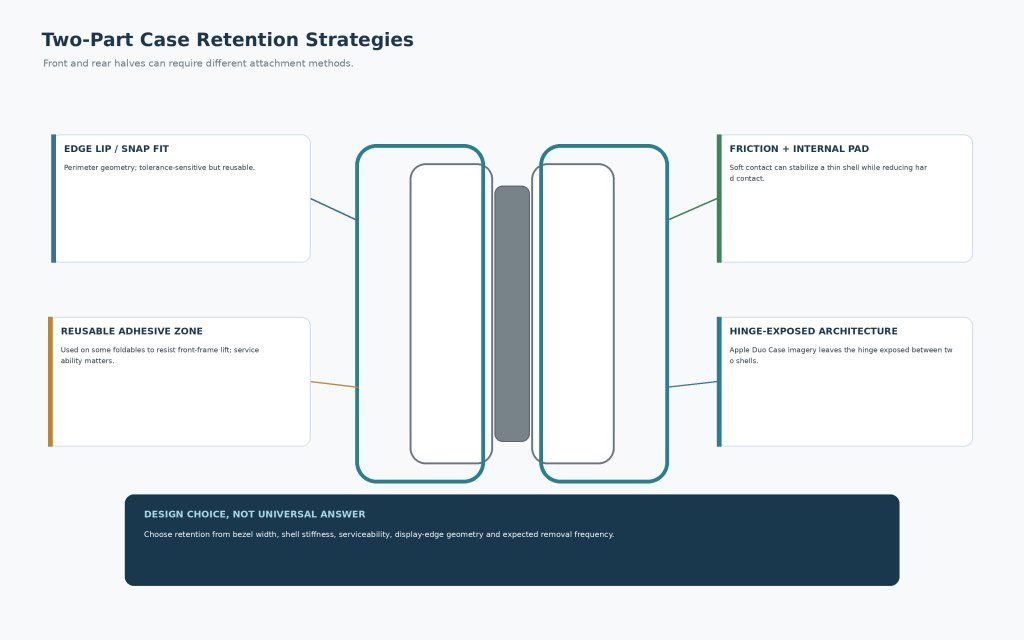
Do not infer Apple’s retention method from other foldables. Apple’s public Duo Case page confirms a two-part polycarbonate architecture but does not state that its front shell uses adhesive. Adhesive-strip examples should be treated as comparative foldable engineering, not as an Apple specification.
Constraint — Protection zones change with device state
A drop plan for a foldable needs more than corner drops
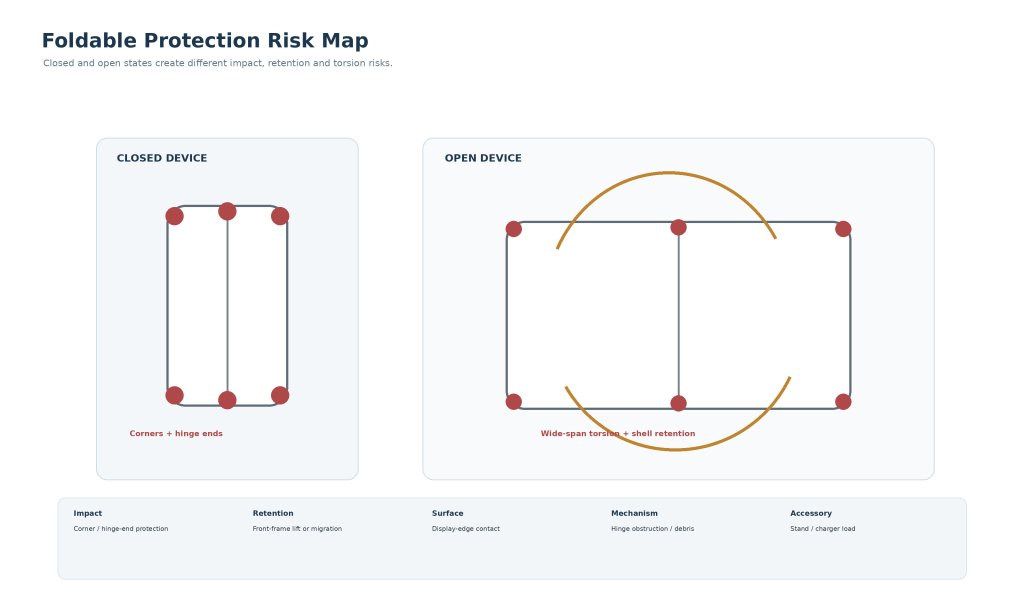
Closed, iPhone Duo behaves like a thick compact phone with two outer slabs and exposed hinge ends. Opened, it becomes a much wider 164.6 mm structure with a flexible center region. Those two states create different load paths. Corner protection is still important, but so are front-frame retention, hinge-end impact, shell migration and torsion across the open device.
| Failure mode | Why it matters | Suggested validation |
|---|---|---|
| Front-frame lift | A thin front shell can migrate or detach during handling. | Repeated install/remove, pocket friction, fold cycling and edge-load checks. |
| Hinge interference | A shell or accessory can rub or collide mid-fold. | Slow-motion clearance review across the full fold path. |
| Open-state torsion | The wide open device can twist under asymmetric handling. | Controlled bending/torsion checks defined with engineering criteria. |
| Debris trap | Tight hinge or shell gaps can retain grit near moving surfaces. | Visual contamination inspection after repeated pocket/desk cycles. |
| Accessory load | Stand or magnetic accessories add off-axis force to one half. | Test the complete phone + case + accessory assembly. |
Constraint — MagSafe and kickstands become geometry problems
A magnetic feature must work in more than one pose
Apple lists MagSafe and Qi2 wireless charging up to 25W for iPhone Duo. Apple’s Folio with Kickstand goes further: Apple says it can remain installed while charging with MagSafe, Qi2 25W or a Qi-certified charger. That makes the accessory a useful engineering reference because it demonstrates a case, stand and magnetic charging system designed around foldable motion rather than added independently.
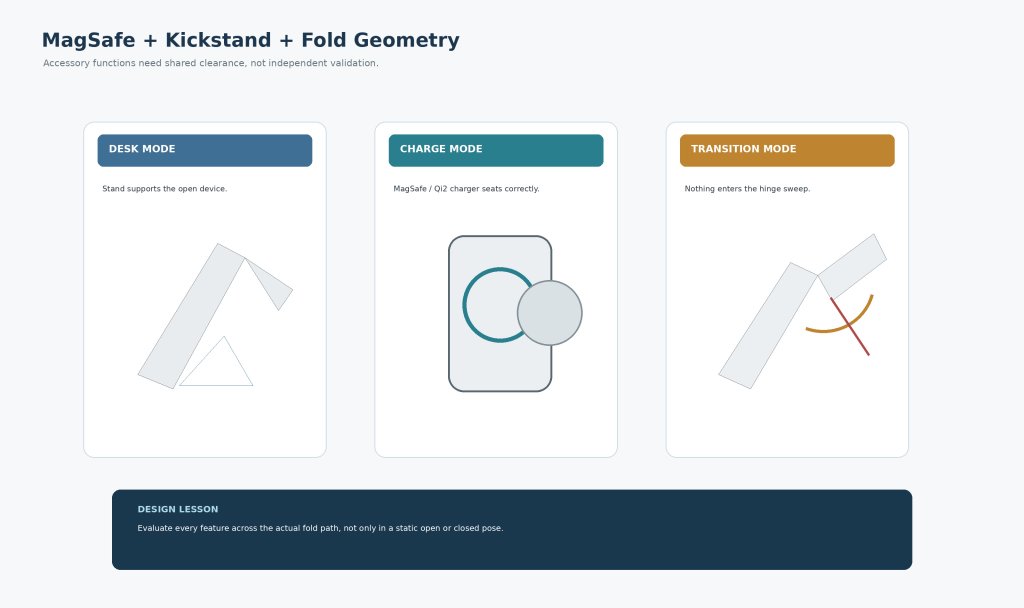
For suppliers, this changes the approval method. Do not validate a magnetic ring only with the phone flat on a charger. Validate the assembly in the actual poses the listing promises: folded, open, supported by the stand and transitioning between states.
Constraint — Existing rigid-phone modules can inform Duo design, but they do not transfer directly
What current Kejie case modules can teach — and what they cannot prove
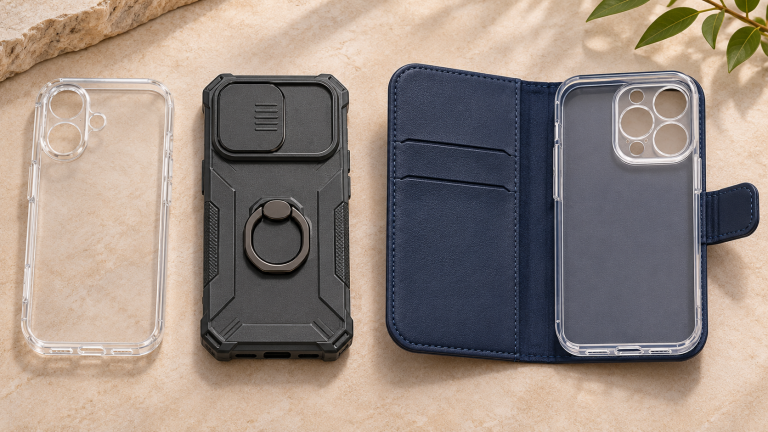
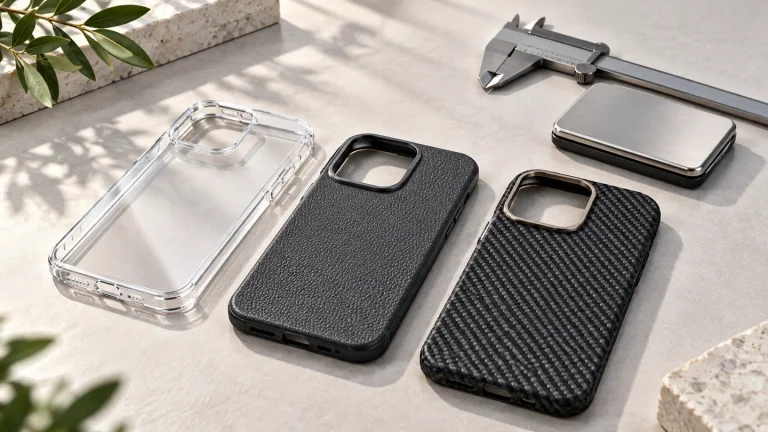
Kejie’s existing iPhone case pages contain design modules that are relevant to foldable engineering discussions: magnetic kickstands, clear magnetic protection and ring-holder mechanisms. They are useful references for how Kejie might think about moving parts, magnetic zones and transparent protective structures, but none of the three supplied pages is an iPhone Duo product.
| Existing Kejie page | Transferable design lesson | What must be redesigned for Duo |
|---|---|---|
| iPhone 18 Pro Max Magnetic Kickstand Case | Stand geometry, hinge module, magnetic-accessory clearance. | The stand must coexist with a folding center hinge and two device halves. |
| iPhone 18 Pro Max Clear Magnetic Shockproof Case | Clear material quality, raised protection, magnetic-zone integration. | Two-shell alignment, front-display frame retention and hinge clearance. |
| iPhone 18 Magnetic Ring Holder Kickstand Case | Compact moving hardware integrated into the rear case. | Ring movement and load must not conflict with fold geometry or the second shell. |
Compatibility boundary: these links are engineering analogues only. They should not be labeled, sold or presented as iPhone Duo-compatible products unless a future Kejie Duo-specific product page and physical sample confirm that support.
Validation framework
A foldable case needs a state-based test plan
For a conventional rigid phone, many case tests can be written around one device geometry. For iPhone Duo, the engineering plan should specify the state of the phone during each test. “Passes drop testing” or “supports magnetic charging” is incomplete unless the test record identifies whether the device was folded, open, partially open or mounted to another accessory.
Fold-cycle clearance
Run the complete case through repeated open/close cycles and inspect rubbing, lift and shell migration.
Closed-state impact
Include corners and hinge ends because the folded device behaves like a thick compact slab.
Open-state impact / torsion
Define controlled criteria for the wide open structure rather than reusing only closed-state methods.
Retention
Check front- and rear-shell retention separately after fold cycling, pocket handling and removal/reinstallation.
Magnetic system
Test charger, wallet, mount or power bank with the exact shell and intended pose.
Packaging / instructions
Explain installation order, adhesive reuse if applicable, stand use and any exposed-hinge limitation.
Design conclusion: An iPhone Duo case must work as the phone folds, not just use protective materials. The best foldable case architecture is the one that stays attached, protects the vulnerable edges, clears the hinge, supports the promised accessories and remains predictable through every device state.
ENGINEERING SOURCES
- Apple Newsroom — iPhone Duo announcement, hinge architecture and Apple accessories
- Apple — iPhone Duo Technical Specifications
- Apple — iPhone Duo Case
- Apple — iPhone Duo Folio with Kickstand
- Google Pixel Phone Help — official foldable case installation example
- Samsung Support — foldable phone case/care reference
Source review date: September 29, 2026. This article separates confirmed Apple specifications from engineering recommendations and cross-industry examples. Generated diagrams are explanatory visuals, not Apple drawings, Kejie production drawings or evidence of completed Kejie testing.

 English
 Español de Argentina
 Русский
 Italiano
 日本語
 한국어
 العربية
 Français
 Deutsch