
A foldable phone case manufacturer needs to control movement as carefully as fit.
Ask for a sample for the exact phone. Open and close it to check for rubbing, lifted edges and loose shells.
Start a foldable model-fit review
One foldable category. Three different fit briefs.
iPhone Duo
A book-style folding phone with inner and outer screens. Confirm the production-device reference, camera opening and control access before freezing the mold.
Galaxy Z Fold
A book-style family, but a separate geometry from Duo. Identify the exact generation; front-frame width, camera layout and accessory support must be checked for that model. Procurement route: request the exact Z Fold variant and a matching sample; do not treat a Flip7 card as a Fold SKU.
Galaxy Z Flip
A clamshell family with upper/lower shells. Check the cover-screen perimeter, camera access and the transverse hinge path for the exact generation. Explore the Galaxy Z collection
Compare foldable cases by device family
Choose the device family first, then compare its case designs. Duo, Fold and Flip cases are not interchangeable.
Published products, newest first. Browse every page for the full matching range.
iPhone Duo
-
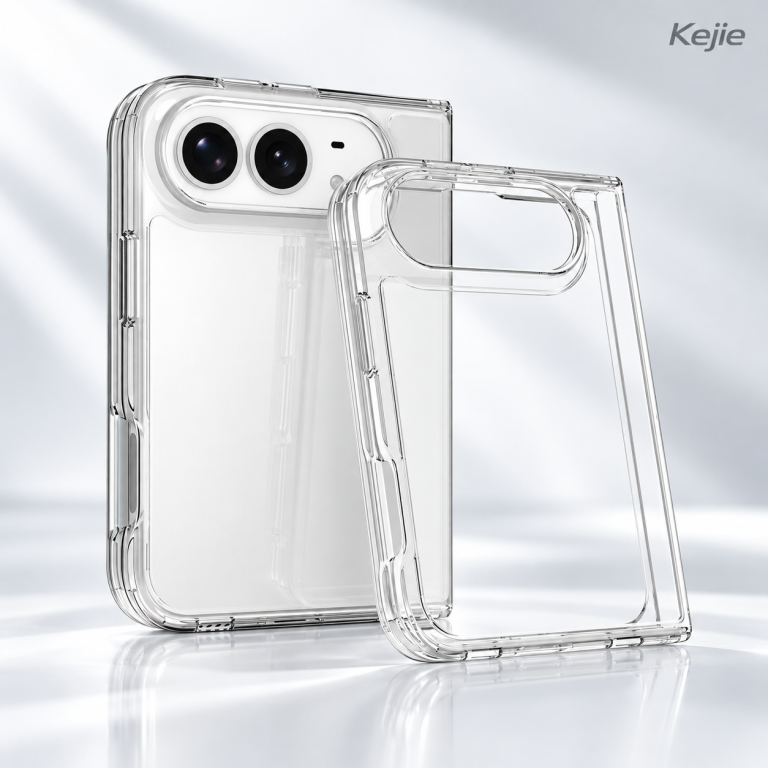
Transparent 2-in-1 TPU + PC Shockproof Foldable Case for iPhone Duo
-
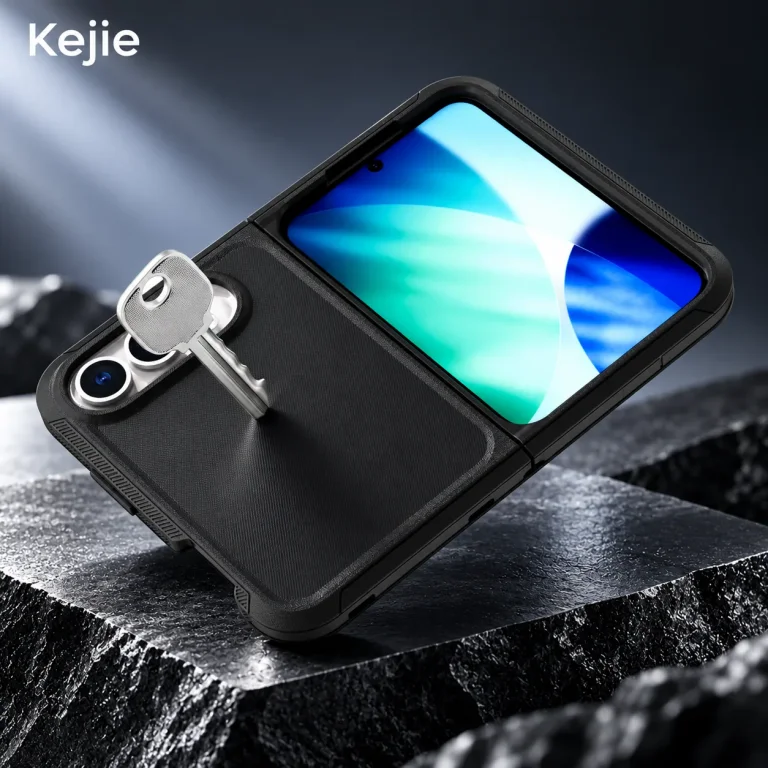
3-in-1 Heavy Duty Full-Body Shockproof TPU + PC Case for iPhone Duo
-
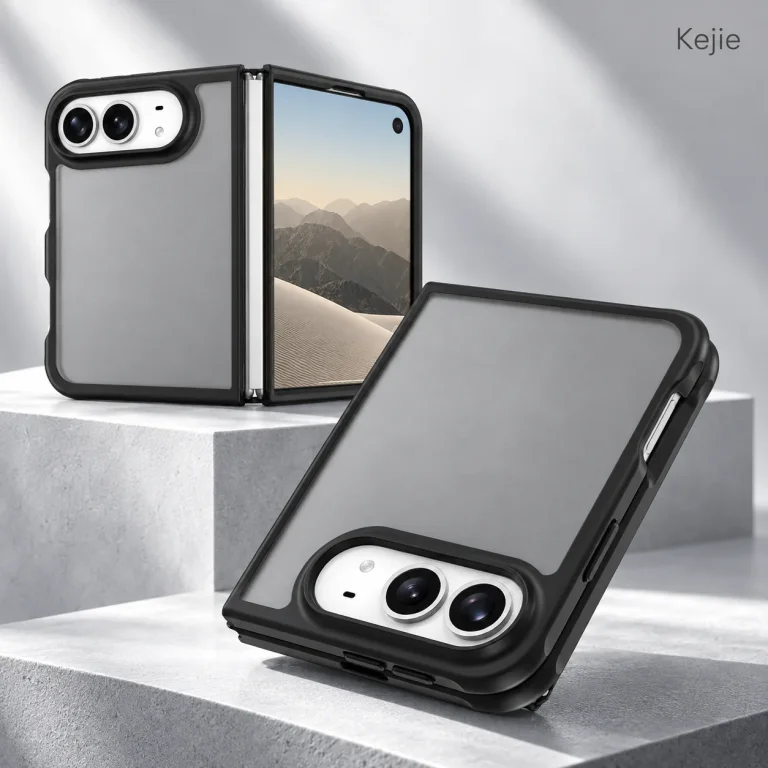
Translucent Matte Magnetic TPU + PC Hinge Protection Case for iPhone Duo
-
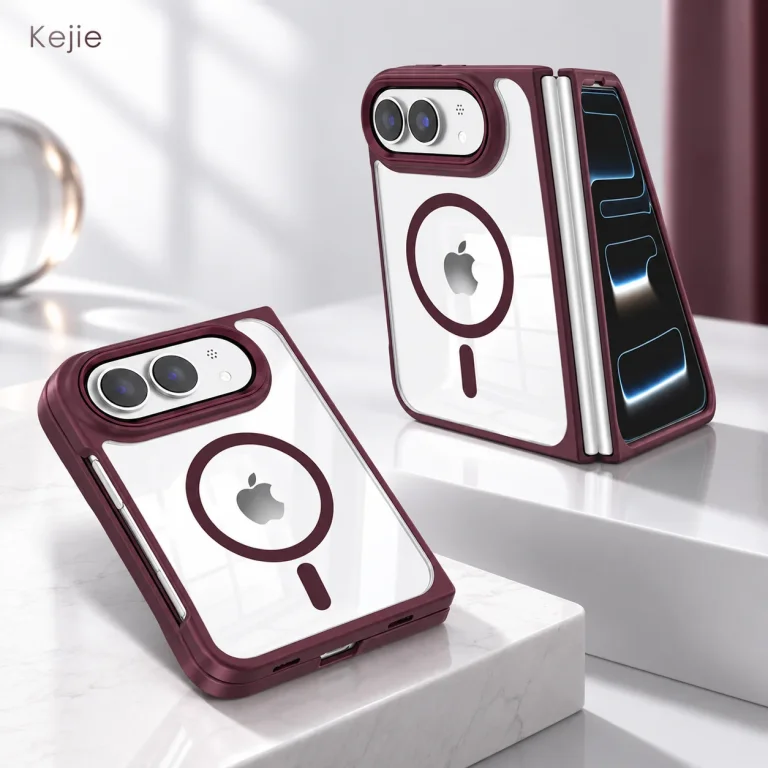
Magnetic TPU + PC Shockproof Protective Case for iPhone Duo
-
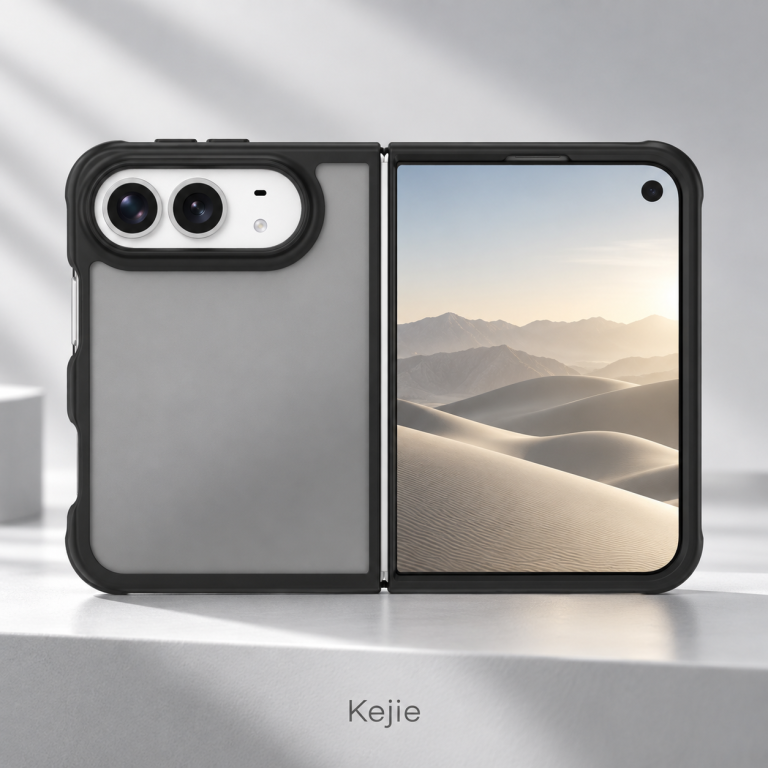
2-in-1 Translucent Matte Magnetic TPU + PC Hinge Protection Case for iPhone Duo
Galaxy Z Fold / Galaxy Z Flip
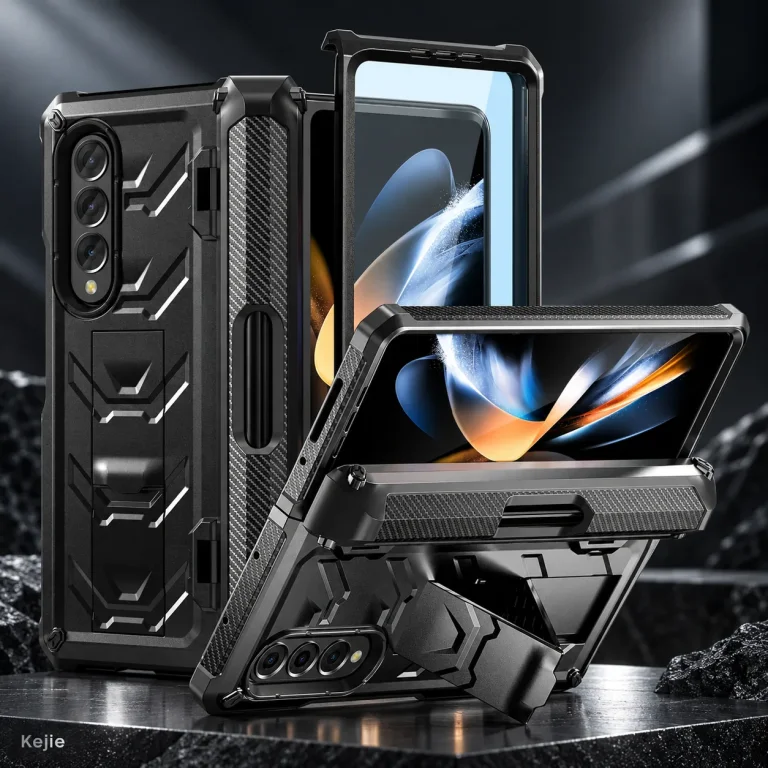
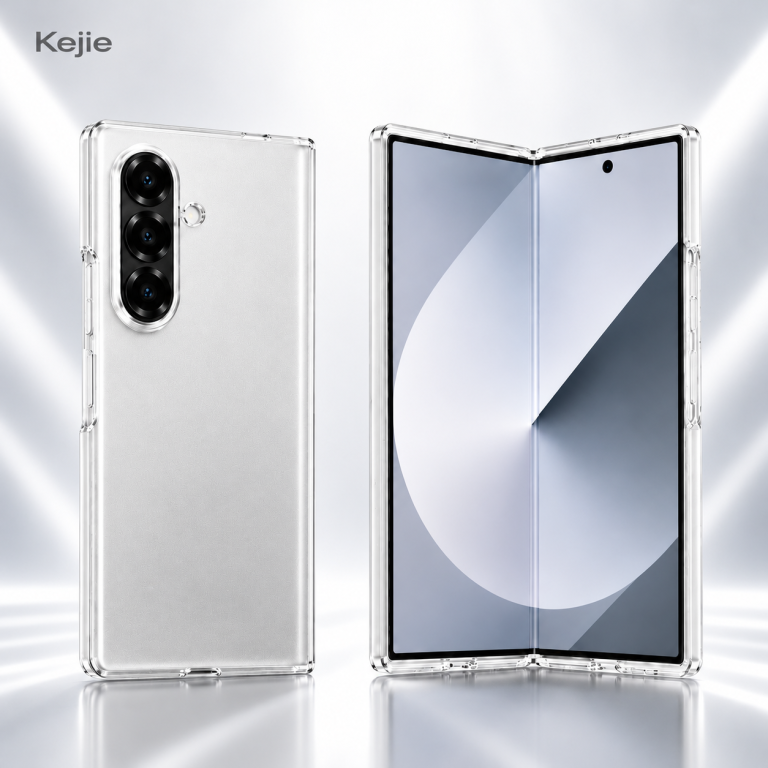


Apple’s Duo page lists availability from October 23, 2026. For early sourcing, identify whether a sample is based on drawings, a device surrogate or a production phone, and agree on the final-device fit gate. A published case listing alone does not close that gate.
The official Fold7 and Flip7 pages show different folding and display arrangements. They are form-factor references, not specifications for a third-party case. Keep each generation and regional model code in its own fit record.
The hinge cover must clear the entire opening path
Check the hinge cover while opening and closing the phone, not only at the endpoints. Stop if it rubs, lifts a shell or adds resistance.
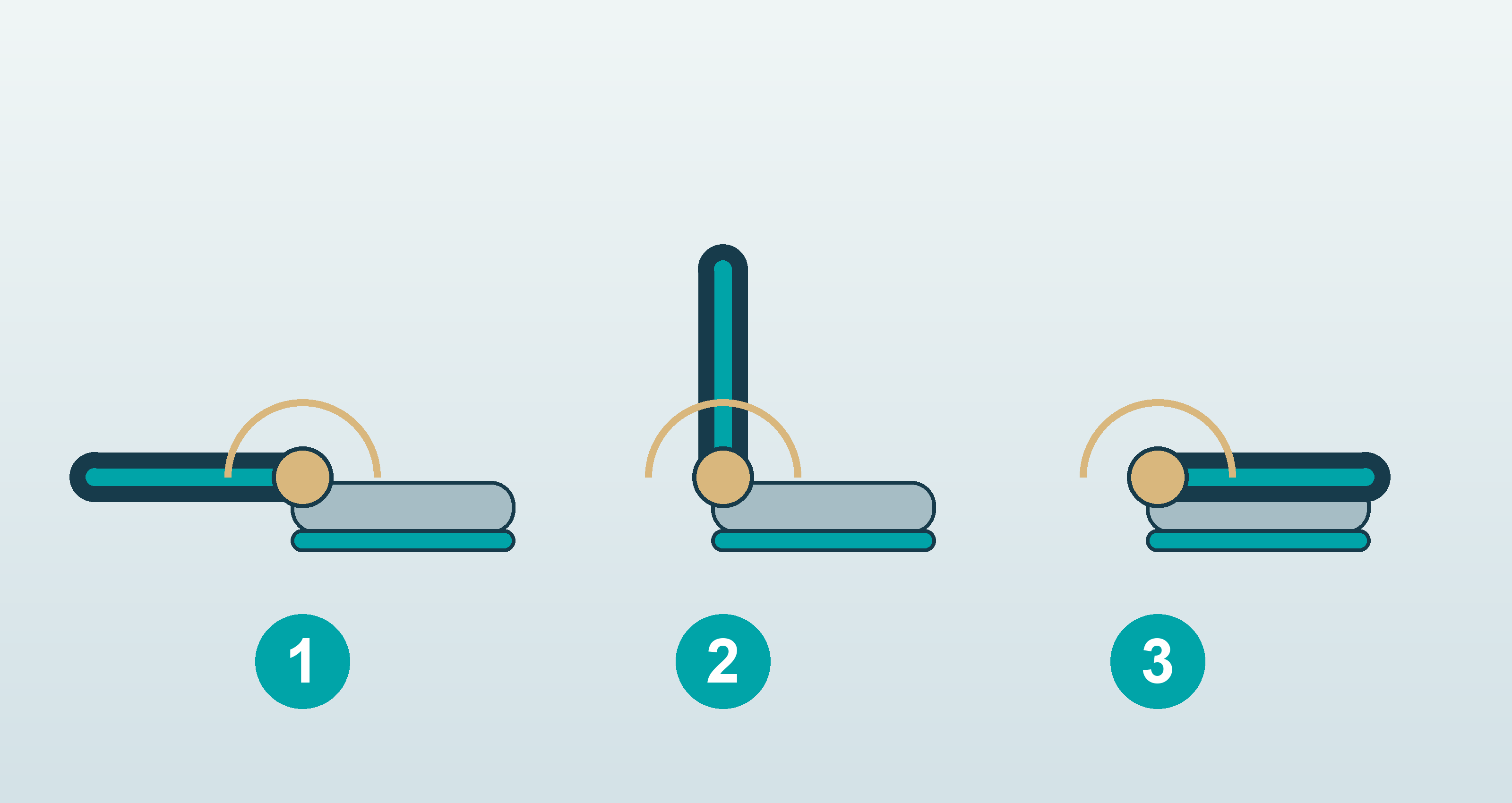
- Open. Check shell seating, hinge-edge gaps, inner-screen perimeter and normal control access.
- Partly folded. Look for rubbing, a moving cover lifting a shell, trapped material or sudden extra resistance.
- Closed. Check that the case permits normal closure without forcing the halves or shifting a front frame.
Hinge coverage or a slimmer exposed hinge?
A hinge cover can reduce exposed exterior area, but adds components and a clearance task. A simpler split shell may keep bulk lower while leaving the hinge more exposed. Choose the trade-off for the customer’s use, then confirm the actual design. Exterior coverage is not proof of dust sealing, waterproofing or a tested drop rating.
For hands-free use, test the intended resting positions with the actual case installed. A new hinge cover or stand can change contact with the table and stability. Neither the pictured Duo case design nor the Flip7 listing should be assumed to include a stand.
How will the narrow shell sections stay in place?
Ask the manufacturer to identify the retention method for each half: molded rails, clips, friction fit, adhesive strips or a combination. Do not infer an adhesive-free fit from a clean product photograph.
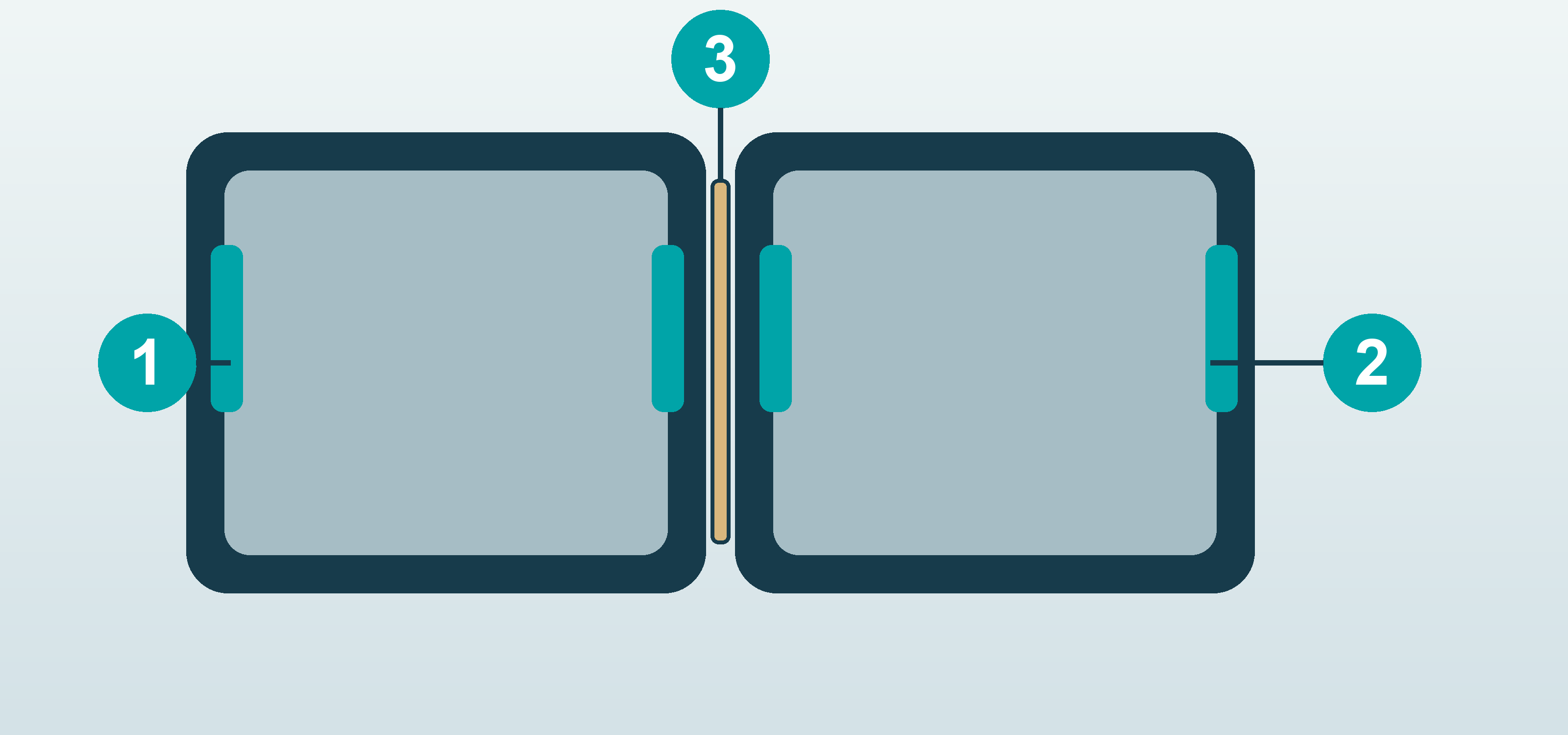
- 1 — First shell: inspect narrow rails and corners for lift, rocking or migration.
- 2 — Second shell: check seating under normal grip, pocket handling and permitted removal.
- 3 — Hinge interface: confirm that movement does not pull either shell out of position.
If the design uses adhesive
Confirm the supplied strip, installation surface, preparation method and settling time. Ask about replacement strips, removal and residue. Repeatedly removing a sample may invalidate an adhesive-dependent fit check; record its installation history and follow the supplier’s instructions.
Specify what each material does. PC may support a narrow frame; TPU can provide compliant edge areas; PU leather describes an exterior finish. The shape, thickness, joints and retention system decide how that assembly fits. A finish change should not hide an underlying mold or material revision.
Use the symptom to choose the next check
Record the exact device, case revision, installation method and state where the problem occurs. These are possible causes to investigate, not diagnoses from appearance alone.
| Observed symptom | First check | Next action |
|---|---|---|
| Front frame shifts during opening | Exact model; full seating; retention/adhesive condition | Reinstall to instructions; document movement; request a revised sample if it persists |
| Hinge cover rubs or catches | Where in the motion path contact occurs | Stop forcing movement; record position and contact marks for geometry review |
| Phone does not close normally | Shell seating; inner-edge interference; trapped material | Remove case using instructions and compare normal closure; hold approval |
| Cover-screen gesture is obstructed | Frame width and intended screen protector | Check edge swipes and touch access; specify the affected area |
| Charging or mount seating is inconsistent | Exact device–case–accessory pairing | Compare seating/alignment; log the combination rather than assuming certification |
Check camera, microphone, button and cable access after the motion checks. A sample that folds smoothly can still obstruct daily use. Keep acceptance for mechanical movement, usability and accessory pairing as separate items.
Approve the device reference before the order
- Confirm the phone model. Confirm model/generation, regional identifier where relevant, drawings or physical device, and any remaining final-device validation.
- Check fit and folding. Approve both installed shells, their retention method, the opening path, closure, screen/camera edges and normal controls.
- Agree the required tests. If you need cycle-life or drop claims, agree on the sample configuration, method, count, conditions and acceptance criteria. A phone’s hinge-life claim does not establish the case’s performance.
- Confirm the production version. Match the approved sample revision to mold, material/finish, retention parts, installation instructions and inspection criteria. Review changes before accepting repeat orders.
For broader development and supplier checks, read the foldable iPhone manufacturer selection guide. This page focuses on multi-family fit, motion and sample handover.
Turn your foldable range into a model-specific request
Send the inputs that change the design
- Exact device models and quantity for each variant.
- Reference product, desired material/finish and hinge coverage.
- Retention preference, installation/removal needs and screen protector.
- Charging accessories, mounts and hands-free use requirements.
- Branding/packaging, required evidence and delivery destination/window.
Why start with Kejie?
The published Duo and Flip7 directions give your brief a concrete starting point. Kejie’s OEM/ODM service covers specification, sample, branding and production coordination; the company overview explains the wider supply scope.
For a Z Fold project or a new generation, ask for the exact variant and sample basis instead of transferring a Flip7 or Duo specification. Confirm feasibility, MOQ, sample/tooling charges, test responsibility and lead time in the project quotation.
 English
 Español de Argentina
 Русский
 Italiano
 日本語
 한국어
 العربية
 Français
 Deutsch